
France · Europe
Nice Travel Guide: Plan Your Visit to the French Riviera
Nice pairs a walkable historic centre with Mediterranean sea views and easy access to the wider French Riviera. Spend your time between the lanes of Vieux Nice, the seafront Promenade des Anglais and neighbourhoods with a more local feel, or use the city as a base for coastal rail trips. This guide covers when to go, how to get around and what to consider when choosing where to stay.
Find flights to Nice ↓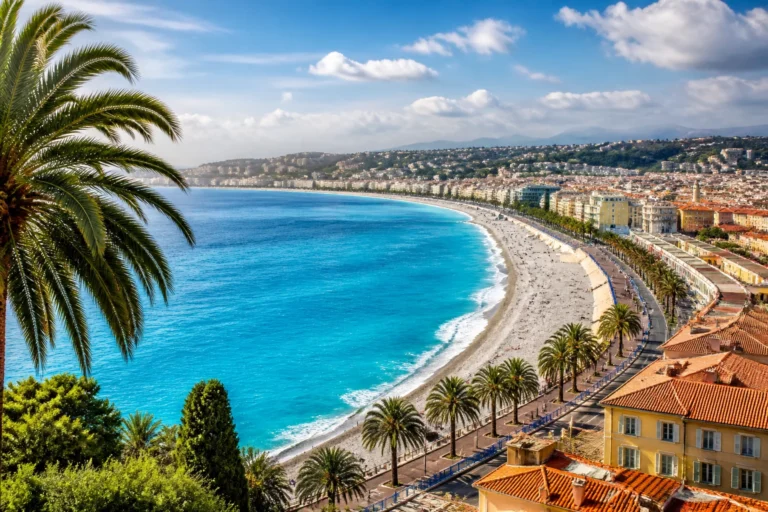 AI illustration
Find flights to Nice
Compare flights · EURWhat to expect in Nice
Nice is a coastal city in south-eastern France and a useful base for exploring the French Riviera. Its appeal lies in the mix: a broad seafront, an old town of narrow streets, markets and cafés, and everyday city neighbourhoods beyond the visitor centre. The Mediterranean setting is central to the experience, but Nice is more than a beach stop; museums, food markets and hilltop viewpoints make it rewarding away from the water.
The central areas are compact enough to explore on foot, though streets in Vieux Nice can be crowded and some routes involve steps or slopes. The shore is mostly pebbly rather than sandy, so pack footwear that is comfortable on stones if you plan to swim. Nice suits travellers who want a city break with coastal scenery, as well as visitors using public transport to see nearby towns.
- Walk the Promenade des Anglais
- Explore the lanes and squares of Vieux Nice
- Look out over the city from Castle Hill
- Use Nice as a base for Riviera day trips
Things to do in Nice
Start in Vieux Nice, where narrow lanes open onto lively squares and the Cours Saleya market area. Market offerings and opening arrangements can vary by day, so check locally if a particular market is a priority. Nearby, the seafront Promenade des Anglais is a straightforward place for a walk, while Castle Hill offers elevated views over the waterfront and rooftops. Allow time to explore rather than treating the old town as a quick photo stop.
For art and architecture, consider the museums in and around the city, including the Matisse Museum in Cimiez and the Marc Chagall National Museum. Check current opening days and any booking requirements before setting out. Cimiez also offers a quieter contrast to the seafront, with gardens and historic sites in the neighbourhood.
If you have extra time, regional trains can make coastal towns such as Antibes, Cannes or Monaco possible day trips. Journey times and services vary, so check current information with the rail operator before planning a tight itinerary. A slower alternative is to spend a day simply moving between neighbourhoods, cafés and the waterfront.
- Cours Saleya and the old town
- Promenade des Anglais and the seafront
- Castle Hill viewpoints
- Matisse Museum and Cimiez
- Coastal day trips by regional rail
When to visit Nice
Spring and early autumn are often comfortable periods for combining city walks with time outdoors, and they can feel less crowded than the height of summer. Summer brings long days and the strongest beach atmosphere, but popular central areas can be busy and the heat may make sightseeing in the middle of the day less comfortable. Book accommodation well ahead if your dates coincide with a major event or peak holiday period.
Winter is generally quieter for a city-focused visit, although some seasonal businesses and beach activities may operate differently. Nice’s Carnival takes place in winter, but dates and event arrangements change each year and can affect availability and access around the centre. Check the official event information before choosing dates around it.
- Spring and early autumn for walking and sightseeing
- Summer for a livelier seafront atmosphere
- Winter for a quieter city break, subject to seasonal changes
How long to stay in Nice
Two full days is enough for a first look at Vieux Nice, the Promenade des Anglais, Castle Hill and one museum, provided you keep the schedule manageable. Add another day if you want a slower pace, time at the beach or a visit to Cimiez.
For coastal excursions, plan for at least three or four days. This gives you room to explore Nice itself and choose one or two nearby destinations without turning every day into a transport-heavy outing. If Nice is one stop on a longer French Riviera trip, decide whether you prefer a central base or a different overnight stay for the places you most want to see.
Getting to and around Nice
Nice Côte d’Azur Airport (NCE) is west of the city centre. Tram services link the airport area with central Nice, and taxis and other road transport are also options. Routes, stops, fares and service arrangements can change, so check the airport and local transport operators’ current information before travelling, particularly if you arrive late or have limited mobility.
Within Nice, the tram and bus network can help with journeys beyond the central walking area. Many central sights are close enough to reach on foot, while a bus or tram can be useful for districts such as Cimiez. Regional trains serve coastal destinations from Nice-Ville station; check the operator’s current timetable and station details before relying on a connection. Allow extra time if you have an onward flight or a separate ticket.
When comparing flights to Nice, consider not only the arrival time but also how you will reach your accommodation and whether your plans include onward travel. FlyGo.si lets visitors compare flights, while airport and transport operators are the right places to confirm current services.
- Main airport: Nice Côte d’Azur Airport (NCE)
- Airport-area tram connections and road transport options
- Walk for central sights; use local transit for longer trips
- Check live transport details with official operators
Where to stay in Nice
Vieux Nice is convenient for the old town, markets and evening dining, but its narrow streets can be lively and some accommodation may involve stairs. The area around Jean-Médecin and the central station is practical for shopping, tram connections and rail journeys. It is a good option if you want to balance sightseeing with transport access.
The Carré d’Or and the seafront suit travellers who want to be close to the Promenade des Anglais and central amenities. The Port neighbourhood offers a different atmosphere, with restaurants and access to the eastern side of the city. Cimiez is quieter and greener, but less convenient for spontaneous walks to the beach and old town. Compare the exact location and walking route, not just the neighbourhood name.
- Vieux Nice for historic lanes and central sights
- Jean-Médecin for transport and city convenience
- Carré d’Or or the seafront for a coastal setting
- Cimiez for a quieter, more residential feel
Practical tips for planning a Nice trip
Wear comfortable shoes: old-town paving can be uneven, and viewpoints or hillside routes may involve steps. If you need step-free access, check the accommodation, transport stops and attractions individually rather than assuming every central route is accessible. For swimming, remember that the city’s beaches are generally pebbly; check beach access and facilities before choosing where to go.
Reserve accommodation early for busy summer dates and major events, and check cancellation terms before booking. Museums, markets, transport services and event arrangements can change, so confirm details with the relevant official operator or venue. In warmer months, plan outdoor sightseeing for earlier or later in the day and leave time for breaks.
Nice works well without a car for central sightseeing and many coastal excursions. A car may be useful for destinations beyond convenient rail or bus links, but traffic and parking can add complexity in and around the city. For a short stay, compare the total convenience of a central base with the space or quieter setting of an outlying area.
- Bring shoes suitable for uneven streets and pebbles
- Check accessibility and opening details in advance
- Consider transport and parking before hiring a car
Frequently asked questions about Nice
Is Nice a good base for exploring the French Riviera?
Yes. Nice has local public transport and regional rail connections to several coastal towns, making it a practical base for some day trips. Check current services and journey details before planning excursions.
How do you get from Nice Côte d’Azur Airport to the city centre?
Tram services connect the airport area with central Nice, and road transport such as taxis is also available. Check current routes, stops and fares with the airport or local transport operator before travelling.
Are the beaches in Nice sandy?
Most of Nice’s central beaches are pebbly. Water shoes or other comfortable footwear can make access easier, and beach facilities may vary by location and season.
Can you explore Nice without a car?
Yes. The central sights are walkable, and local tram and bus services can help with longer journeys. Regional trains are useful for some coastal trips, though current routes and timetables should be checked with the operator.
How many days should I spend in Nice?
Two full days can cover the main central sights and one museum at a steady pace. Three or four days gives you more time for neighbourhoods, the beach or one or two coastal excursions.
Which area is best to stay in Nice?
Vieux Nice is handy for the historic centre, Jean-Médecin for transport links, and the Carré d’Or or seafront for coastal access. Cimiez is quieter but farther from the main waterfront sights.
Travel information can change. Check official transport operators and attraction websites before booking.
Editorial review: 5 Nov 2026
More destinations to explore
 AI illustration
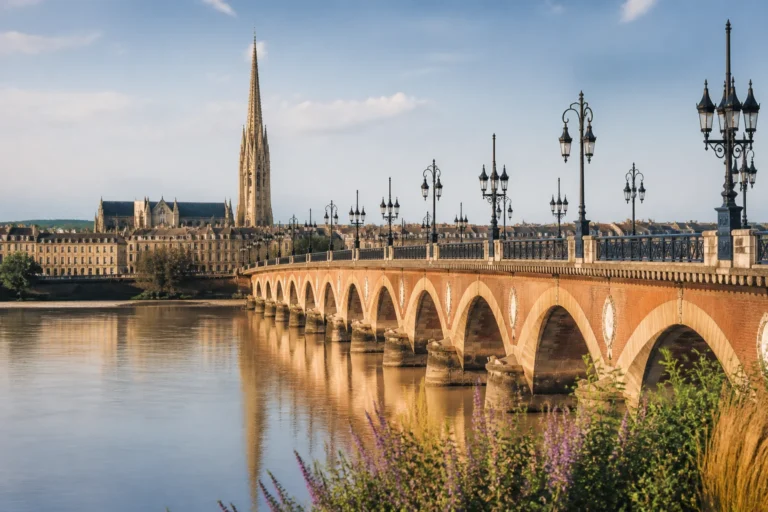
Bordeaux
Bordeaux is one of France’s most rewarding city breaks: elegant enough for a special trip, yet relaxed enough for…
Explore destination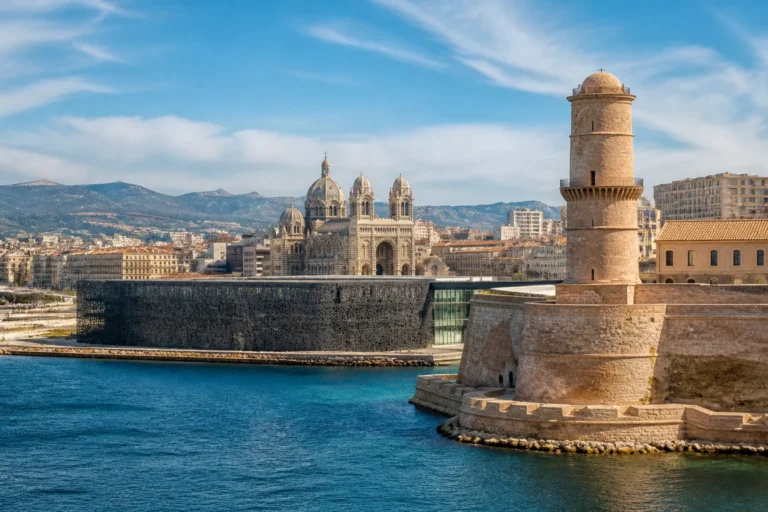 AI illustration
Marseille
Marseille combines a busy Mediterranean port with historic streets, lively markets and access to the Calanques’ coastal scenery. Its…
Explore destination AI illustration
Paris
Paris rewards slow travel: museum-heavy days, long walks along the Seine, neighbourhood cafés, and compact districts that each feel…
Explore destination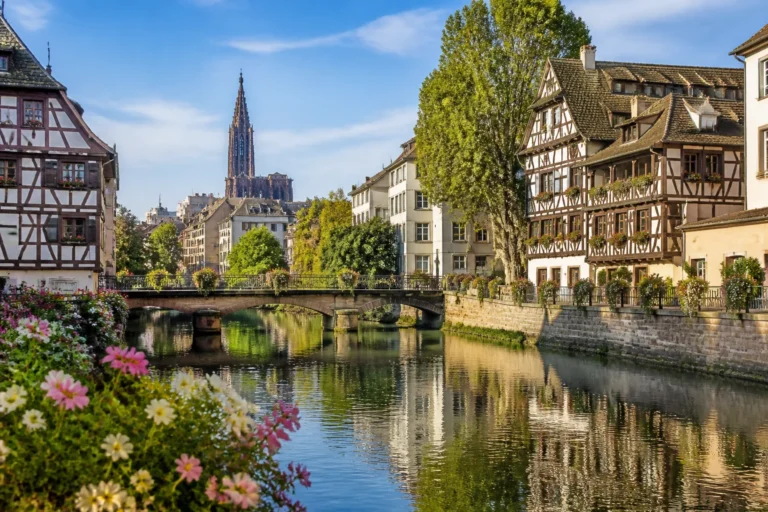 AI illustration
Strasbourg
Strasbourg combines a walkable historic centre with a distinct blend of French and German influences. Its canals, half-timbered houses…
Explore destination