
3 Days in Rome: A Practical City Break Itinerary

Rome rewards a focused plan: in three days, you can combine its ancient landmarks, Baroque squares, Vatican art and neighbourhood life without trying to see every museum and church. This Rome 3 day itinerary groups sights by area, leaving room for meals, photographs, queues and the occasional unplanned discovery.
The key is to book the major timed attractions first, then build each day around a compact walking route. That approach reduces unnecessary backtracking and makes a short city break feel manageable rather than rushed.
Planning Your Rome 3 Day Itinerary
Best Area to Stay
For a first visit, the best base is usually somewhere between the historic centre, Termini and the Colosseum. The right choice depends on whether you prioritise atmosphere, transport connections or evening dining.
- Centro Storico: Stay near the Pantheon, Piazza Navona or Campo de’ Fiori for atmospheric streets and easy access to the Day 1 route. Accommodation can be more expensive, and the area is lively at night.
- Monti: A convenient, characterful choice close to the Colosseum, with independent restaurants, wine bars and a more residential feel.
- Prati: Practical for the Vatican, generally quieter and well connected by Metro Line A. It is a good option if you prefer wider streets and a less hectic base.
- Trastevere: Attractive for evening dining and narrow lanes, though some streets can be noisy and connections to the main sights are less direct.
- Termini and Repubblica: Useful for airport transfers and trains, with a broad range of accommodation. Choose carefully by street and check recent guest reviews.
For a short stay, prioritise a location that lets you walk to at least one major area. A central hotel can save time and reduce reliance on public transport, especially when returning after dinner.
Airport Transfers
From Fiumicino Airport, the Leonardo Express is a non-stop rail connection to Roma Termini. It is usually the simplest option if your accommodation is near Termini or connected to the Metro network. Regional trains, buses, taxis and pre-booked transfers are alternatives for other neighbourhoods. Check the current timetable on Trenitalia before travelling.
From Ciampino Airport, airport buses run to Roma Termini, while local connections can link the airport with Ciampino railway station or Anagnina. A taxi or pre-booked private transfer may be worthwhile if you arrive late, have bulky luggage or are travelling as a group. The airport’s official transport information is available through Aeroporti di Roma.
Allow extra time on the return journey. Airport transport can be affected by traffic, strikes, maintenance or queues at security, so avoid planning a tight connection after your sightseeing ends.
Getting Around Rome
Rome’s central sights are best explored on foot. The historic centre is compact, but cobbled streets, crossings and hills can make distances feel longer than they look on a map. Wear supportive shoes and group nearby attractions together.
Use the Metro for longer journeys, particularly between Termini, the Colosseum area and the Vatican. Buses and trams can be useful, although road traffic makes journey times less predictable. The ATAC ticket and pass system covers the city’s buses, trams and Metro, with options based on the number and duration of journeys. Check the official network before relying on a particular route.
Buy or activate tickets before boarding or entering Metro gates, and keep digital tickets available for inspection. Taxis can save time late at night or when public transport is disrupted, but use official ranks or reputable booking apps rather than unsolicited offers around the airports and main stations.

Day 1: Historic Centre
Walkable Route Through the Historic Centre
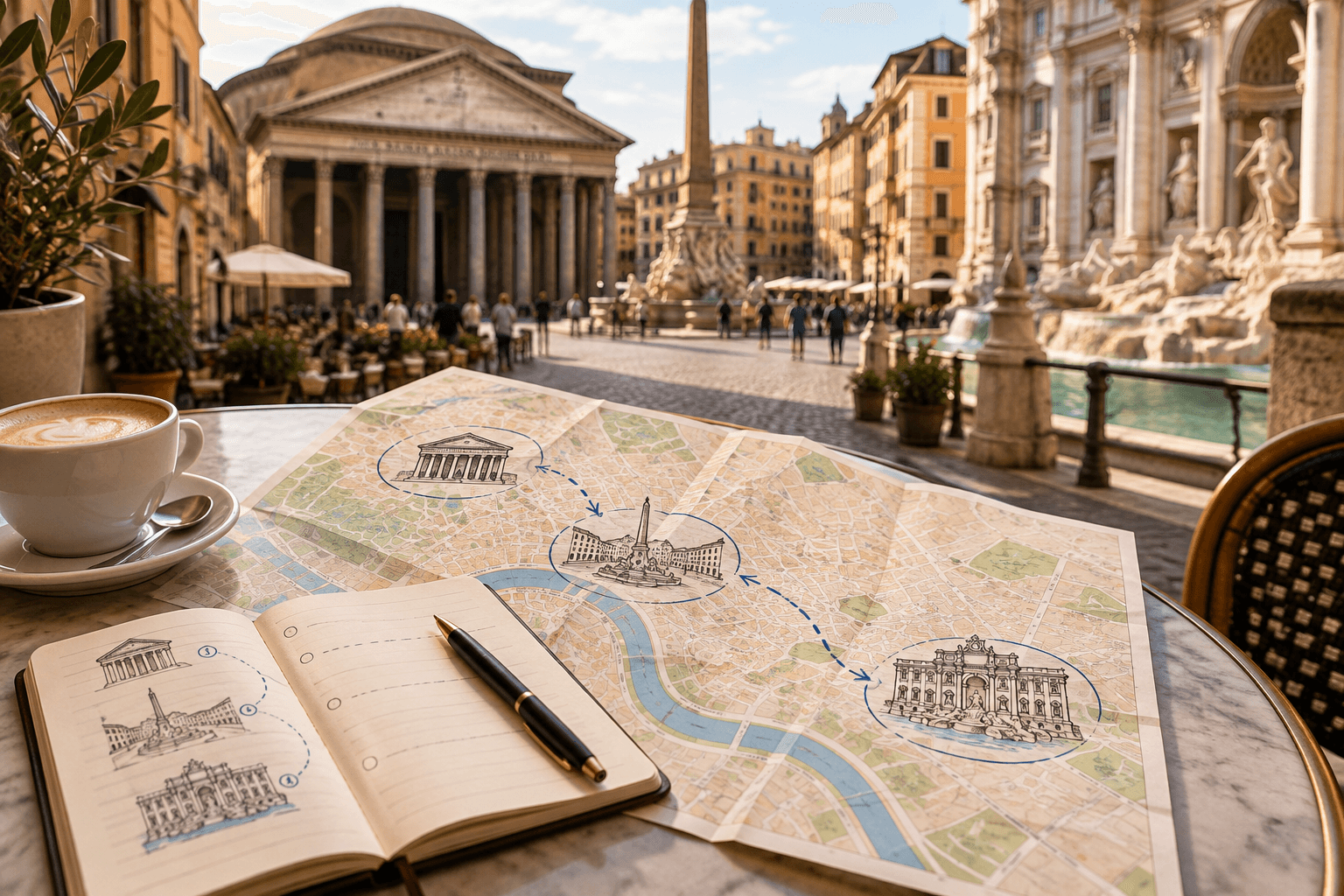
Begin at the Pantheon, one of Rome’s most impressive ancient buildings and a useful starting point for exploring the Centro Storico. Arrive early if you want a quieter experience, then continue to Piazza della Minerva and the nearby Church of Sant’Ignazio, known for its striking painted ceiling.
Walk west to Piazza Navona, where fountains, cafés and Baroque architecture create one of the city’s most recognisable urban spaces. Take time to look beyond the central fountain and explore the surrounding lanes, where you will find small restaurants, bakeries and churches.
After lunch, continue towards the Trevi Fountain. The route is short but busy, so allow time for slow-moving crowds. The fountain is particularly atmospheric later in the day, although the area can be crowded. Keep valuables secure and avoid stopping in the centre of narrow pedestrian flows.
From Trevi, walk towards Piazza di Spagna and the Spanish Steps, or make a shorter loop through Via del Corso and Piazza Colonna. If you still have energy, visit the gardens of Villa Borghese for a change of pace, or finish with an aperitivo near Piazza del Popolo.
| Time | Suggested plan |
|---|---|
| Morning | Pantheon, Piazza della Minerva and nearby churches |
| Midday | Piazza Navona and lunch in the surrounding streets |
| Afternoon | Trevi Fountain, Via del Corso and Spanish Steps |
| Evening | Flexible dinner in the historic centre or near Piazza del Popolo |
Do not add the Colosseum or Vatican to this day. The historic centre is more enjoyable when you leave time to browse, stop for coffee and enter one or two unexpected churches.
Day 2: Colosseum
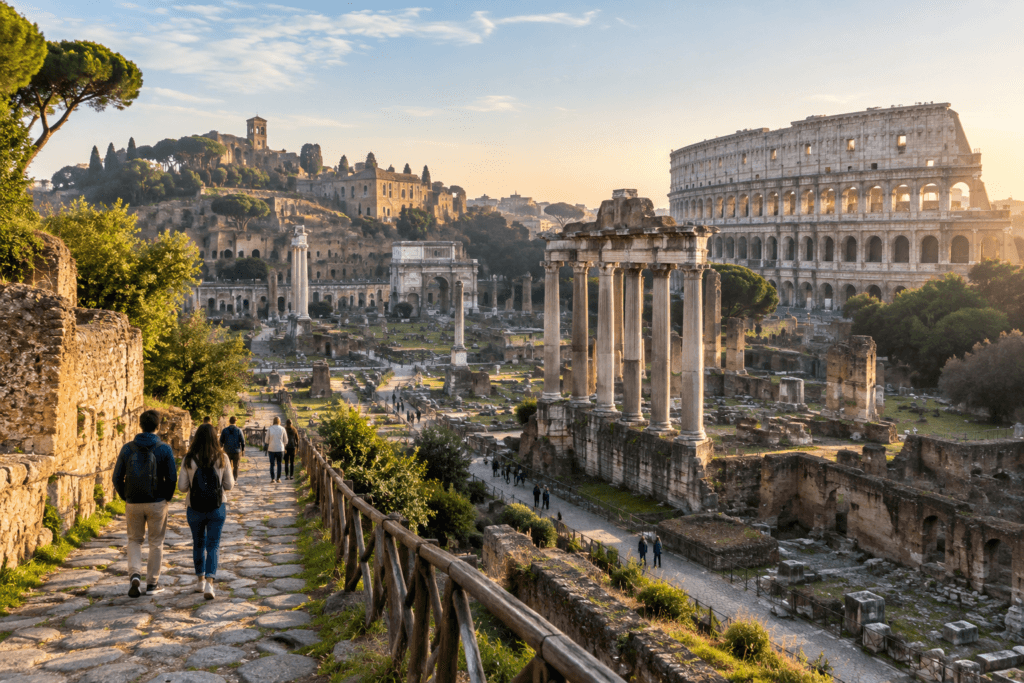
Dedicate the second day to ancient Rome. Start with the Colosseum, then continue through the Roman Forum and Palatine Hill. This is a substantial visit involving sun exposure, uneven surfaces and considerable walking, so take water and plan a proper lunch break.
Timed Entry and Visiting Time
The Colosseum requires a timed entry, and the official archaeological park advises visitors to arrive before their booked slot. Tickets for the Colosseum, Roman Forum and Palatine are sold through the official Parco archeologico del Colosseo website. Availability and visiting arrangements can change, so confirm the details for your date before booking.
Allow at least half a day for the combined archaeological area. A morning Colosseum slot is often convenient because it gives you the rest of the day for the Forum, lunch and Monti. However, the best time depends on your travel season and ticket availability.
After the Colosseum, enter the Roman Forum and follow the paths towards the Palatine Hill. The Forum is easier to appreciate with a guide, audio guide or short background reading because many remains are fragmentary. Do not rush from viewpoint to viewpoint; the Palatine terraces offer some of the most rewarding perspectives over the ruins.
Exploring Monti
End the day in Monti, a short walk from the Colosseum. Its lanes are filled with cafés, small shops, trattorias and wine bars. Piazza della Madonna dei Monti is a natural place to pause, but explore a few side streets before choosing dinner.
Monti works well after an archaeological visit because it offers a relaxed evening without requiring another cross-city journey. If you still want a landmark, walk towards the Basilica di San Pietro in Vincoli, home to Michelangelo’s Moses, checking access arrangements before setting out.

Day 3: Vatican
Planning the Vatican Visit
Reserve the morning for the Vatican Museums and leave enough time for security, navigation and a break. The museums contain far more than can be seen in one visit, so select a route or a small number of priorities rather than attempting every gallery.
Buy tickets only through the official Vatican Museums portal, which warns visitors about unofficial websites and inflated prices. You can check the current visiting information and booking options on the official Vatican Museums website.
After the museums, visit St Peter’s Basilica. Security queues can be significant, and access may be affected by religious ceremonies or special events. Dress appropriately: shoulders should be covered and clothing should reach below the knee. The basilica’s official visitor guidance is available at St Peter’s Basilica.
Have lunch in Prati or near the Vatican before crossing the river. Avoid booking a tightly timed restaurant immediately after the museums because queues and security checks are difficult to predict.
Evening in Trastevere
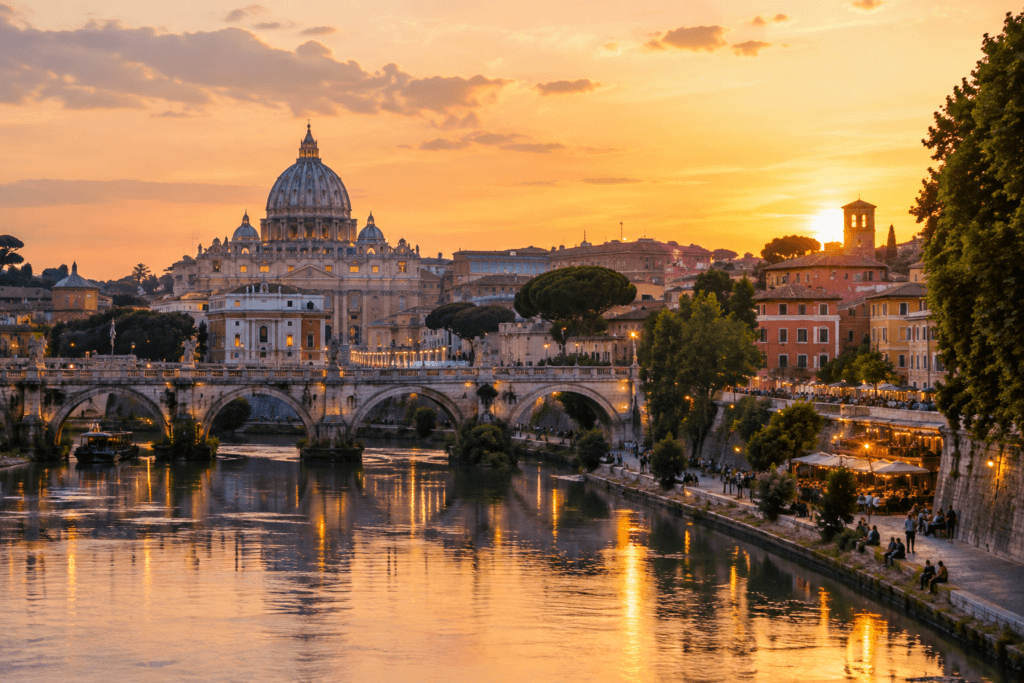
Spend the evening in Trastevere. Walk along the Tiber, explore the neighbourhood’s lanes and visit Santa Maria in Trastevere if it is open. The area is especially suited to an unhurried dinner, with traditional Roman dishes and a lively evening atmosphere.
For a quieter alternative, cross the river towards the Gianicolo viewpoint before dinner. The uphill walk is not essential, but it offers a broad city panorama and a slower finish to the trip.

Booking, Budget and Practical Tips
Reservations and Queues
Book the Colosseum and Vatican Museums in advance, especially for weekends, school holidays and peak summer months. St Peter’s Basilica has security checks even when you are not joining a guided tour, so allow a buffer.
For budgeting, separate your spending into accommodation, flights, airport transfers, museum admissions, local transport, meals and extras. Rome can suit different budgets: save by staying slightly outside the most famous squares, eating a substantial lunch, using public transport for longer journeys and choosing a small number of paid attractions.
- Check official attraction websites before paying third-party booking fees.
- Carry a reusable water bottle; Rome has public drinking fountains, but confirm local guidance and keep it sealed inside museums.
- Keep a small amount of cash for minor purchases, while using a card for larger expenses.
- Book restaurants for popular evening times, but leave at least one meal flexible.
- Carry a light layer for churches and air-conditioned museums.
- Use the Rome destination page for neighbourhood ideas, the flight search for route planning, and flight deals pages when comparing travel dates.
Common mistakes to avoid: scheduling the Vatican and Colosseum on the same day, assuming every attraction is walk-in, wearing uncomfortable shoes, overlooking church dress codes, leaving no time for meals, and choosing a hotel solely because it appears close on a map. Also avoid overplanning every hour. A useful Rome 3 day itinerary should have fixed anchors but flexible spaces around them.
How to Adapt the Itinerary
For rainy weather, replace open-air wandering with the Pantheon, churches, museums and longer meals. The Capitoline Museums, National Roman Museum and Galleria Borghese are strong alternatives, although some require advance reservations.
Travellers who prefer a slower pace can remove either the Spanish Steps on Day 1 or the Palatine Hill on Day 2. On Day 3, choose either a full Vatican Museums visit or a shorter basilica-focused morning. Families may prefer fewer interiors and more open spaces, while returning visitors can replace the Vatican with Appian Way, Ostia Antica or a neighbourhood-based food tour.
The best plan is not the one with the most sights. It is the one that groups attractions logically, protects time for rest and leaves you with enough energy to enjoy Rome after the sightseeing ends.
Key Takeaways
- Stay centrally or near a Metro connection to make a short visit more efficient.
- Group the historic centre, ancient Rome and the Vatican into separate days.
- Reserve timed attractions before finalising the rest of your schedule.
- Allow extra time for security, queues, meals and uneven walking routes.
- Keep at least part of every day flexible to avoid overplanning.
Rome 3 Day Itinerary FAQs
Is three days enough for Rome?
Three days is enough for a first overview of Rome’s main areas, including the historic centre, Colosseum and Vatican. It is not enough to see every museum, church and archaeological site, so prioritise the experiences that matter most to you.
Where should I stay in Rome for three nights?
Centro Storico is best for atmosphere and walking, Monti is convenient for the Colosseum, Prati suits Vatican-focused visits, and Termini is practical for transport. Compare the location with your arrival airport and evening plans.
Do I need to book the Colosseum in advance?
Yes. The Colosseum uses timed entry, and the official archaeological park states that reservations are required for the entry slot. Use the official ticketing route and check the rules for your selected ticket.
Can I visit the Vatican Museums and St Peter’s Basilica on the same day?
Yes, and they are commonly combined. Allow a generous gap between them because the museum visit, walking route and basilica security queue can all take longer than expected.
Is Rome easy to explore without a car?
Yes. The central sights are connected by walkable routes, while buses, trams and the Metro cover longer distances. A car is usually inconvenient in the historic centre because of traffic, restricted zones and limited parking.
What should I wear to visit St Peter’s Basilica?
Wear clothing that covers the shoulders and knees. Avoid sleeveless tops, very short clothing and hats inside the basilica, and carry only a small bag because cloakroom facilities may not be available.