
Italy · Europe
Trieste Travel Guide: Sights, Neighbourhoods and Practical Tips
Trieste is a port city in north-eastern Italy, where Adriatic views, grand central squares and a layered Central European history shape the experience. It suits travellers who enjoy a walkable historic centre, café stops and easy access to the coast. This guide covers what to see, where to stay and how to plan your arrival through Trieste Airport (TRS); compare flight options before settling on dates.
Find flights to Trieste ↓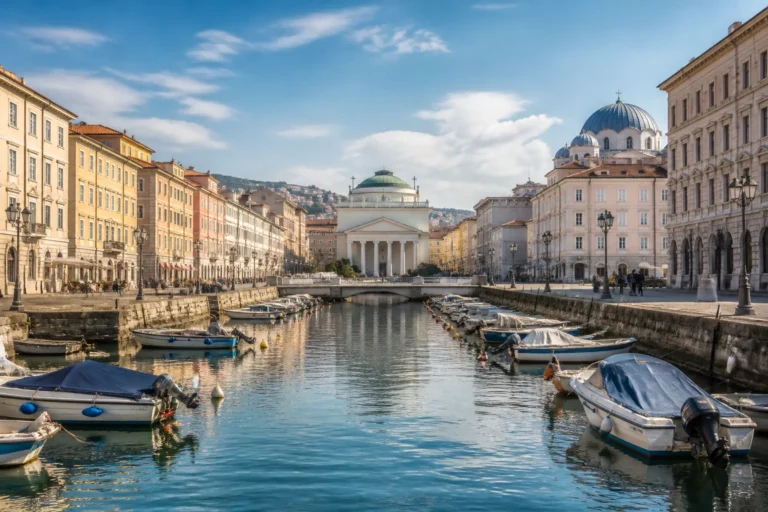 AI illustration
Find flights to Trieste
Compare flights · EURAbout Trieste
Set on the Adriatic near Slovenia, Trieste has a distinctive mix of Italian, Central European and seafaring influences. Its history as a major port of the Habsburg Empire is visible in the architecture and broad squares, while Italian is the everyday language. The city feels more like a working regional centre than a resort, with the waterfront and café culture woven into ordinary city life.
The compact centre is a good base for exploring on foot, although some streets rise steeply towards the Karst plateau. Trieste can work well as a short city break, a stop on a wider north-eastern Italy itinerary or a base for travellers interested in the coast and nearby border region.
- Piazza Unità d’Italia and the seafront
- Canal Grande and Borgo Teresiano
- San Giusto Hill
- Miramare Castle and its grounds
Things to do in Trieste
Start around Piazza Unità d’Italia, a large square opening directly onto the sea. From there, walk along the waterfront and into the older streets behind it. Borgo Teresiano, with the Canal Grande at its centre, offers a contrasting grid of streets, churches and cafés. Trieste’s coffee heritage is part of the city’s character; stopping for a coffee is an easy way to slow down between sights.
Allow time to climb or travel up to San Giusto Hill for the cathedral, castle and views over the rooftops and harbour. The Roman theatre sits close to the modern centre and can be included in a walking route. Miramare Castle, on the coast outside the centre, is a separate outing; check access arrangements and opening information before you go.
For a less museum-focused day, follow the waterfront towards Barcola, a popular area for seaside walks and swimming when conditions allow. The bora, a strong local wind, can affect comfort outdoors, so keep plans flexible rather than relying on a long exposed walk.
Best time to visit Trieste
Spring and early autumn are often comfortable periods for combining city walks with time by the water, with fewer peak-season visitors than in midsummer. Summer brings longer days and a livelier seafront, but can feel busier, particularly around popular coastal spots. In winter, the city’s cafés, museums and historic interiors remain worthwhile, though outdoor plans may be more affected by wind and changeable conditions.
Trieste’s bora is a notable feature rather than a reason to avoid any particular season. Check the forecast close to departure, pack a wind-resistant layer if visiting in cooler months, and be prepared to adjust exposed coastal plans.
How long to stay in Trieste
Two full days give most first-time visitors time to explore the central squares, Canal Grande, San Giusto Hill and the waterfront without rushing. Add another day if you want to visit Miramare Castle at an unhurried pace or spend time in Barcola.
A longer stay suits travellers who want to explore beyond the city centre or use Trieste as part of a wider regional trip. If your schedule is tight, group sights by area: the central squares and Borgo Teresiano together, then San Giusto and the Roman theatre, with Miramare as a separate excursion.
Getting to and around Trieste
Trieste Airport (TRS), also known as Trieste Airport or Friuli Venezia Giulia Airport, serves the city from outside the centre near Ronchi dei Legionari. Rail and bus connections may be available between the airport and Trieste; check the airport and transport operators for current routes, timetables and any service changes before travelling. Allow extra time if making a train or flight connection.
Trieste Centrale is the main railway station and a useful arrival point for visitors staying in or near the centre. Within the city, many central sights are walkable, while local buses can help with uphill journeys or longer distances. Check local operator information for current tickets and services. For Miramare, confirm the available public transport options before setting out rather than assuming a particular service or frequency.
- Use Trieste Airport (TRS) when comparing flights
- Check current airport rail and bus connections
- Walk around the historic centre; use local transport for longer or uphill trips
Where to stay in Trieste
The historic centre and Borgo Teresiano are convenient choices for a first visit, with many sights, restaurants and cafés within walking distance. Staying near Piazza Unità d’Italia puts the waterfront close by, while accommodation around the Canal Grande is well placed for exploring the central grid of streets.
The area around Trieste Centrale can be practical for travellers arriving by train or making an early departure, though it is worth checking the exact location and walking route to your accommodation. Choose Barcola if access to the seafront matters more than being close to the historic core, and check transport links if you plan to visit the centre frequently.
Practical tips for visiting Trieste
Bring comfortable shoes with good grip: central streets are walkable, but routes to San Giusto include slopes and steps. If you have limited mobility, check access details for individual sights and accommodation before booking. For a coastal day, carry a layer that can handle wind, even when the city centre feels sheltered.
Plan popular attractions around their current opening days and ticket arrangements, especially Miramare Castle. Keep some flexibility for weather and transport changes, and confirm local bus or rail information with the relevant operator. If you are comparing flights to Trieste, check the airport location and onward journey as part of your overall itinerary; flight availability can vary by date.
- Wear comfortable shoes for slopes and steps
- Check attraction access and opening details before travelling
- Build in time for the journey between the airport and your accommodation
Frequently asked questions about Trieste
Which airport should I use for Trieste?
Trieste Airport (TRS), also called Friuli Venezia Giulia Airport, is the airport serving the city. Check current flight options and onward transport to your accommodation before choosing your itinerary.
Can I explore Trieste without a car?
Yes. The central sights are generally walkable, and local buses can help with longer or uphill journeys. Check current public transport options for trips outside the centre, including to Miramare.
How many days are enough for Trieste?
Two full days are a useful starting point for the central sights and waterfront. Add a day if you want to visit Miramare Castle or spend more time by the coast.
Is Trieste suitable for a seaside holiday?
Trieste has a waterfront and coastal areas such as Barcola, but it is also a historic port city with an urban feel. It suits visitors who want to combine city sightseeing with time by the sea rather than focus only on a beach resort.
What should I pack for a trip to Trieste?
Comfortable walking shoes are useful for the historic centre and San Giusto Hill. Conditions can be windy, so a light wind-resistant layer is practical, particularly for time along the exposed waterfront.
Travel information can change. Check official transport operators and attraction websites before booking.
Editorial review: 23 Oct 2026
More destinations to explore
 AI illustration
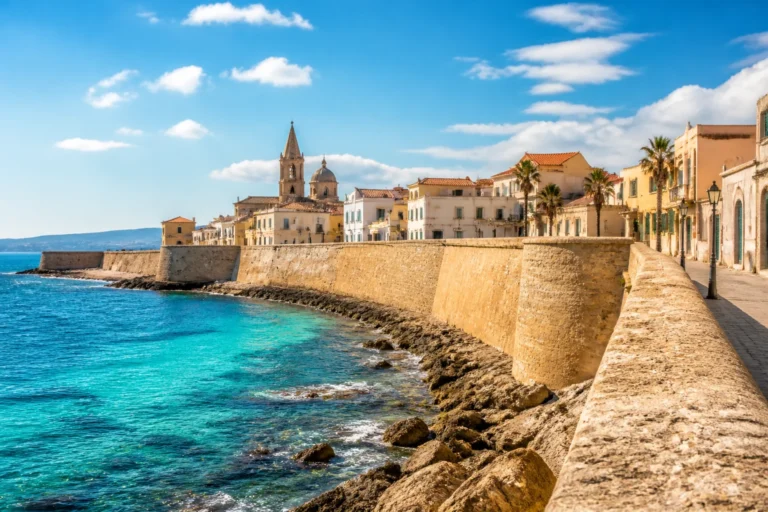
Alghero
Alghero, on the north-west coast of Sardinia, combines a historic centre with easy access to beaches and the coastal…
Explore destination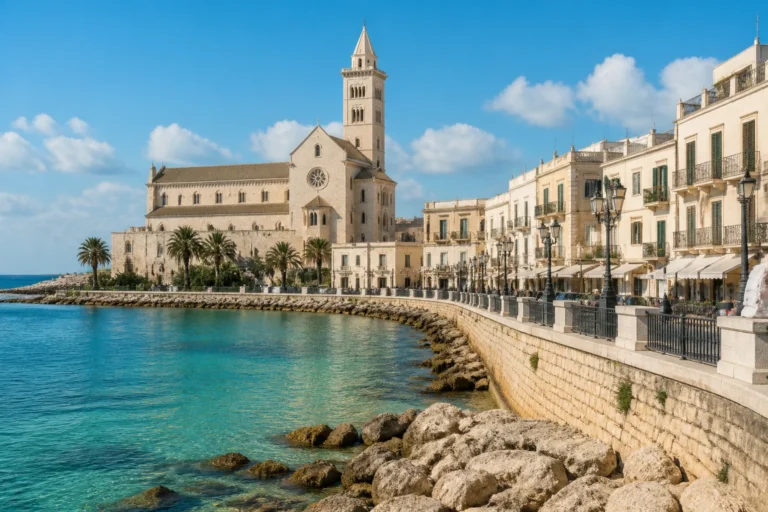 AI illustration
Bari
Bari is a practical, characterful gateway to Puglia, combining a walkable old town, a lively waterfront and an easy…
Explore destination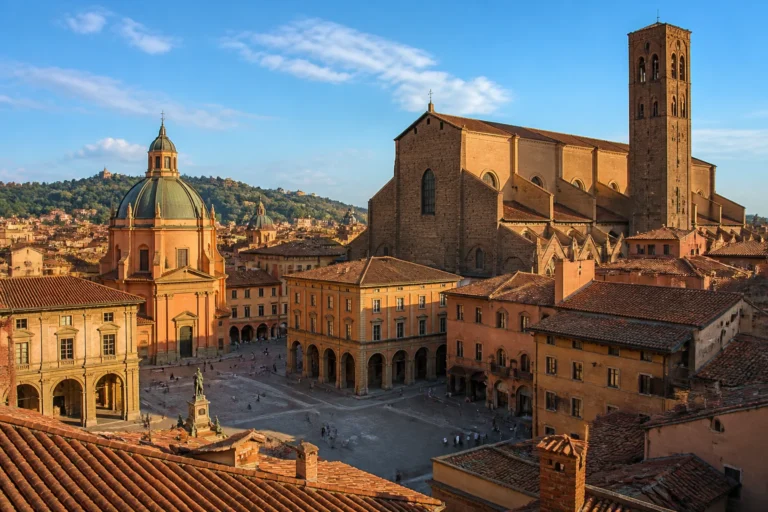 AI illustration
Bologna
Bologna is one of Italy’s most rewarding city breaks: compact enough to explore on foot, lively without feeling overwhelming,…
Explore destination AI illustration
Cagliari
Cagliari is Sardinia’s lively capital, where a compact historic centre, long city beaches and easy access to turquoise coastline…
Explore destination