
Italy · Europe
Bologna travel guide for independent travellers
Bologna is one of Italy’s most rewarding city breaks: compact enough to explore on foot, lively without feeling overwhelming, and especially good for travellers who care about food, history and everyday local life. Its porticoed streets, medieval towers and long student tradition give the city a distinctive character, while the wider Emilia-Romagna region makes it an easy base for short rail trips. This guide covers what to do, when to go and how to plan a practical visit.
Find flights to Bologna ↓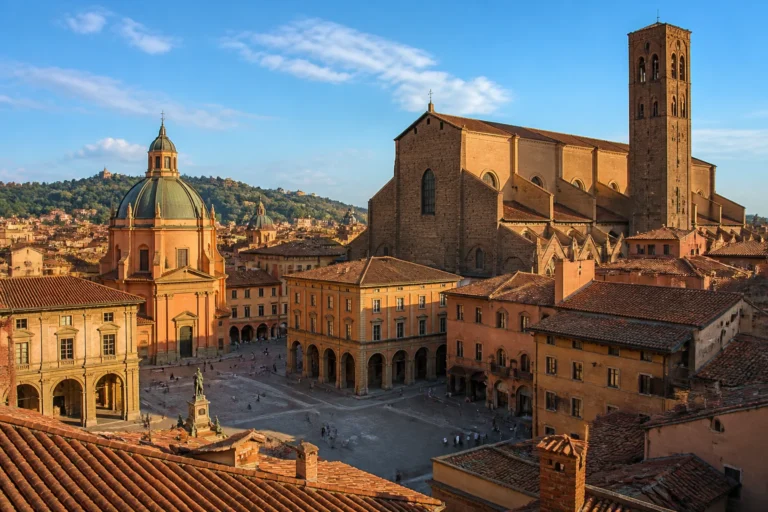 AI illustration
Find flights to Bologna
Compare flights · EURAbout Bologna
Bologna is the capital of Emilia-Romagna and one of northern Italy’s most historic university cities. The centre is known for its long porticoes, brick towers, elegant squares and a street plan that is easy to navigate once you understand the main north-south and east-west axes around Piazza Maggiore and the medieval core.
For many visitors, Bologna’s appeal is its balance: there is enough heritage for a classic Italian city break, but the atmosphere stays grounded and local. Cafés, markets, delis and student bars sit alongside churches, arcaded shopping streets and museums, so the city works well for travellers who like to mix sightseeing with relaxed wandering.
- Historic centre with compact, walkable streets
- Strong food culture and market traditions
- Good rail connections for day trips in Emilia-Romagna
Things to do in Bologna
Start in Piazza Maggiore, the main civic square, and work outward from there. Nearby are the Basilica di San Petronio, the Neptune Fountain and several important medieval and Renaissance buildings. This area is the best place to get a first impression of the city’s scale and rhythm.
Bologna’s porticoes are one of its defining features and a pleasure to explore in any season. Walking under them takes you past bookshops, bars and arcades that link major landmarks with less obvious corners of the centre. If you enjoy viewpoints, the city’s towers and higher vantage points can be rewarding, though access arrangements may vary and should be checked locally.
Food is a major part of the experience. Visit a market, sample tortellini or tagliatelle al ragù in a traditional trattoria, and spend time in the Quadrilatero area, where narrow streets are lined with food shops and informal places to eat. If you have more time, look for the university quarter, where the city feels younger and more everyday than the monumental centre.
- Piazza Maggiore and the civic heart of the city
- Portico walks through the historic centre
- Quadrilatero food area and local markets
- University district for a livelier, less formal atmosphere
Best time to visit Bologna
Bologna can be visited year-round, but spring and autumn are usually the most comfortable times for walking and café-hopping. In these seasons, the weather is often more pleasant for spending long days outdoors and the city feels active without the heavier summer crowds found in some Italian destinations.
Summer can be warm, with more emphasis on shaded walking routes, early sightseeing and slower afternoons indoors. Winter is quieter and can suit travellers who prefer museums, restaurants and city atmosphere over outdoor sightseeing, though daylight is shorter. If you are planning around festivals, university events or major local holidays, check dates in advance because they can affect accommodation availability and opening patterns.
- Spring and autumn are generally the easiest for sightseeing
- Summer suits early starts and longer indoor breaks
- Winter is calmer for food-focused city trips
How long to stay in Bologna
One full day is enough to see the main centre and get a feel for the city, but it is better treated as a minimum rather than an ideal. With two days, you can combine the headline sights with proper meals, a market visit and some unhurried neighbourhood walking.
Three days is a very good length for Bologna if you want a balanced city break. That gives you time for museums, tower views, food exploration and perhaps a side trip by train to a nearby Emilia-Romagna city. Longer stays work well if you enjoy slow travel, remote work or using Bologna as a base for regional trips.
- 1 day: brief introduction and central sights
- 2 days: enough for food, walking and one or two museums
- 3 days or more: comfortable for a slower, more local pace
Airports and transport
Bologna is served by Bologna Guglielmo Marconi Airport (BLQ), which is convenient for access to the city and the wider region. From the airport, travellers typically use a shuttle, bus, taxi or other local transfer option into the centre, depending on budget and timing. For the most current route details and operating information, check the airport and official transport providers before you travel.
Within the city, walking is often the simplest way to get around the historic core. Bologna is also served by local buses, and regional trains make it easy to reach other cities in Emilia-Romagna and beyond. If you are arriving by train, the main station is well placed for the centre, though the final approach may still be easier on foot or by bus depending on your accommodation.
- BLQ is the main airport for Bologna
- Historic centre is best explored on foot
- Regional trains are useful for nearby city trips
Where to stay in Bologna
For first-time visitors, staying near Piazza Maggiore, the Quadrilatero or the area between the centre and the main sights is usually the most convenient choice. You will be able to walk to restaurants, museums and evening activities without relying heavily on transport, which suits a short break.
Travellers who prefer a livelier feel may like the university quarter, where bars and casual eateries create more of a local everyday atmosphere. If you want easier access by rail or are planning onward travel, staying closer to the station can be practical, although the immediate surroundings are less atmospheric than the historic core. Families or longer-stay travellers may prefer quieter residential areas just outside the busiest streets, provided there is a straightforward route back into the centre.
- Historic centre for the easiest sightseeing
- University area for a younger, livelier atmosphere
- Near the station for practical rail connections
Practical tips for Bologna
Bologna rewards comfortable shoes and flexible plans. The centre is walkable, but the arcades can make distances feel longer if you are chasing several sights in one day. Build in time for coffee stops, meals and getting slightly lost in the side streets, which is often part of the appeal.
Food culture is serious here, so booking popular restaurants in advance can be sensible, especially for dinner or on busy weekends. If you want a more local experience, consider lunch at a market counter or trattoria rather than focusing only on the most famous dishes. As always in busy city centres, keep an eye on valuables and check official opening times for museums, towers and churches before setting out.
- Wear comfortable shoes for portico-lined walking routes
- Reserve popular dining spots when possible
- Check opening times and transport details locally before you go
Frequently asked questions about Bologna
Is Bologna easy to visit without a car?
Yes. Bologna’s historic centre is compact and walkable, and trains plus local buses are usually enough for getting around the city and making short regional trips.
What is Bologna best known for?
Bologna is known for its food culture, medieval architecture, university heritage and distinctive porticoes that run through much of the city centre.
Is Bologna a good base for day trips?
Yes. Bologna’s rail connections make it a practical base for exploring nearby cities and towns in Emilia-Romagna, provided you check current train times and connections.
How much time do you need in Bologna?
A day gives you a quick introduction, but two to three days is better if you want to combine the main sights with proper meals and a slower pace.
Where should first-time visitors stay in Bologna?
The historic centre is usually the most convenient choice for first-time visitors because it allows easy walking access to sights, restaurants and evening activities.
What kind of traveller will enjoy Bologna most?
Bologna suits travellers who like walkable cities, strong regional food, historic streets and a local atmosphere rather than a heavily tourist-focused break.
Travel information can change. Check official transport operators and attraction websites before booking.
Editorial review: 19 Oct 2026
More destinations to explore
 AI illustration
Alghero
Alghero, on the north-west coast of Sardinia, combines a historic centre with easy access to beaches and the coastal…
Explore destination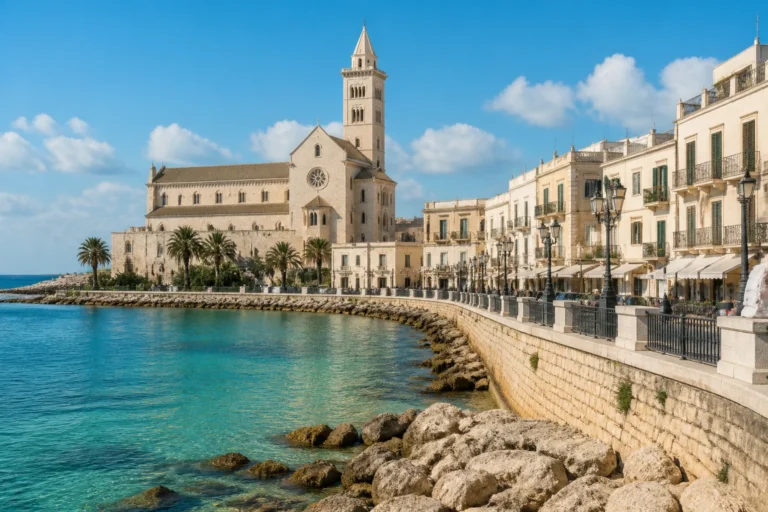 AI illustration
Bari
Bari is a practical, characterful gateway to Puglia, combining a walkable old town, a lively waterfront and an easy…
Explore destination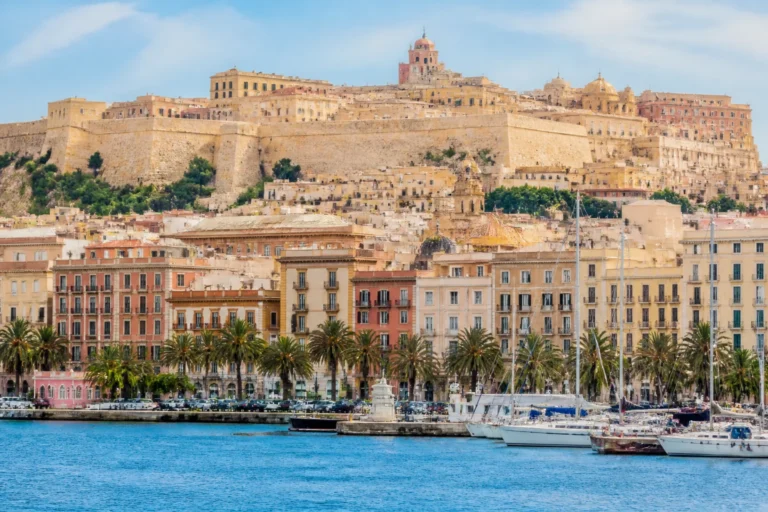 AI illustration
Cagliari
Cagliari is Sardinia’s lively capital, where a compact historic centre, long city beaches and easy access to turquoise coastline…
Explore destination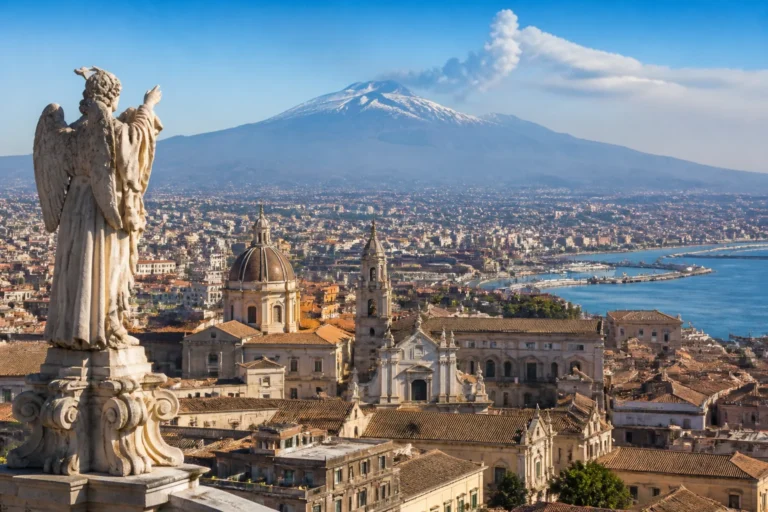 AI illustration
Catania
Catania is one of Sicily’s most characterful cities: busy, sunlit, a little rough around the edges, and full of…
Explore destination