
Spain · Europe
Tenerife Travel Guide: Areas, Airports and Things to Do
Tenerife is the largest of Spain’s Canary Islands, with volcanic landscapes, historic towns, coastal resorts and beaches that suit very different kinds of trip. Choosing where to stay matters: the south is a popular base for beach holidays, while the north offers greener scenery and easy access to historic La Laguna. This guide covers the island’s main areas, airports, transport options and practical points to consider when planning your visit.
Find flights to Tenerife ↓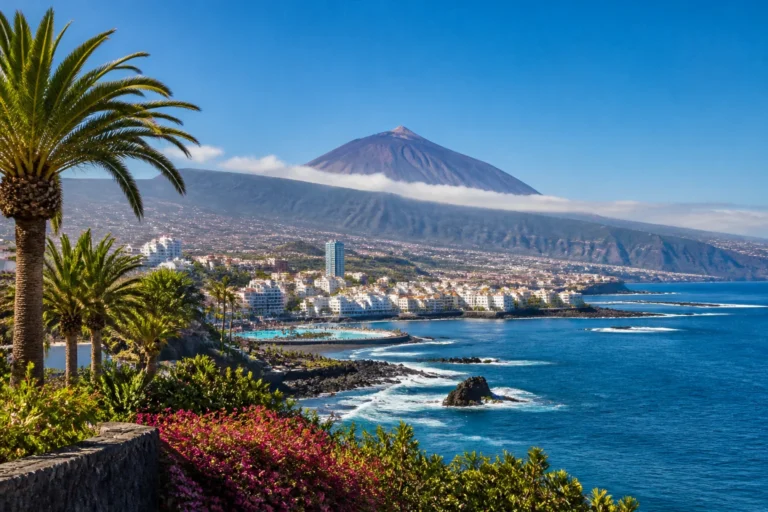 AI illustration
Find flights to Tenerife
Compare flights · EURWhat to expect from Tenerife
Tenerife is an island rather than a single city, and its character changes considerably from one coast to another. The south is known for established beach resorts and visitor facilities; the north has a greener landscape, traditional towns and a more urban feel around Santa Cruz de Tenerife and San Cristóbal de La Laguna. Inland, Mount Teide and its surrounding national park form the island’s most dramatic landscape.
The island can work well for a beach break, a walking holiday or a trip that combines both. A car gives more flexibility for reaching rural areas and viewpoints, but it is not essential if you plan to base yourself in one town and use public transport or organised excursions. For an island-wide itinerary, allow for travel times between regions rather than treating Tenerife as a compact resort.
- Volcanic scenery in and around Teide National Park
- Historic streets in La Laguna
- Beach resorts and coastal towns in the south
- Green landscapes and viewpoints in the north
Things to do in Tenerife
Teide National Park is a major draw for its volcanic terrain and high-altitude scenery. Visitors can explore viewpoints and walking routes, but conditions and access arrangements may differ by area and activity. Check official park information before setting out, especially if you plan a hike or want to use the cable car. The elevation can make exertion feel different from a coastal walk, so choose a route that suits your fitness and preparation.
For culture and architecture, spend time in La Laguna, whose historic centre is recognised by UNESCO, or explore the capital, Santa Cruz de Tenerife. Coastal options range from resort beaches in the south to the cliffs around Los Gigantes. Anaga Rural Park in the north-east offers forested trails and rugged scenery; use marked routes and check local guidance before walking.
You can also build a trip around swimming, boat excursions or a relaxed stay in one resort. These activities depend on local operators and conditions, so check details directly before making plans.
- Explore volcanic landscapes at Teide National Park
- Walk through the historic centre of La Laguna
- Visit Anaga for rural scenery and hiking
- Choose a south-coast base for beaches and resort facilities
When to visit Tenerife
Tenerife is a year-round destination, but the best time depends on your plans. Winter attracts visitors looking for a milder coastal break, while summer suits travellers combining beach time with longer days for exploring. School holidays and popular resort periods can bring greater demand, so plan accommodation and transport ahead if your dates are fixed.
Conditions vary between the coast and the mountains, and between the north and south. Cloud, wind or cooler temperatures may be more noticeable at altitude than by the sea. If Teide or hiking is central to your trip, build some flexibility into the itinerary and check local conditions and access information close to your visit.
How long to stay in Tenerife
Three or four days can suit a short break focused on one area, such as a southern resort or Santa Cruz and La Laguna. You may fit in a beach day and one or two excursions, but crossing the island repeatedly can take time, particularly on winding mountain roads.
A week gives more room to combine the coast, Teide, historic towns and a visit to the north or Anaga. For a slower trip or several hikes, consider staying longer. If you want to see both sides of the island, either hire a car for part of the visit or choose accommodation with convenient connections for your planned outings.
Tenerife airports and getting around
Tenerife has two airports: Tenerife South Airport (Reina Sofía, TFS) and Tenerife North Airport (Los Rodeos, TFN). They serve different parts of the island, so compare the airport location with your accommodation and planned activities, not just the flight itinerary. Check your booking documents carefully to confirm which airport you are using.
Buses operated by TITSA connect the airports with towns and other parts of Tenerife, though the most convenient route depends on your destination and may involve a change. Taxis are another option, while a hire car can be useful for reaching rural areas or making several stops. Check current routes, service times and airport pick-up arrangements with the relevant operator or provider.
Local buses serve many towns and resort areas. A car offers greater independence, but some mountain roads are narrow, steep or winding, and parking can be limited in busy places. Plan journeys with realistic time allowances and avoid assuming that a short distance on a map will be a quick drive.
- Tenerife South Airport (TFS)
- Tenerife North Airport (TFN)
- TITSA buses, taxis and car hire are transport options
Where to stay in Tenerife
Costa Adeje, Los Cristianos and Playa de las Américas are common choices for a south-coast holiday, with a wide range of accommodation and access to beaches and visitor services. The areas differ in atmosphere, so look at the specific location rather than choosing only by resort name. They are practical bases for travellers prioritising coastal facilities and organised activities.
Santa Cruz suits visitors who want a city base, while La Laguna offers a historic setting and a different pace. Puerto de la Cruz is a useful north-coast base for town life and access to nearby scenery. For a quieter or more rural stay, look beyond the main resorts, but check how far accommodation is from bus connections, shops and restaurants before booking.
- South: Costa Adeje, Los Cristianos and Playa de las Américas
- City stays: Santa Cruz de Tenerife or La Laguna
- North coast: Puerto de la Cruz
Practical tips for planning a Tenerife trip
Choose your base around the activities you most want to do. Staying on one coast and making occasional day trips can be more straightforward than changing accommodation repeatedly. If you plan to visit Teide, Anaga or several towns, check journey options before booking and allow for the island’s varied terrain.
For mountain walks, bring suitable footwear, water and layers, as conditions can differ from those at the coast. Check official guidance for trail access, park rules and any activity-specific requirements before travelling. In towns and resorts, walking can be easy in central areas, but hills and distances may make transport useful for longer journeys.
When comparing flights on FlyGo.si, check whether the arrival airport matches your plans and factor in the onward journey to your accommodation. Confirm current transport details with official operators, and review accommodation location, cancellation terms and any hire-car conditions directly with the provider.
Frequently asked questions about Tenerife
Which airport should I choose for Tenerife?
Tenerife South (TFS) is convenient for many southern resorts, while Tenerife North (TFN) can suit trips based around Santa Cruz, La Laguna or the north. Compare the airport with your accommodation and check the onward transport before choosing.
Can I visit Teide without hiring a car?
It may be possible to reach the area by public transport or an organised excursion, but options depend on your starting point and current services. Check official transport information and park access details before planning the visit.
Is one week enough to explore Tenerife?
A week is enough for many visitors to combine a coastal base with several excursions, such as Teide, La Laguna or the north coast. The island has varied terrain, so prioritise the places that interest you rather than trying to cover every area.
Where should I stay in Tenerife for a beach holiday?
Costa Adeje, Los Cristianos and Playa de las Américas are established south-coast bases with access to beaches and visitor facilities. Compare the exact location and atmosphere of each area, as they are not interchangeable.
Do I need a car in Tenerife?
No, not for every trip. Buses and taxis can work for a stay focused on one town or resort, while a car gives more flexibility for rural areas and multiple stops. Check current connections and consider parking and mountain-road conditions.
Travel information can change. Check official transport operators and attraction websites before booking.
Editorial review: 23 Oct 2026
More destinations to explore
 AI illustration
Alicante
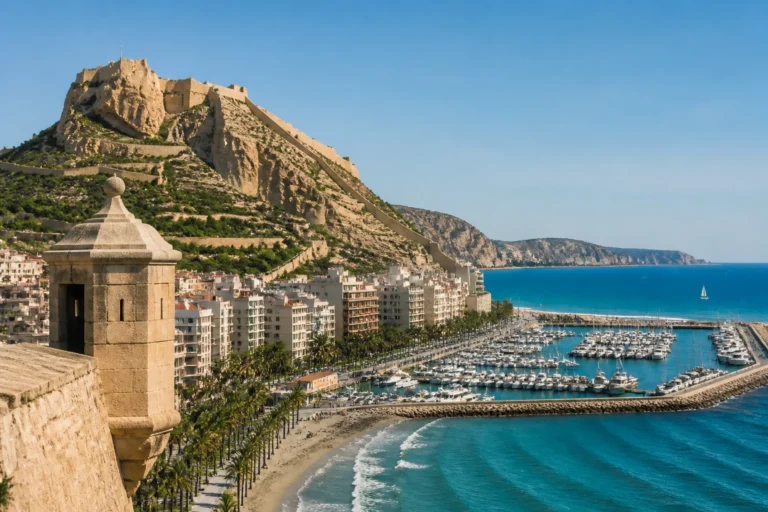
Alicante is an easygoing Mediterranean city where a compact old centre, a long waterfront and a busy local food…
Explore destination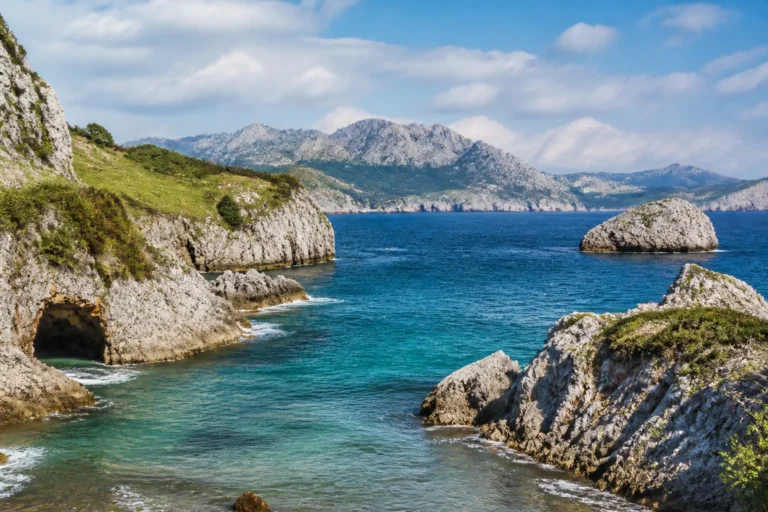 AI illustration
Asturias
Asturias is a region in northern Spain where compact cities, Atlantic beaches and green mountain landscapes make very different…
Explore destination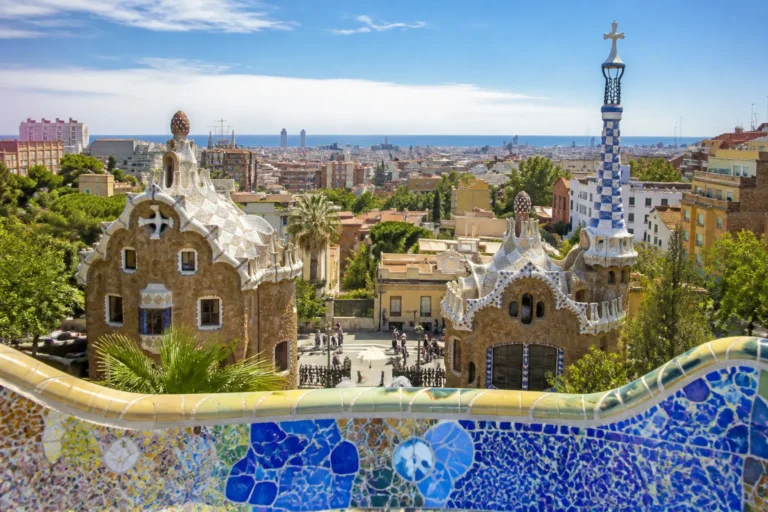 AI illustration
Barcelona
Barcelona mixes a compact city break with beach time, neighbourhood wandering and a strong food-and-culture scene. For European independent…
Explore destination AI illustration
Bilbao
Bilbao is one of northern Spain’s most interesting city breaks: compact enough to explore on foot in parts, but…
Explore destination