
United Kingdom · Europe
Manchester travel guide for independent travellers
Manchester is one of the UK’s most straightforward cities for a short break: compact enough to explore without much planning, but varied enough to reward curiosity. It mixes industrial heritage, football culture, music history, museums, canals and a strong food and nightlife scene. For European travellers arriving on a short flight, it works well as a city-first destination with easy day-trip options and a practical transport network.
Find flights to Manchester ↓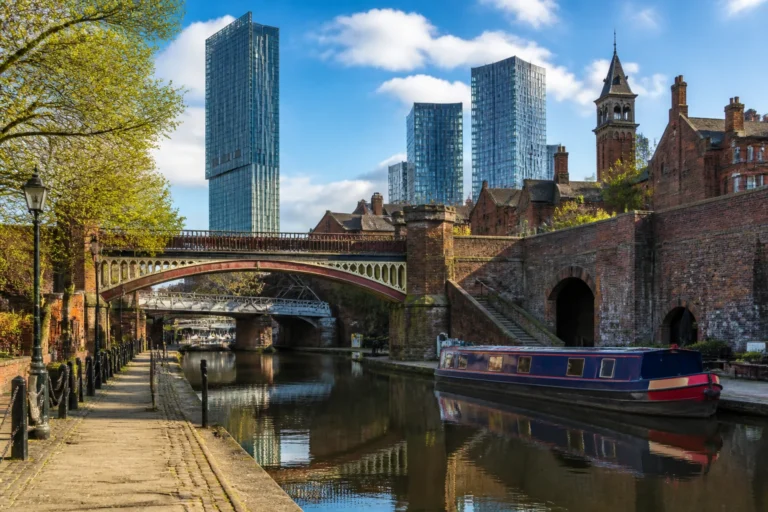 AI illustration
Find flights to Manchester
Compare flights · EURAbout Manchester
Manchester is a major city in northwest England with a character shaped by industry, migration, sport and music. The centre is walkable in sections, but the city is big enough that each district feels slightly different: the retail and business core, the canal-side and warehouse areas, university zones, and neighbourhoods with local pubs, independent cafés and live venues. It is a useful destination for travellers who like cities with history but prefer them to feel lived-in rather than polished.
For visitors, Manchester works best when you mix a few headline sights with time for ordinary city life. You can move from old mills and civic buildings to modern galleries, stadium areas and neighbourhood restaurants without needing a rigid itinerary. It is also a good base for exploring northern England if you want to combine urban sightseeing with a second stop elsewhere, but even on its own it offers enough variety for a full weekend.
- Compact central areas with distinct neighbourhoods
- Strong museums, music and football culture
- Easy base for a city break or onward travel
Things to do in Manchester
Start with the city centre and its key cultural stops. The Science and Industry Museum is a natural choice for Manchester because it helps explain the city’s role in the Industrial Revolution, while the Central Library area, town hall surroundings and nearby streets give a sense of the civic heart of the city. For art and design, the city has several galleries and smaller exhibition spaces worth checking depending on your interests.
Football is a major part of Manchester’s identity, even for travellers who are not dedicated fans. Stadium visits and museum tours are popular, but the exact experience depends on match schedules and club access, so it is worth checking official sites before planning. Beyond football, make time for the Northern Quarter for independent shops, coffee, record stores and street art, plus the canal-lined areas around Castlefield for a quieter walk that still feels central. In the evening, the city has a wide range of pubs, live music rooms, theatres and restaurants, so it is easy to tailor the pace to your trip.
If you have more time, look at Manchester’s neighbourhood character rather than only the centre. Salford Quays, Ancoats and Didsbury each show a different side of the city, from waterfront redevelopment to food-led urban districts and more residential local streets. This is the kind of place where a casual wander often reveals as much as a checklist of sights.
- Industrial heritage at museums and old canal-side areas
- Northern Quarter for independent shops and street life
- Football culture and stadium-related visits
- Live music, pubs and theatres in the evening
Best time to visit Manchester
Manchester is a year-round city break destination, but the experience changes more in mood than in essentials. Spring and early autumn are often comfortable for walking around and sitting outdoors, while summer brings longer days and a fuller events calendar. Winter can feel atmospheric, especially around festive markets and indoor venues, but it is sensible to plan for changeable weather and more time indoors.
If your priorities are museums, restaurants and neighbourhood wandering, any season can work. If you want a busier cultural calendar, check what is on before booking. For football travellers, the exact timing of the trip may be dictated by match fixtures, and that can affect hotel demand and neighbourhood atmosphere, particularly on game days. As always, official event and transport sites are the right place for current details.
- Spring and early autumn are often comfortable for walking
- Summer offers longer daylight and more events
- Winter suits indoor attractions and festive atmosphere
How long to stay in Manchester
Two full days is enough for a first look at Manchester if you want the city centre, one or two museums, a neighbourhood like the Northern Quarter and an evening out. That works well for travellers pairing the city with another UK destination. If you prefer to travel slowly, three days gives you room to add a stadium tour, a canal walk, more time for shopping or cafés, and perhaps a visit to a less central district.
A longer stay makes sense if you want to use Manchester as a base. The city connects easily with other places in the region, and you could add day trips without feeling rushed. For most independent travellers, the sweet spot is a weekend plus part of a third day, which balances sightseeing with enough flexibility for meals, shopping and spontaneous stops.
- 2 days for a concise first visit
- 3 days for neighbourhoods, museums and an extra experience
- Longer stays suit day trips and slower travel
Airports and transport
Manchester Airport is the main arrival point for the city and one of the busiest in the UK, with rail and road connections into the centre. Travellers should check which terminal they use and how to reach their accommodation before arrival, because transfer times vary by time of day and by mode. If you are connecting onward, allow extra time for UK rail or road travel and check the latest information with official operators.
Within the city, public transport and walking usually cover most needs. Trams, buses and trains can help you move between the centre, surrounding districts and the airport corridor, but service patterns can vary, so plan routes in advance rather than assuming frequent late-night options. For the central area, walking is often the easiest choice, especially if your hotel is near the main stations or in a neighbourhood like the Northern Quarter or Castlefield. Taxis and ride-hailing can be useful for late arrivals or heavier luggage, but it is still worth checking pickup points and local access rules.
If you are arriving from elsewhere in Europe, Manchester is a practical city for a short break because the airport is directly tied into the urban area rather than sitting at a long remove from it. That said, it is best to keep your transport expectations flexible and verify current timetables, especially on weekends, holidays and during engineering works.
- Manchester Airport is the main gateway
- Trams, trains and buses serve the wider city
- Walking is often the simplest way around the centre
Where to stay in Manchester
For a first trip, staying central is usually the most convenient option. The city centre and the areas just north of it make it easier to walk to museums, restaurants, nightlife and rail links. The Northern Quarter is a good fit if you want independent cafés, bars and a more creative feel, while the core shopping and business streets suit travellers who prefer straightforward access and a wider range of hotels.
Castlefield can work well if you like a calmer atmosphere close to the centre, especially if you want canal walks and easy access to major sights. If your trip is shaped by football, choose your area with stadium access in mind rather than assuming the centre is always the best base. For longer stays or repeat visits, neighbourhoods such as Ancoats or Didsbury can be more relaxed and local-feeling, though you may rely more on transport to move around.
When choosing accommodation, think about your evening plans and your arrival time more than just the map. Manchester’s centre is compact, but a hotel near a station or tram stop can save time if you are arriving late or planning day trips. If you are sensitive to noise, busy nightlife areas may be less suitable on weekends.
- City centre for convenience and easy connections
- Northern Quarter for cafés, bars and creative energy
- Castlefield for a quieter, walkable setting
Practical tips for Manchester
Manchester is easy to enjoy when you keep plans flexible. Weather can change quickly, so light layers and a waterproof outer layer are sensible whatever the season. If you want to make the most of museums, stadium visits or live events, book ahead where possible and check opening details directly with the venue, especially on holidays or match days.
The city has a strong food and nightlife scene, but opening patterns can vary by neighbourhood and day of the week. If you are arriving for a weekend, reserve popular restaurants in advance and avoid leaving all your evening plans to the last minute. For transport, have a backup route in mind in case trams or trains are disrupted, and keep an eye on station or operator updates on the day of travel.
Manchester is also a good city for pacing yourself. You do not need to pack every neighbourhood into one visit; combining a couple of planned activities with time to wander usually gives the best sense of the place. That approach suits the city’s mix of heritage, modern redevelopment and everyday local life.
- Bring layers and be ready for changing weather
- Book popular meals and visits ahead where sensible
- Plan around football and event days if relevant
Frequently asked questions about Manchester
Is Manchester easy to visit without a car?
Yes. Most visitors can get by using a mix of walking, trams, trains and buses, especially if they stay in or near the centre. A car is more useful if you are continuing into the wider region or making several out-of-city trips.
Which area is best for a first-time stay in Manchester?
The city centre is usually the easiest choice, with the Northern Quarter and Castlefield also popular for their atmosphere and access to attractions. Choose based on whether you want nightlife, a quieter base or the simplest transport links.
How much time do I need for Manchester?
A weekend is enough for a first impression, including museums, a neighbourhood walk and an evening out. Three days gives you more room for a stadium visit, slower meals and a better look at different districts.
Is Manchester only worth visiting for football?
No. Football is a big part of the city’s identity, but Manchester also has strong industrial heritage, music history, galleries, shopping areas and a lively food and bar scene. Many visitors enjoy it even if they are not football fans.
Can Manchester work as a base for day trips?
Yes, it can. The city has strong rail and road connections, so it works well if you want to combine a city stay with nearby places in northern England. Check current transport options and timings with official operators before you plan exact day trips.
When should I book accommodation in Manchester?
Book earlier if your trip overlaps with major events, football fixtures or busy holiday periods. At quieter times, there is more flexibility, but central hotels can still fill up quickly on weekends.
Travel information can change. Check official transport operators and attraction websites before booking.
Editorial review: 23 Oct 2026
More destinations to explore
 AI illustration
Birmingham
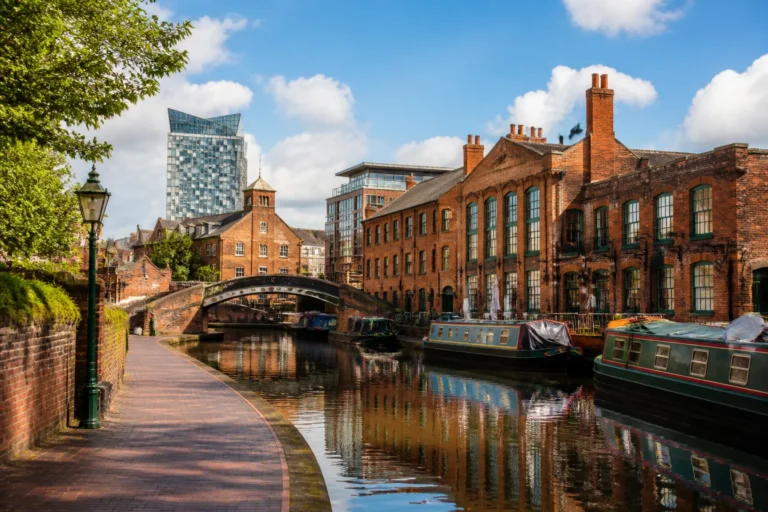
Birmingham combines an industrious past with a lively cultural scene, independent neighbourhoods and a network of canals through the…
Explore destination AI illustration
Bristol
Bristol combines a historic harbour and maritime heritage with independent shops, a lively food scene and a strong creative…
Explore destination AI illustration
Edinburgh
Edinburgh pairs a compact, walkable centre with historic streets, grand Georgian architecture and views towards hills and the Firth…
Explore destination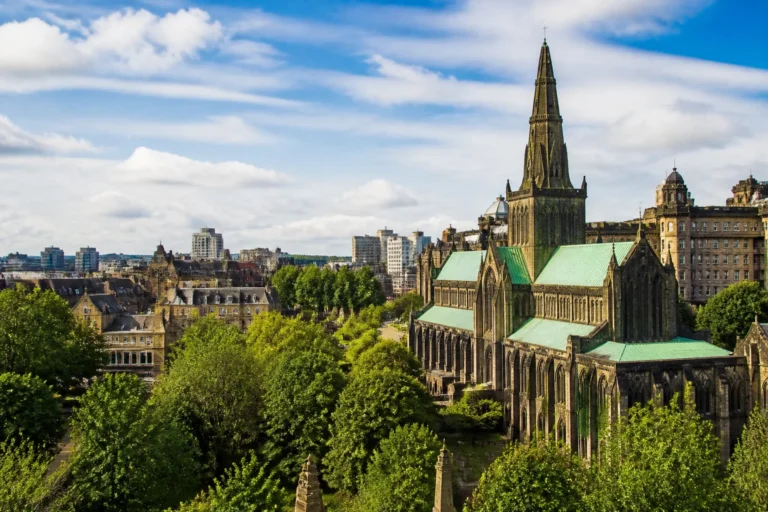 AI illustration
Glasgow
Glasgow combines grand Victorian architecture, a lively music scene and a strong cultural offer with a distinctly local feel.…
Explore destination