
United Kingdom · Europe
London Travel Guide for Independent Travellers
London is a city that rewards planning but still leaves room for spontaneity. For independent travellers, it offers a mix of major museums, neighbourhoods with distinct personalities, easy day-to-day public transport, and endless choices for food, theatre, and riverside walks. This guide focuses on how to experience London practically and comfortably, whether you are visiting for a first overview or returning to explore beyond the main sights.
Find flights to London ↓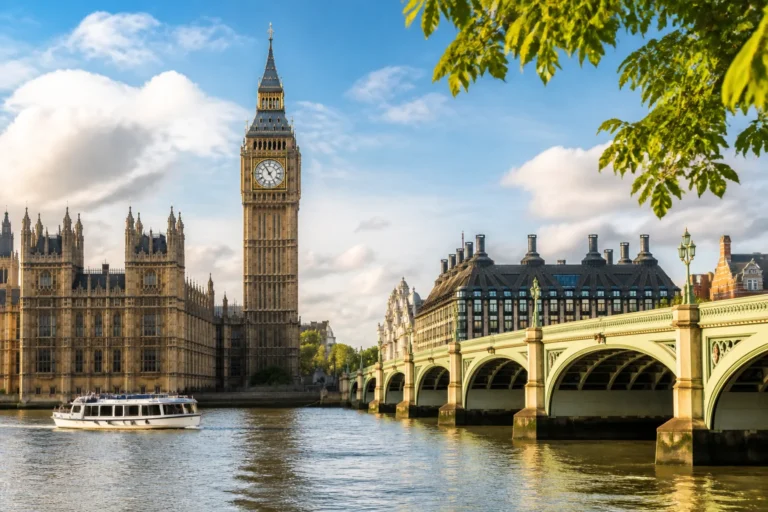 AI illustration
Find flights to London
Compare flights · EURAbout London
London is one of Europe’s most layered capitals, with royal landmarks, financial districts, residential neighbourhoods, and green spaces all coexisting within one very large city. The River Thames is a useful reference point, but most visitors experience London by moving between areas such as Westminster, the South Bank, Covent Garden, Shoreditch, Camden, Notting Hill, and Greenwich.
It is a city where museums are often a major draw, but London’s real appeal for independent travellers is the variety between districts. You can spend one morning in a grand national museum, take a walk through a park in the afternoon, and end the day in a neighbourhood pub, a food market, or a theatre district. Public transport makes this structure relatively easy to navigate compared with many cities of similar size.
- Big-city scale with strong neighbourhood character
- Excellent museums and galleries, many with free general admission
- A good fit for travellers who like mixing sightseeing with local life
Things to Do in London
Start with the classic landmarks if it is your first visit: Westminster, the Houses of Parliament area, Buckingham Palace, the Tower of London, Tower Bridge, and the South Bank all give a clear sense of the city’s history and scale. Many travellers pair these with a river walk, since the Thames ties together several major sights and offers some of the best open views in central London.
After that, focus on what interests you most. Museum lovers can spend days around South Kensington, where several major collections sit close together. If you prefer streets, markets, and independent shops, look at areas such as Borough, Spitalfields, Camden, and Notting Hill. For evenings, London is especially strong for theatre, live music, cocktail bars, and restaurant scenes that vary widely by district.
- Walk the South Bank for views and easy sightseeing
- Use neighbourhood markets to sample different parts of the city
- Leave time for at least one museum or gallery day
- Add a theatre evening if you want a classic London experience
Best Time to Visit London
London can be visited year-round, but your experience will depend less on perfect weather than on how crowded you are willing to be. Spring and early autumn are often attractive for walking, parks, and outdoor cafés, while summer brings longer days and a fuller events calendar alongside more visitors. Winter can be a good choice for museum-heavy trips, shopping streets, and festive atmosphere, though daylight is shorter.
If you are sensitive to queues and congestion, aim for weekdays outside major school holiday periods when possible. Whatever the season, London’s indoor attractions make it relatively flexible in unsettled weather, so it helps to build a list of both outdoor and indoor options for each day.
- Spring and early autumn suit walking and parks
- Summer offers long daylight and more events
- Winter works well for museums, shopping, and theatre
How Long to Stay in London
For a first visit, three full days is enough to see a useful cross-section of London without constantly rushing. That usually allows for one day of central landmarks, one museum-and-neighbourhood day, and one more flexible day for markets, parks, or a river area such as Greenwich or the South Bank.
If you want to explore at a calmer pace, four to five days is more comfortable. That gives you time to move beyond the obvious sights, build in a theatre night, and take an easier approach to lunches, cafés, and neighbourhood wandering. Longer stays are worthwhile if you plan day trips or want to see London as a place to live, not just to visit.
- 3 days for a solid first overview
- 4–5 days for a slower, more rounded trip
- Longer stays suit travellers who enjoy neighbourhood exploration
Airports and Transport in London
London is served by several airports, and the best arrival point depends on your airline and route rather than the city itself. From any London airport, check official airport and transport operator information for current rail, coach, or bus options into central areas. Because transfer times vary by airport and time of day, it is worth choosing accommodation with a realistic onward journey in mind, especially if you land late or travel with heavy luggage.
Within the city, the Underground, Overground, buses, and rail services form a dense network that usually makes car hire unnecessary for short visits. Contactless payment and travel cards are widely used, but travellers should still confirm the most suitable option for their length of stay and the zones they expect to use. For many visitors, the simplest strategy is to combine rail for longer hops with walking between nearby sights, since London rewards short-distance exploration.
- Multiple airports serve the city, so compare transfer options by route
- Public transport is usually the easiest way to get around
- Walking between neighbouring sights can save time and add context
Where to Stay in London
For a first trip, staying in or near the West End, Covent Garden, South Bank, or Westminster can reduce transport friction and place you close to major sights and evening options. These areas are convenient, but they are not the only good choices, and some travellers may prefer a calmer district with better value and more local character.
If you want atmosphere and nightlife, look at Shoreditch, Soho, or parts of Camden. For a quieter base with leafy streets, consider Kensington, Bloomsbury, or Greenwich. The best area depends on your priorities: quick access to landmarks, an interest in food and nightlife, or a more residential feel. In a city as spread out as London, choosing the right neighbourhood often matters more than finding a hotel near one single attraction.
- Central areas are convenient for a first visit
- Lively districts suit nightlife and food-focused trips
- Quieter neighbourhoods can feel more relaxed for longer stays
Practical Tips for Visiting London
London is easy to enjoy when you plan around distance, not just attractions. Map out clusters of sights and do not try to cross the city too many times in one day. If you are using public transport, allow extra time for transfers and busy periods, especially at commuter hours. Comfortable walking shoes are important because even short sightseeing routes can add up.
It also helps to build in everyday London experiences rather than only headline attractions. A park walk, a museum café, a market lunch, or a pub stop can make the trip feel less rushed. If you are travelling with limited time, book any must-see timed entries well ahead through the official venue channels and keep the rest of the itinerary flexible.
- Plan by neighbourhood to reduce unnecessary cross-city travel
- Use transport and walking together rather than relying on one mode
- Mix major sights with everyday cafés, parks, and markets
Frequently asked questions about London
Is London easy to visit without a car?
Yes. London is one of the easier large European cities to visit without a car because public transport covers most visitor areas and many attractions are walkable within neighbourhood clusters.
Which area is best for a first stay in London?
For a first visit, many travellers find central areas such as Covent Garden, the West End, South Bank, or Westminster convenient because they reduce travel time to major sights and evening activities.
Do I need to pre-book attractions in London?
For some popular attractions, timed entry or advance booking can help you avoid disappointment, especially in busier periods. Check each venue’s official website for current arrangements before you go.
Can I see a lot of London in three days?
Yes, three days is enough for a useful introduction if you focus on a few well-chosen areas rather than trying to cover the whole city. A neighbourhood-based plan works best.
Are London’s museums suitable for a rainy day?
Absolutely. London’s museum and gallery scene is one of its biggest strengths, so it is a good city for flexible itineraries when the weather changes.
Is London only for major landmarks and shopping?
No. While the landmarks are important, London is also about parks, markets, theatre, local pubs, riverside walks, and distinct neighbourhoods that feel very different from one another.
Travel information can change. Check official transport operators and attraction websites before booking.
Editorial review: 23 Oct 2026
More destinations to explore
 AI illustration
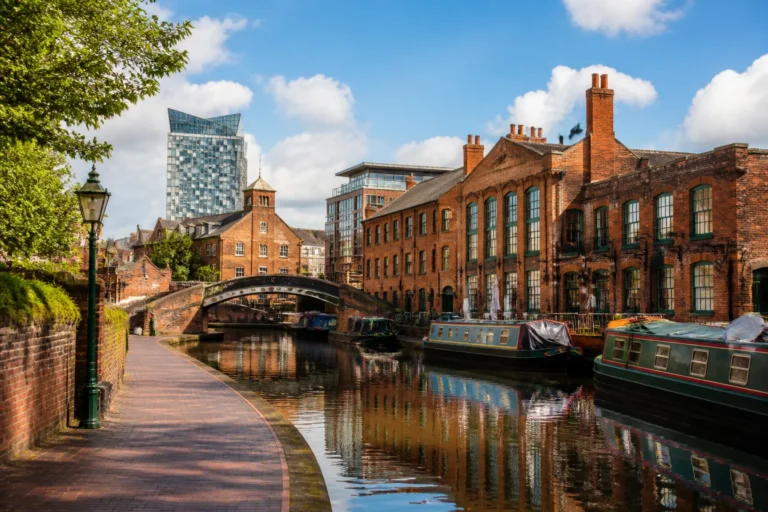
Birmingham
Birmingham combines an industrious past with a lively cultural scene, independent neighbourhoods and a network of canals through the…
Explore destination AI illustration
Bristol
Bristol combines a historic harbour and maritime heritage with independent shops, a lively food scene and a strong creative…
Explore destination AI illustration
Edinburgh
Edinburgh pairs a compact, walkable centre with historic streets, grand Georgian architecture and views towards hills and the Firth…
Explore destination AI illustration
Glasgow
Glasgow combines grand Victorian architecture, a lively music scene and a strong cultural offer with a distinctly local feel.…
Explore destination