
United Arab Emirates · Asia
Dubai travel guide for independent travellers
Dubai is a fast-moving city of skyline views, neighbourhood contrasts and easy stopover logistics, but it also rewards travellers who look beyond the obvious landmarks. This guide focuses on how to plan a practical trip: what to see, how long to stay, where to base yourself and how to move around without wasting time. It is aimed at independent travellers who want a clear, useful overview before booking.
Find flights to Dubai ↓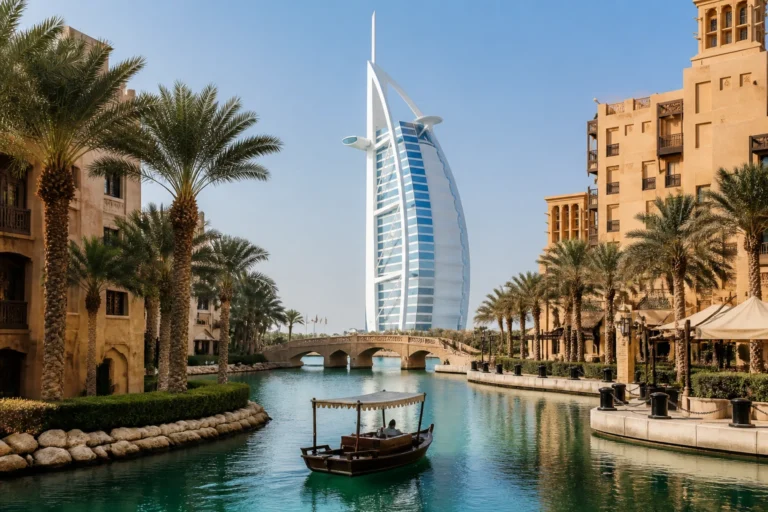 AI illustration
Find flights to Dubai
Compare flights · EURAbout Dubai
Dubai is one of the United Arab Emirates’ most recognisable cities, known for its modern skyline, large shopping districts, resort-style coastline and strong air connectivity. For visitors, it works well as both a destination in its own right and a stopover city, with enough variety to fill several days if you plan beyond the headline attractions.
The city is spread out, so your experience changes a lot depending on where you stay. Downtown Dubai and the Marina feel polished and built for visitors, while older areas such as Deira and Bur Dubai are better for markets, local routines and a more practical base. That mix is part of Dubai’s appeal: you can pair contemporary architecture with creek-side heritage areas and beach time in the same trip.
- Large, spread-out city with distinct neighbourhoods
- Good stopover destination and short city break
- Mix of modern attractions and older trading areas
Things to do in Dubai
The most familiar Dubai itinerary includes the Burj Khalifa area, Dubai Mall and the surrounding fountains and promenades, but it is worth balancing that with experiences that show the city’s wider character. The historic districts around Dubai Creek, including the souks and traditional crossing points, give a sense of how the city developed from trading roots into a major global hub.
For a more relaxed day, many travellers head to the beach districts, marina walkways or landscaped parks and waterfronts. If you like shopping, Dubai has everything from luxury malls to neighbourhood markets, but even if retail is not your priority, malls can be useful for dining, climate control and easy transport connections. Many visitors also add a desert excursion, though it is best to choose operators carefully and check what is included before you book.
If you prefer slower sightseeing, look for cultural spaces, small museums, architecture-focused walks and boat rides on the creek or along the marina. Dubai is not a city where everything happens in one compact centre, so combining two or three areas in a day usually works better than trying to see too much at once.
- Downtown Dubai and Burj Khalifa area
- Dubai Creek, souks and older trading districts
- Beach, marina and waterfront walks
- Desert excursions and evening outings
- Malls, dining and indoor attractions
Best time to visit Dubai
Dubai can be visited year-round, but the most comfortable months for many travellers are usually in the cooler part of the season, when walking, sightseeing and outdoor dining are easier to enjoy. In hotter periods, visitors often structure days around indoor attractions, shopping centres, taxis and evening activities rather than long daytime walks.
If you are flexible, think about what matters most to you: easier weather for sightseeing, calmer hotel pricing patterns, or being in the city during a major event or holiday period. Because Dubai’s calendar can be busy, it is sensible to check local events, religious observances and school holiday periods before you finalise plans.
- Cooler months are generally easier for walking and outdoor plans
- Hotter periods suit indoor-focused itineraries
- Check event calendars and local holiday periods before booking
How long to stay in Dubai
A short stay of two to three days works for a first look at Dubai if your priority is the skyline, a creek visit and one or two neighbourhoods. That is enough for a stopover, but it can feel rushed if you want to add beach time, a desert trip and some unhurried meals.
For a more rounded visit, three to five days is often the sweet spot. That gives you time to separate the city into zones, avoid spending the whole trip in taxis, and see more than the most famous central sights. If you plan to use Dubai as a base for a broader United Arab Emirates itinerary, you may want longer, especially if you like slower sightseeing or shopping.
- 2–3 days for a focused stopover
- 3–5 days for a fuller city break
- Longer stays suit beach time and day-trip style plans
Airports and transport in Dubai
Dubai is served by Dubai International Airport, which is a major global hub and usually convenient for arriving in the city from Europe and beyond. Depending on your route, you may also see other airport options in the wider emirate, so it is worth checking which airport your flight actually uses and how far it is from your hotel.
Getting around Dubai is usually straightforward if you combine public transport and taxis. The metro is useful for some major districts and can be a good option when your hotel and destination are both near stations. Taxis are widely used for door-to-door trips, especially in hot weather or when you are carrying luggage. For more local movement, buses and tram connections can help, but they require a little more planning. If you are renting a car, remember that parking and road layouts can be part of the equation in a city as spread out as Dubai.
For airport transfers, the practical choice depends on where you stay and when you arrive. Check official transport operators and your hotel for the latest advice, especially if you land late at night or travel with family or heavy bags.
- Dubai International Airport is the main arrival point
- Metro works well for selected districts
- Taxis are a practical option for most visitors
- Check official transport details for the latest connections
Where to stay in Dubai
Downtown Dubai is a strong base if you want the main sights, shopping and a polished city feel within reach. It suits first-time visitors who plan to spend a lot of time around the Burj Khalifa, Dubai Mall and central dining areas, though it can feel less local and more visitor-oriented.
The Marina and nearby waterfront districts are popular with travellers who prefer a modern, walkable evening atmosphere, beach access and plenty of restaurants. Deira and Bur Dubai are better choices if you want a more traditional setting, easier access to older parts of the city and often more practical accommodation options for a city-focused stay. Jumeirah-style beach areas work well for resort-like breaks, but they may be less convenient if you plan to sightseeing-hop across the city.
The best area for you depends on whether you want convenience, a beach base, heritage atmosphere or nightlife. Because Dubai is spread out, location matters more than in many compact cities.
- Downtown for first-time visitors and central sights
- Marina for waterfront dining and beach access
- Deira and Bur Dubai for older neighbourhoods
- Choose location carefully to reduce cross-city travel
Practical tips for visiting Dubai
Dubai is easy to enjoy when you plan around distances and climate. Build your days by area rather than by individual attraction, and leave room for indoor breaks if you are visiting during warmer months. In many cases, a single district can fill half a day once you factor in meals, transport and time spent moving between places.
Dress, etiquette and cultural expectations can matter more in some settings than others, particularly in older districts, religious spaces and public places that are less tourist-focused. Keep an eye on local norms and official guidance, and adapt your clothing and behaviour to the setting. It is also sensible to confirm opening times directly with attractions, since hours can vary by season, holiday or event.
For flights, Dubai is a well-connected airport city, so it often works well for multi-city trips. If you are comparing routes on FlyGo.si, think about total travel time, arrival airport, and how easy it will be to get from the airport to your hotel before you book.
- Plan by district to reduce transport time
- Check opening hours and local observances in advance
- Choose clothing and behaviour that fit the setting
- Compare routes by total journey time, not just the flight
Frequently asked questions about Dubai
Is Dubai a good destination for a short stopover?
Yes. Dubai works well for a stopover because it has a major airport, straightforward transport options and enough central sights to fill one to three days without needing a complex itinerary.
Which part of Dubai is best for first-time visitors?
Downtown Dubai is often the simplest base for first-time visitors because it is close to major landmarks, dining and shopping, though the Marina and beach areas suit travellers who prefer a more relaxed waterfront feel.
Can you get around Dubai without a car?
Yes. Many visitors use a mix of metro, taxis and walking within specific districts. A car is not essential for a city stay, but it can be useful if you plan to move between several far-apart areas.
What should I prioritise on a first trip to Dubai?
A balanced first trip usually includes the central skyline area, one older district around Dubai Creek, and at least one waterfront or beach experience. That gives you a better sense of the city than focusing on shopping malls alone.
Is Dubai better for sightseeing or shopping?
It can work for both. Dubai is famous for shopping, but it also has skyline views, heritage districts, waterfront spaces and desert activities, so most travellers can build a trip around more than one interest.
How far in advance should I plan a Dubai trip?
It is sensible to plan flights and accommodation early if you want a specific area or are travelling during a busy period. For activities and transport, check current official details close to departure because schedules and availability can change.
Travel information can change. Check official transport operators and attraction websites before booking.
Prepared with AI assistance and reviewed by the FlyGo editor.
Editorial review: 6 Oct 2026