
Greece · Europe
Paros Travel Guide: Beaches, Villages and Practical Tips
Paros combines sandy beaches and clear-water bays with lively harbour towns, traditional villages and easy opportunities for island-hopping. Parikia is the main arrival point and a useful base, while Naoussa draws visitors looking for a busy waterfront and Lefkes offers a quieter inland contrast. This guide covers what to see, when to go, where to stay and how to plan flights and local transport around the island.
Find flights to Paros ↓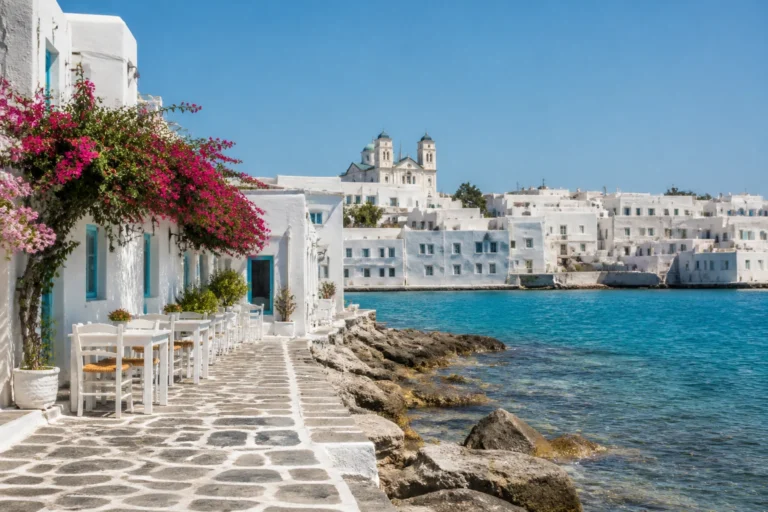 AI illustration
Find flights to Paros
Compare flights · EURWhat to expect from Paros
Paros is a Cycladic island in the Aegean, known for its beaches, whitewashed settlements and connections by sea to other islands. Its main town, Parikia, clusters around the port, while Naoussa on the north coast has a compact harbour and a lively dining scene. Inland, villages such as Lefkes offer a slower pace and a glimpse of island life away from the waterfront.
The island can suit different kinds of trips: a beach break, a few days of village-hopping or a stop as part of a longer Greek island itinerary. Choosing a base matters. Parikia is convenient for arrivals and public transport; Naoussa is a popular choice for evenings out; quieter coastal areas can work well for travellers prioritising time by the sea.
- Harbour towns and traditional inland villages
- Beaches and coves around the island
- A useful stop for a wider Cyclades itinerary
Things to do in Paros
Start in Parikia, where the old town’s narrow lanes lead past shops, cafés and historic buildings. Panagia Ekatontapiliani, a notable Byzantine church near the centre, is one of the island’s best-known landmarks. The waterfront is a natural place to pause after arriving, but the lanes uphill are worth exploring for a different view of the town.
Naoussa is best explored on foot: wander its harbour and side streets, then settle in for a meal or an evening drink. For a change of pace, head inland to Lefkes, a hillside village with traditional architecture and walking routes in the surrounding countryside. Check local conditions before setting out on longer walks, particularly in hot weather.
Beach choices range from organised stretches with facilities to quieter coves where you may need to bring water and supplies. Golden Beach is associated with windsurfing, while other beaches around the coast offer swimming and time in the sun. Facilities and water sports can vary by season, so check locally rather than assuming everything will be operating.
- Explore Parikia’s old town and Panagia Ekatontapiliani
- Visit Naoussa’s harbour and lanes
- See inland Lefkes and its surrounding countryside
- Choose a beach to match your plans for swimming or watersports
When to visit Paros
Late spring and early autumn are often appealing for travellers who want warm-weather sightseeing with a less intense peak-season atmosphere. These periods can also suit walking and exploring villages, though sea conditions and individual services vary. Summer is the busiest time, with stronger demand for accommodation, transport and popular beaches; book key arrangements ahead if travelling then.
Outside the main summer period, the island may feel quieter, but some seasonal businesses and transport services may run less frequently or close. If your plans depend on a particular restaurant, beach facility or connection, check its current opening information. Flexible dates can help when comparing flights and arranging onward travel.
- Late spring and early autumn for a balance of sightseeing and beach time
- Summer for the liveliest atmosphere, with more advance planning
- Check seasonal opening and transport information before travelling
How long to stay in Paros
Allow at least three full days to see the main towns, spend time at a beach and make one inland visit without rushing. A longer stay gives you more choice of beaches and time to explore at a gentler pace. If Paros is one stop on an island-hopping trip, leave room for the journey to and from the island rather than treating ferry time as a sightseeing day.
For a short visit, base yourself near Parikia or another place with transport that suits your itinerary. With more time, you can choose accommodation for its beach access or evening atmosphere and make a few separate outings across the island.
Getting to and around Paros
Paros National Airport (PAS) serves the island, but air connections may be more limited than those at larger Greek airports. Compare current flight options and check how arrival times fit with your accommodation and onward transport. The airport is separate from Parikia, so plan how you will complete the journey to your base; taxis, local buses and car hire may be options, but availability and service patterns can change by season.
Many visitors also arrive by ferry at Parikia, the island’s main port. Ferry journeys and connections depend on the date and operator, and sea conditions can affect travel plans. Check current timetables with the relevant ferry operators and leave a sensible buffer if connecting to another flight or ferry.
Buses connect some of Paros’s settlements and beaches, but routes and frequency can vary, particularly outside the busiest months. For greater flexibility, visitors may consider a taxi or rental vehicle. Confirm current arrangements with local operators, and allow extra time when travelling between beaches or towns during busy periods.
- Airport: Paros National Airport (PAS)
- Parikia is the main ferry port
- Check current airport transfers, bus routes and ferry timetables
Where to stay in Paros
Parikia is a practical base if you are arriving by ferry, want a range of places to eat, or prefer access to island transport. Staying in or near the old town puts you within walking distance of the port and central sights, though it may be busier around arrival times.
Naoussa suits travellers who want a harbour setting and a strong choice of places to eat and go out. It can be a lively option, especially in the main season. For a quieter stay, consider a smaller village or a coastal area, but check how you will reach restaurants, shops and beaches if you are not hiring a vehicle. Compare accommodation location as well as amenities, since the island’s different areas do not all offer the same transport convenience.
- Parikia for port access and practical connections
- Naoussa for a lively harbour base
- Smaller villages or coastal areas for a quieter stay
Practical tips for planning a Paros trip
In summer, reserve accommodation early if you have fixed dates or want to stay in a particular area. Check the location on a map and consider your arrival point, evening plans and how you will reach the beaches. If you are comparing flights through FlyGo.si, also factor in the time and transport needed to reach your accommodation or connect with a ferry.
Pack sun protection, comfortable footwear for uneven lanes and walking routes, and water for beach or countryside outings. Wind can affect comfort on exposed stretches of coast and may influence sea travel, so keep plans flexible. Check current ferry and transport information directly with operators, and confirm opening times for attractions and seasonal businesses before making a special trip.
- Plan the last leg from the airport or port to your accommodation
- Allow flexibility around ferry connections
- Check seasonal services and attraction opening information
Frequently asked questions about Paros
Does Paros have an airport?
Yes. Paros National Airport (PAS) serves the island. Check current flight schedules and onward transport before choosing an arrival, as connections and transfer options can vary.
Where do ferries arrive in Paros?
The main ferry port is in Parikia. Check your ferry operator’s current arrival details and plan the onward journey to your accommodation.
Is Parikia or Naoussa a better base?
Parikia is convenient for the port and transport links. Naoussa is a good fit for a harbour setting and a livelier evening scene. The better choice depends on your plans and how you intend to get around.
How many days do you need in Paros?
Three full days is a useful minimum for seeing the main towns, visiting a beach and making an inland trip. Stay longer if you want a slower pace or several beach days.
Can you get around Paros without a car?
Buses serve some towns and beaches, and taxis may also be available. Routes, frequency and availability can vary by season, so check current local information and consider whether a car would better suit your itinerary.
Travel information can change. Check official transport operators and attraction websites before booking.
Editorial review: 6 Nov 2026
More destinations to explore
 AI illustration
Athens
Athens is a city where ancient landmarks, busy neighbourhoods and everyday Greek life sit side by side. For independent…
Explore destination AI illustration
Kerkyra
Kerkyra, the capital of Corfu, is an easy-going Ionian city where Venetian lanes, a seafront promenade, and island-hopping day…
Explore destination AI illustration
Adler/Sochi
Adler and Sochi stretch along Russia’s Black Sea coast, combining seaside promenades and parks with access to mountain landscapes.…
Explore destination AI illustration
Alghero
Alghero, on the north-west coast of Sardinia, combines a historic centre with easy access to beaches and the coastal…
Explore destination