
Greece · Europe
Athens travel guide for European independent travellers
Athens is a city where ancient landmarks, busy neighbourhoods and everyday Greek life sit side by side. For independent travellers, that makes it rewarding but also a place where good planning helps: distances are larger than they look, some sights need timed visits, and the best experience usually comes from mixing headline monuments with relaxed neighbourhood time. This guide focuses on practical ways to see Athens well without rushing.
Find flights to Athens ↓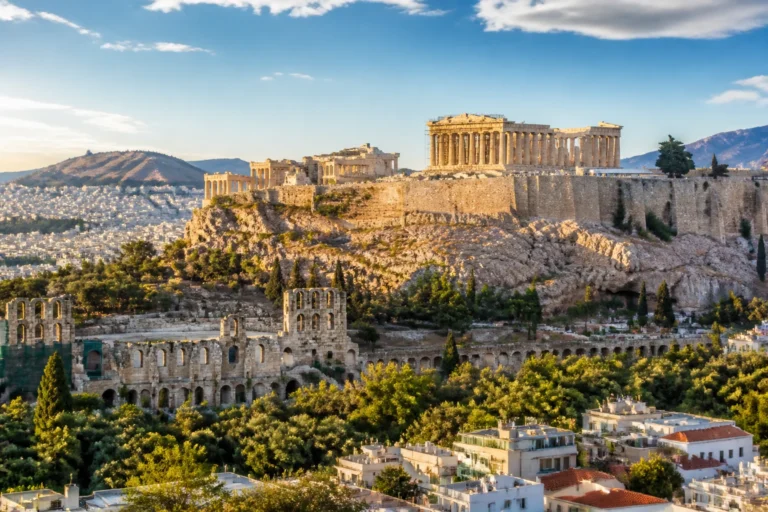 AI illustration
Find flights to Athens
Compare flights · EURAbout Athens
Athens is one of Europe’s most layered capitals, known for its archaeological sites, museum collections and compact historic centre. The Acropolis dominates the skyline, but the city rewards travellers who look beyond the major monuments to markets, hill viewpoints, café streets and residential districts with a strong local feel.
For independent visitors, Athens works well as a city break or as the starting point for island or mainland travel. The city centre is walkable in places, but it is not flat and some attractions are spread out, so it helps to plan by area rather than trying to cross the whole city on foot every day.
- Mix ancient sites with modern neighbourhoods for a fuller visit.
- Expect uneven pavement, hills and busy traffic in central areas.
- Good for combining history, food and short urban exploration.
Things to do in Athens
Start with the Acropolis and the Acropolis Museum, ideally early in the day before the main crowds build. Nearby, the ancient Agora and the Roman Agora help fill in the broader story of the city, while the National Archaeological Museum gives a strong overview of Greek antiquity if you want more context than a single monument can provide.
Athens also shines through its districts. Plaka is the classic historic quarter, though some streets are more tourist-focused than others. Monastiraki is useful for browsing markets and reaching the main sights, while Psyrri has a busier evening atmosphere with tavernas and bars. For a more local pace, look at Koukaki, Pangrati or Exarchia, where daily life is more visible and there are plenty of cafés and small eateries.
For a break from archaeology, add a viewpoint such as Lycabettus Hill, wander the National Garden, or spend time around Syntagma and Ermou for central-city people-watching. If you have extra time, consider a half-day trip to the coast or to one of the nearby hills for a different angle on the city.
highlights":["Acropolis and Acropolis Museum","Ancient Agora and surrounding historic centre","Neighbourhood walking in Plaka, Monastiraki, Psyrri and Koukaki","Panoramic city views from Lycabettus Hill"]},{
Best time to visit Athens
Athens is a year-round destination, but the most comfortable sightseeing weather is usually in spring and autumn. These shoulder seasons are often better for walking between sites, sitting outdoors and making the most of long daylight hours without the strongest summer heat.
Summer can be very hot and crowded, especially around the main archaeological sites, so it makes sense to plan early starts, shaded breaks and indoor visits in the middle of the day. Winter is quieter and can be a good choice for museums, neighbourhood cafés and a slower pace, although some days may be cooler and wetter than travellers expect from a Greek capital.
If your dates are flexible, check whether major public holidays, festivals or local closures might affect opening hours or transport. In Athens, that can matter as much as the season itself.
- Spring and autumn are usually the easiest seasons for sightseeing.
- Summer can require careful pacing and more indoor breaks.
- Winter is calmer for museums and neighbourhood-focused trips.
How long to stay in Athens
A first visit usually works well with two or three full days. That gives enough time for the Acropolis, a good museum, a historic-centre walk and one or two neighbourhoods without turning the trip into a checklist. If you like museums, food and slower wandering, a fourth day makes the city feel much less rushed.
If Athens is part of a longer Greek itinerary, one or two nights may be enough for the main highlights, especially if your goal is to connect onward rather than stay in the city itself. Travellers who enjoy history, rooftop views and local dining will get more value from a slightly longer stay than from trying to squeeze everything into one crowded day.
- 2–3 days suits most first-time visitors.
- 4 days gives more room for museums and neighbourhoods.
- 1–2 nights can work as a stopover before islands or mainland trips.
Airports and transport in Athens
Athens International Airport is the main gateway for the city and the most likely arrival point for European travellers. From there, your options usually include metro, suburban rail, airport buses, taxis and pre-booked transfers. For current routes, fares and operating details, it is best to check the official transport operators before you travel, since services and schedules can change.
Within the city, the metro is often the easiest way to cover longer distances efficiently, especially when connecting the airport, central stations and some major districts. Buses and trams can help for specific routes, though traffic can make them slower than the metro at busy times. In the centre, walking works well for short hops, but be prepared for hills, uneven surfaces and crossings that sometimes feel more chaotic than the map suggests.
If you are staying near the Acropolis, Syntagma, Monastiraki or Koukaki, many key sights are reachable on foot or with short metro rides. For day trips beyond the centre, check trains, buses or organised excursions in advance and allow extra time for connections.
- Athens International Airport is the main arrival point.
- Metro is usually the most practical city connection for visitors.
- Check official operators for current schedules and ticket rules.
Where to stay in Athens
For a first trip, the most convenient base is usually the historic centre around Syntagma, Monastiraki or Plaka, because these areas put you close to major sights and public transport. They are also the easiest choice if you want to walk to dinner after a day of sightseeing, although some streets can be lively late into the evening.
Koukaki is a strong alternative for travellers who want a slightly less tourist-heavy feel while still staying close to the Acropolis and key metro links. Psyrri is useful if you want restaurants and nightlife close by, but it can be noisier. Pangrati and Neos Kosmos may suit repeat visitors or those who prefer a more residential atmosphere and better value, with straightforward access to the centre by metro or taxi.
When choosing accommodation, think about how often you will rely on public transport versus walking. In Athens, being on the right metro line or within a manageable walk of the main sites can make a bigger difference than staying a little closer on the map.
- Syntagma, Monastiraki and Plaka are best for first-time convenience.
- Koukaki offers a more local base near major sights.
- Choose transport access carefully; it can save a lot of time.
Practical tips for Athens
Book major archaeological sites and popular museums with enough flexibility that you are not forced to rush between them. Athens is a city where pacing matters: a morning of sightseeing often goes best with a long lunch, a shaded break or a neighbourhood coffee stop in between. Good shoes are more important than in many flat city-break destinations.
Keep an eye on opening days and public-holiday changes, especially if your trip is short. Carry water in warmer months, use sun protection, and plan indoor alternatives for the hottest part of the day. Cashless payment is common in many places, but it is still sensible to have a little cash for smaller purchases or transport-related needs.
Finally, think of Athens as a city of layers rather than a single monument stop. If you build in time for one museum, one major ancient site and one or two lived-in neighbourhoods, the city usually feels much more balanced and memorable.
- Comfortable shoes and shade breaks matter.
- Check opening days and holiday schedules in advance.
- Balance major sights with neighbourhood time for a better trip.
Frequently asked questions about Athens
Is Athens easy to explore on a first visit?
Yes, especially if you focus on the centre and nearby neighbourhoods. The main challenge is not distance so much as pacing, hills and choosing a sensible order for sights.
Which area is best for first-time visitors to stay in Athens?
Syntagma, Monastiraki and Plaka are the most convenient for a first trip because they combine central location, transport access and easy reach to major sights.
Can you walk between the main Athens attractions?
Some of them, yes. The Acropolis, Agora, Monastiraki and Plaka are close enough for walking, but longer cross-city moves are usually easier by metro or taxi.
Do I need a lot of time for the Acropolis?
Allow enough time to visit without rushing, and add extra time if you want the museum as well. Early morning is often the most comfortable time for the climb and the views.
Is Athens only worth visiting for ancient history?
No. The city is also good for café culture, street life, neighbourhood food, viewpoints and museums, so it can work well even if you are not planning a heavy archaeology trip.
Should I use public transport or taxis in Athens?
Both can be useful. The metro is often the simplest option for key routes, while taxis or pre-booked transfers can be more convenient for luggage or late arrivals. Check current official information for the best fit for your trip.
Travel information can change. Check official transport operators and attraction websites before booking.
Editorial review: 16 Oct 2026
More destinations to explore
 AI illustration
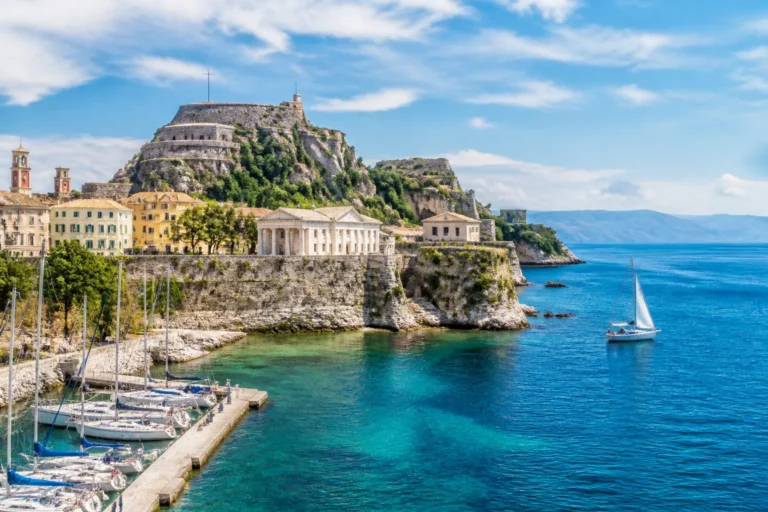
Kerkyra
Kerkyra, the capital of Corfu, is an easy-going Ionian city where Venetian lanes, a seafront promenade, and island-hopping day…
Explore destination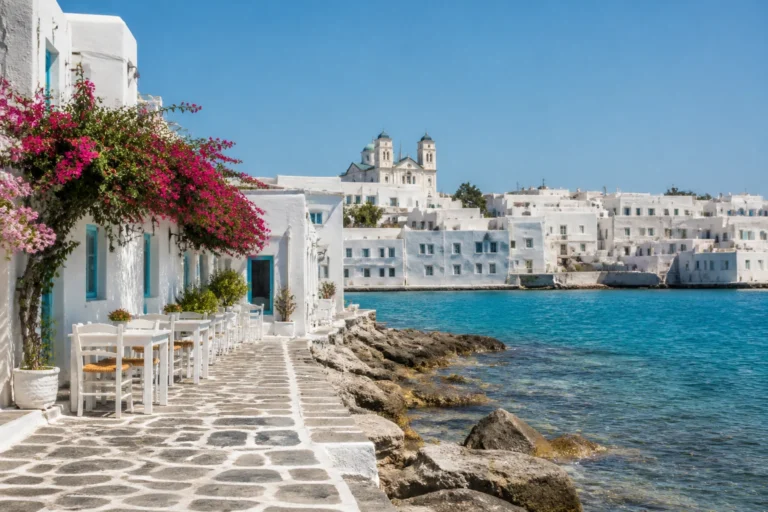 AI illustration
Paros
Paros combines sandy beaches and clear-water bays with lively harbour towns, traditional villages and easy opportunities for island-hopping. Parikia…
Explore destination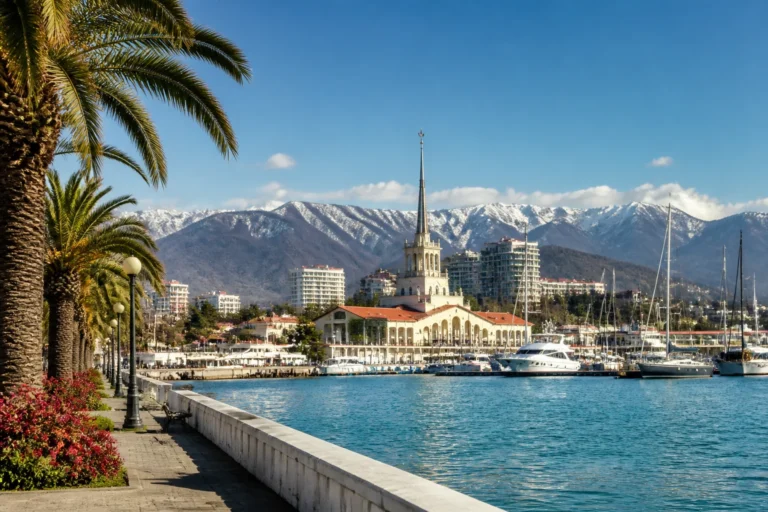 AI illustration
Adler/Sochi
Adler and Sochi stretch along Russia’s Black Sea coast, combining seaside promenades and parks with access to mountain landscapes.…
Explore destination AI illustration
Alghero
Alghero, on the north-west coast of Sardinia, combines a historic centre with easy access to beaches and the coastal…
Explore destination