
United Kingdom · Europe
Liverpool City Guide: What to See and How to Plan Your Trip
Liverpool combines a compact waterfront, major museums and a strong music heritage with lively neighbourhoods beyond the centre. Visitors come for the Beatles story, football, architecture and cultural events, but the city also works well for an unhurried weekend of galleries, independent shops and food. This guide covers the main areas to explore, how to get from Liverpool John Lennon Airport into the city and what to consider when planning your stay.
Find flights to Liverpool ↓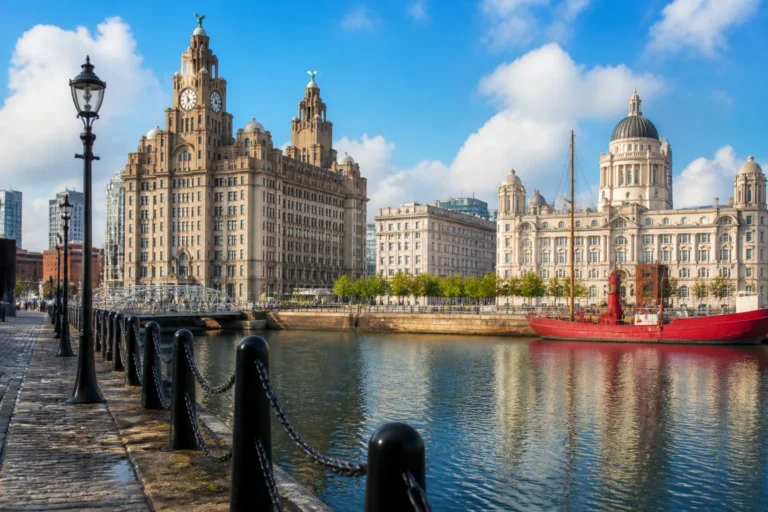 AI illustration
Find flights to Liverpool
Compare flights · EURAbout Liverpool
Liverpool is a port city in north-west England, shaped by its maritime past and its role in music, sport and popular culture. The central waterfront around the Royal Albert Dock is a natural starting point, with historic buildings, museums and views across the Mersey. The city centre is walkable in places, though hills, distances between some sights and changeable conditions can make local transport useful.
The best fit depends on your interests: music fans can follow the Beatles’ story, football supporters may plan around a match or stadium visit, and culture-focused travellers have museums and galleries to choose from. Liverpool also suits visitors who want a city break with distinct districts rather than a single monumental attraction.
- Historic waterfront and Royal Albert Dock
- Beatles heritage and live-music venues
- Museums, galleries and two major football clubs
Things to do in Liverpool
Begin at the waterfront, where the Royal Albert Dock brings together museums, places to eat and converted warehouse architecture. The Museum of Liverpool explores the city’s history, while Tate Liverpool and the Merseyside Maritime Museum are among the cultural institutions associated with the dock area; check current opening arrangements before making a visit the centrepiece of your day. A walk along the riverfront gives a sense of the city’s connection to the port.
For Beatles-focused sightseeing, consider the Beatles Story exhibition and locations linked to the band’s early years. The Cavern Club area is associated with the city’s live-music history, although the modern venue experience is not a substitute for checking event details in advance. Football visitors can look into stadium tours or fixtures at Anfield and Everton’s Hill Dickinson Stadium; access and match-day arrangements vary.
Allow time to explore beyond the waterfront. The Georgian Quarter is known for grand architecture and cultural venues, while the Baltic Triangle has a mix of creative spaces, food and nightlife. Liverpool Cathedral and the Metropolitan Cathedral offer contrasting architectural landmarks. Pick a few areas rather than trying to cover every neighbourhood in one day.
- Explore the Royal Albert Dock and waterfront
- Choose a Beatles attraction or live-music stop
- Visit Liverpool Cathedral or the Metropolitan Cathedral
- Look beyond the centre to the Baltic Triangle and Georgian Quarter
Best time to visit Liverpool
Liverpool is a year-round city break. Spring and early autumn can be appealing for combining outdoor walks with museums and indoor attractions, while summer often brings a busier events calendar and more visitors. Winter trips can suit travellers focused on galleries, music and food, but shorter daylight hours may affect how much time you want to spend walking between sights.
The calendar matters as much as the season. Football fixtures, concerts and major city events can affect accommodation availability and the feel of central areas. If a match, festival or exhibition is the main reason for your visit, check its dates and arrange transport and accommodation around the event before settling on flights.
- Plan around football fixtures and major events
- Allow for rain and changeable conditions in any season
- Check attraction opening days before travelling
How long to stay in Liverpool
Two full days is a useful starting point for a first visit: one can cover the waterfront and a museum, while another can be devoted to Beatles heritage, a cathedral and a neighbourhood such as the Baltic Triangle. This pace leaves room for meals and breaks without turning the trip into a checklist.
Add a third day if you want a stadium tour, several museums, more time for music and nightlife, or a slower look at the city’s districts. Match-day visits may need extra flexibility. Travellers with only one day can still enjoy the central waterfront and one major attraction, but should choose their priorities in advance.
- One day: focus on the central waterfront
- Two days: add music, museums or the cathedrals
- Three days: make room for a stadium visit and neighbourhoods
Liverpool Airport and getting around
Liverpool John Lennon Airport (LPL) is the city’s airport. It lies outside the centre, so allow time for the onward journey when planning an arrival or departure. Bus services connect the airport with Liverpool and nearby transport links; taxis are another option. Routes, stops and service times can change, so check the airport and transport operators’ current information before travelling.
There is no rail station at the airport itself. Liverpool South Parkway is a nearby rail interchange, but travellers should check whether a bus or taxi connection suits their journey and luggage. For destinations elsewhere in the region, Lime Street is Liverpool’s main central railway station. In the city, walking works well for some central sights, while local buses and Merseyrail trains can help with longer journeys. Check routes and fares with the relevant operators.
- Airport: Liverpool John Lennon Airport (LPL)
- Check current bus connections and onward transport before departure
- Lime Street is the main central railway station
Where to stay in Liverpool
The city centre is convenient for Lime Street, shopping streets, restaurants and many central attractions. It is a practical base for a short visit, especially if you expect to travel by train or want to walk between sights. The waterfront and dock area puts museums and river views close by, though accommodation there may not suit every budget or travel style.
The Georgian Quarter offers historic streets and cultural venues, with a different feel from the busiest shopping areas. The Baltic Triangle is worth considering for food, creative venues and nightlife, but check the location carefully if you prefer quieter evenings. For a football-focused stay, compare the match venue with your accommodation and check local transport plans rather than assuming the stadium is a short walk from the centre.
- City centre for transport and general sightseeing
- Waterfront for museums and riverfront access
- Baltic Triangle for food and evening venues
Practical tips for visiting Liverpool
Group nearby sights together: the waterfront and dock museums make a natural half-day, while city-centre landmarks can be combined on foot. Wear comfortable shoes and leave some flexibility for rain. For popular exhibitions, stadium tours and live events, check booking requirements directly with the venue; opening times and access can vary.
If visiting for football or a concert, confirm the venue, start time and travel arrangements close to departure. Match days can make some areas busier and affect transport demand. When comparing flights, consider the airport transfer as part of the overall journey and leave a buffer for connections. FlyGo.si lets travellers compare flights and browse destinations, but transport and attraction details should be checked with their operators.
- Check event and venue information before you go
- Plan airport transfers around your arrival time
- Leave room in the itinerary for weather and travel time
Frequently asked questions about Liverpool
Which airport serves Liverpool?
Liverpool John Lennon Airport (LPL) serves the city. It is outside the centre, with bus connections and taxis available as onward transport options. Check current services with the airport or transport operators.
How many days should I spend in Liverpool?
Two full days is a sensible first-visit plan for the waterfront, a museum and some music or architectural sights. Add a day for a stadium visit, several museums or a more relaxed pace.
Can you get from Liverpool Airport to the city by train?
There is no railway station at Liverpool John Lennon Airport. Bus services connect the airport with the city and nearby transport links; check current options before travelling.
Where is convenient to stay for Liverpool sightseeing?
The city centre is useful for shops, restaurants and transport, while the waterfront is close to several museums. The Baltic Triangle and Georgian Quarter offer different neighbourhood settings; compare their location with the places you plan to visit.
What is Liverpool best known for?
Liverpool is widely associated with its maritime heritage, the Beatles and other music, football, historic architecture and cultural institutions. A first visit can combine the waterfront with one or two interests rather than trying to see everything.
Travel information can change. Check official transport operators and attraction websites before booking.
Editorial review: 23 Oct 2026
More destinations to explore
 AI illustration
Birmingham
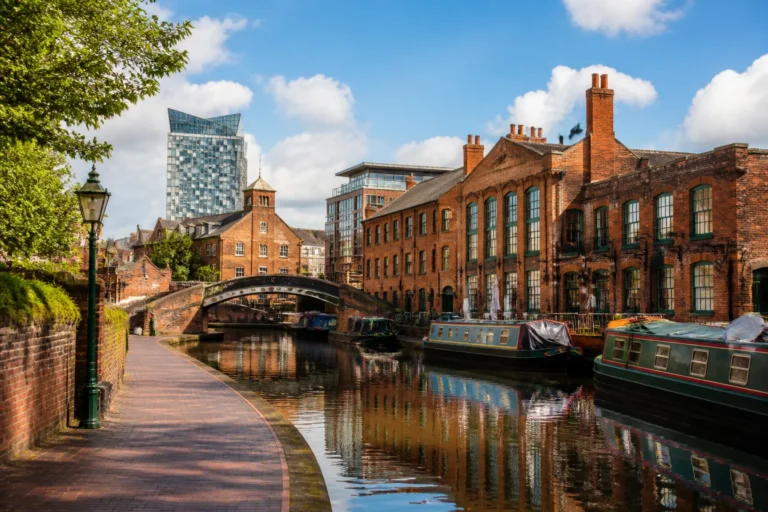
Birmingham combines an industrious past with a lively cultural scene, independent neighbourhoods and a network of canals through the…
Explore destination AI illustration
Bristol
Bristol combines a historic harbour and maritime heritage with independent shops, a lively food scene and a strong creative…
Explore destination AI illustration
Edinburgh
Edinburgh pairs a compact, walkable centre with historic streets, grand Georgian architecture and views towards hills and the Firth…
Explore destination AI illustration
Glasgow
Glasgow combines grand Victorian architecture, a lively music scene and a strong cultural offer with a distinctly local feel.…
Explore destination