
Spain · Europe
Asturias Travel Guide: Cities, Coast and Mountains
Asturias is a region in northern Spain where compact cities, Atlantic beaches and green mountain landscapes make very different trips possible. Oviedo offers historic streets and museums, while Gijón combines an urban waterfront with a lively centre; smaller towns and rural areas provide a slower pace. Use this guide to plan your arrival through Asturias Airport, choose a base and decide how much of the region to explore.
Find flights to Asturias ↓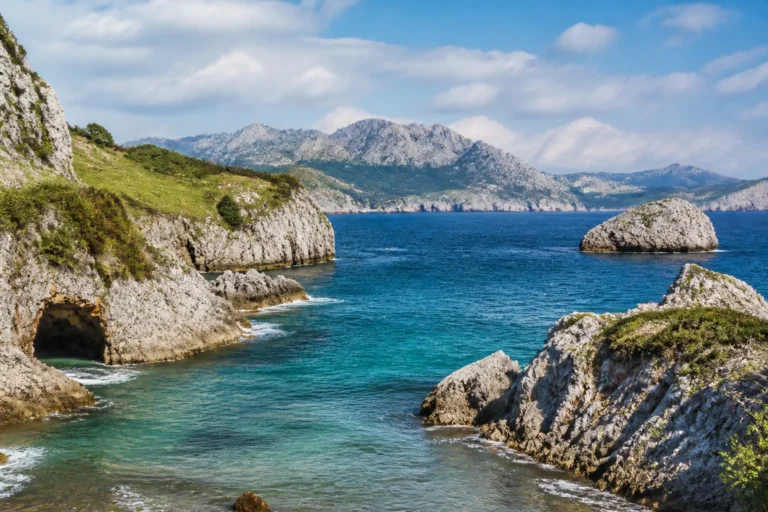 AI illustration
Find flights to Asturias
Compare flights · EURWhat to expect from a trip to Asturias
Asturias is an autonomous community on Spain’s northern coast, with Oviedo as its capital. It is a regional destination rather than a single city: travellers can combine historic urban centres, fishing towns, beaches and countryside, with the Cantabrian Mountains inland. Distances can look modest on a map, but winding roads and the region’s varied terrain mean that a journey between places may take longer than expected.
Oviedo is a useful base for architecture, museums and restaurants, while Gijón has a broad seafront and a more maritime feel. Avilés is another city option, known for its historic centre and cultural venues. Asturias may suit travellers who enjoy mixing city visits with walks, coastal stops or food-focused outings. A car offers flexibility in rural areas, but a trip based around the larger towns can also be planned using public transport.
- Use Oviedo or Gijón as a base for city stays
- Pair the coast with an inland mountain excursion
- Try regional dishes such as fabada asturiana
- Look for sidrerías to experience Asturian cider culture
Things to do in Asturias
In Oviedo, explore the old town on foot, including the cathedral area and nearby squares, and allow time for its museums and café stops. Gijón’s seafront is suited to an unhurried walk, with the old fishing quarter of Cimavilla offering a change of scene from the modern centre. Avilés makes a worthwhile stop for its historic streets and contemporary cultural architecture.
Along the coast, choose a few beaches or small towns rather than trying to cover the entire shoreline in one day. Cudillero is a well-known harbour town, and the coast has many other settlements where local conditions and facilities vary by season. Inland, the Picos de Europa offer mountain scenery and walking opportunities. Trails range from accessible outings to demanding routes, so check route conditions and transport before setting out.
Food is part of the region’s appeal. Fabada, a substantial bean and pork dish, is a classic choice, while local cheeses and seafood reflect the region’s varied landscapes. In a sidrería, cider is traditionally poured in a distinctive way; follow the venue’s guidance and check whether food service or opening arrangements suit your plans.
- Walk Oviedo’s historic centre
- Explore Gijón’s waterfront and Cimavilla
- Visit coastal towns such as Cudillero
- Plan a mountain walk around your ability and transport
When to visit Asturias
Late spring to early autumn is a practical period for combining coastal visits, city sightseeing and outdoor activities, with longer daylight than in winter. The region has an Atlantic climate, so rain and changeable conditions are possible at any time of year. Pack layers and check local forecasts close to departure, especially if your plans include walking in the mountains.
Summer is popular for beach and town visits, so accommodation in sought-after coastal areas can be more constrained around busy periods. Spring and early autumn can appeal to travellers seeking a quieter feel, although some seasonal services may operate differently. Winter can work for a city-focused trip, but it is less suitable if your itinerary depends on particular mountain routes or seasonal coastal facilities.
How long to stay in Asturias
Allow at least three days for a short visit focused on Oviedo and Gijón, with time for a coastal excursion. Five to seven days gives more breathing space to add Avilés, several coastal stops or an inland stay. If you want to hike, travel by public transport, or explore both the east and west of the region, plan extra time rather than treating each outing as a quick day trip.
A car makes it easier to reach rural accommodation, trailheads and smaller coastal places, but it is not essential for every itinerary. Without one, choose a base with useful onward connections and check travel times for each day before booking accommodation. Avoid changing hotels every night unless the journey itself is a priority.
Asturias Airport and getting around
Asturias Airport (OVD) is the main airport for the region. It is outside the central areas of Oviedo, Gijón and Avilés, so allow time for the onward journey. Bus or coach connections, taxis and car hire may be options, but routes, operators and timetables can change; check current information with the airport and transport providers before travelling. Compare available flights to Asturias on FlyGo.si, then confirm your airport transfer separately.
Rail and bus services can link larger towns and some smaller destinations, but coverage and journey times vary. Regional rail includes different networks, so check the operator and station details for each leg rather than assuming services use the same stations. In towns, walking is often convenient for central sights; local buses can help with longer journeys. A hire car is useful for flexible rural exploring, while parking and narrow roads may make it less convenient in historic centres.
- Airport code: OVD
- Check current airport transfer options before departure
- Confirm stations and connections for each public transport journey
Where to stay in Asturias
Oviedo is a practical choice for a first visit, with a walkable centre and a good range of places to eat. It suits travellers prioritising city sights or using public transport to link several larger towns. Gijón is a better fit if you want a coastal city atmosphere and easy access to the waterfront. Avilés can work well for a shorter stop or for exploring the central coast.
For a quieter stay, consider a coastal town or rural accommodation, bearing in mind that services and transport may be limited outside larger centres. Mountain villages are appealing for walking-focused trips but require more planning, particularly if you are not driving. Choose accommodation around the activities you most want to do, and check late arrival arrangements and local transport before committing to a location.
Practical tips for planning an Asturias trip
Asturias is part of Spain, and Spanish is widely used; a few basic phrases can be helpful in smaller towns. Asturian is also part of the region’s cultural identity, and visitors may see it used alongside Spanish. Restaurant and shop opening patterns can differ from those in northern Europe, so check specific venues if a meal or visit is central to your plans.
Keep a flexible plan for outdoor days. Mountain conditions, trail access and coastal facilities can vary, so consult official park, local authority or transport information before setting out. If you are driving, check parking arrangements in city centres and rural access details for your accommodation. Book ahead for popular periods and confirm cancellation terms directly with your chosen provider.
For flight planning, compare arrival options and consider whether your first night should be near the airport, in Oviedo or in another base. FlyGo.si is an independent flight comparison website; it does not operate flights or issue airline tickets. Check final schedules and travel conditions with the relevant airline and transport operators.
Frequently asked questions about Asturias
Is Asturias a city or a region?
Asturias is an autonomous community in northern Spain, not a city. Oviedo is its capital, and Gijón and Avilés are among its other principal cities.
Which airport should I use for Asturias?
Asturias Airport, code OVD, serves the region. Consider your final destination when planning the onward journey, as the airport is outside the central areas of Oviedo, Gijón and Avilés.
Can I visit Asturias without hiring a car?
Yes. A trip centred on Oviedo, Gijón and other larger towns can be planned using public transport, though connections and journey times vary. A car is more convenient for some rural areas, trailheads and smaller coastal settlements.
How many days do I need in Asturias?
Three days can cover a short city-and-coast visit. Five to seven days allows a more varied itinerary, while hikers and travellers crossing the region may want longer.
What should I pack for Asturias?
Bring layers and be prepared for changeable conditions, including rain. For mountain walks, choose suitable footwear and check the forecast, route information and access details before leaving.
Travel information can change. Check official transport operators and attraction websites before booking.
Editorial review: 23 Oct 2026
More destinations to explore
 AI illustration
Alicante
Alicante is an easygoing Mediterranean city where a compact old centre, a long waterfront and a busy local food…
Explore destination AI illustration
Barcelona
Barcelona mixes a compact city break with beach time, neighbourhood wandering and a strong food-and-culture scene. For European independent…
Explore destination AI illustration
Bilbao
Bilbao is one of northern Spain’s most interesting city breaks: compact enough to explore on foot in parts, but…
Explore destination AI illustration
Ibiza
Ibiza, in Spain’s Balearic Islands, combines a historic port city with beaches, rural villages and a well-known nightlife scene.…
Explore destination