
Poland · Europe
Warsaw Travel Guide: Plan Your City Break
Warsaw combines a carefully reconstructed Old Town with modern museums, leafy parks and neighbourhoods that feel quite different from one another. Poland’s capital is a practical choice for a city break, whether you are interested in history, food, architecture or a longer stay with time to explore beyond the centre. This guide covers the main areas, transport options and planning details to consider before comparing flights to Warsaw.
Find flights to Warsaw ↓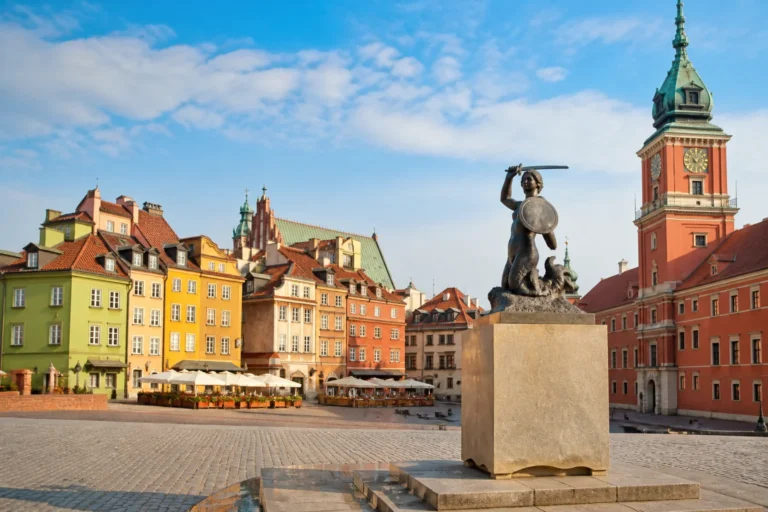 AI illustration
Find flights to Warsaw
Compare flights · EURWhat to expect from Warsaw
Warsaw is a large, energetic capital on the Vistula River, with a mix of post-war reconstruction, contemporary architecture and historic streets. Its Old Town was rebuilt after extensive wartime destruction and is recognised as a UNESCO World Heritage Site. Beyond the historic core, the city has broad avenues, residential districts and green spaces that reward a little extra exploring.
The centre is straightforward to navigate, but Warsaw’s sights are spread across several districts. It suits travellers who want museums and history alongside cafés, parks and evening options, as well as visitors using the city as a base for a wider Poland trip. Allow time to move between areas rather than treating the city as a compact Old Town alone.
- Reconstructed Old Town and Castle Square
- Museums covering Jewish history and the Warsaw Uprising
- Parks, riverfront paths and varied neighbourhoods
Things to do in Warsaw
Begin in the Old Town, where the Market Square, narrow lanes and Royal Castle offer a sense of Warsaw’s historic centre. The nearby Royal Route links central landmarks and makes a useful walking route; extend it towards Łazienki Park for gardens, palace buildings and open space. Wilanów Palace, farther from the centre, is another option for architecture and grounds.
For context on the city’s past, consider the Warsaw Uprising Museum and POLIN Museum of the History of Polish Jews. Their subjects are substantial, so plan a visit around your interests and check official visitor information for opening arrangements and admission details. The Vistula riverbanks provide a change of pace, while Praga, on the east bank, has its own mix of cultural venues, cafés and older streets.
Food is part of the experience: look for Polish classics such as pierogi, soups and seasonal dishes, alongside the city’s international dining scene. If you have more time, explore neighbourhood cafés and markets rather than limiting meals to the busiest tourist streets.
- Walk the Old Town and Royal Route
- Choose a museum visit that matches your interests
- Explore Łazienki Park or the Vistula riverbanks
- Cross the river to discover Praga
When to visit Warsaw
Late spring and early autumn are often appealing for combining city walks with time in parks. Summer brings longer daylight and more opportunities to enjoy outdoor spaces, though popular sights and central areas can be busier. In winter, shorter days and colder conditions make indoor museums, galleries and cafés useful parts of the itinerary; festive events may also shape the atmosphere.
There is no single ideal season for every traveller. If outdoor sightseeing matters most, choose a period when you are comfortable spending time on foot. For a museum-focused break, the time of year may matter less, but check opening days and any special closures directly with venues before travelling.
How long to stay in Warsaw
Two full days can cover the Old Town, a major museum and a walk through central Warsaw, but the schedule will be selective. Three or four days allow more breathing room, a second museum, time in Łazienki Park and visits to districts such as Praga or Powiśle.
For a longer stay, use Warsaw as a base for day trips only after checking journey times and transport details for your chosen destination. If you are arriving late or leaving early, avoid placing a major museum visit on a day when travel logistics could make the schedule rushed.
Warsaw airports and getting around
Warsaw Chopin Airport (WAW) is the main airport serving the city and is relatively close to central districts. Rail and bus services connect the airport with the wider city; the best option depends on your destination, luggage and arrival time. Modlin Airport (WMI), farther north, also serves some travellers to Warsaw. Its onward journey may involve a bus or a connection with rail, so check the airport and transport operators’ current guidance before choosing a flight.
Within the city, Warsaw’s public transport network includes metro, tram and bus services. These are useful for linking central sights with areas farther out, while walking works well between many central landmarks. Check current ticket, route and service information with the official local transport operator, particularly if travelling late or with limited mobility.
- Check which Warsaw airport your flight uses
- Compare the full airport-to-accommodation journey
- Use public transport for longer cross-city trips
Where to stay in Warsaw
Śródmieście is a convenient base for central sights, restaurants and transport connections. The Old Town is atmospheric and close to historic landmarks, although visitors may prefer to compare its accommodation options with nearby central streets for access to a wider choice of services.
Powiśle offers river access and a more neighbourhood-oriented feel while remaining close to central areas. Praga can suit travellers interested in exploring the east bank, while Wola has modern buildings and business-oriented districts. Check the location of a specific property against the places you plan to visit, as the city is spread out and a central-sounding address does not necessarily put every sight within walking distance.
- Śródmieście for a central base
- Old Town for historic surroundings
- Powiśle for river access
- Praga for exploring the east bank
Practical tips for planning your trip
Poland’s currency is the złoty. Payment methods can vary between businesses, so carrying a small amount of cash as a backup may be useful. Polish is the official language; learn a few basic greetings, and keep key addresses saved offline in case you need to show them to a driver or ask for directions.
Warsaw is larger than its compact historic centre suggests. Group nearby sights together, allow time for public transport and check museum opening details before setting out. If a flight itinerary includes a change of airport or a long transfer, compare the complete journey rather than considering flight time alone. FlyGo.si helps travellers compare flights and explore destinations; check travel arrangements and service details with the relevant providers before departure.
- Plan visits by neighbourhood to reduce backtracking
- Check museum opening information directly
- Allow for the transfer from your chosen airport
Frequently asked questions about Warsaw
Which airport should I choose for Warsaw?
Warsaw Chopin Airport (WAW) is closer to central Warsaw. Modlin Airport (WMI) is farther away, so compare the onward journey and your accommodation location as well as the flight itinerary.
How many days do you need in Warsaw?
Two full days can cover a selection of central sights and one major museum. Three or four days give you more time for parks, additional museums and neighbourhoods such as Praga or Powiśle.
Is Warsaw easy to explore without a car?
Yes. Metro, tram and bus services connect many parts of the city, and central landmarks can be explored on foot. Check current routes and tickets with the official local transport operator.
What is a good area to stay in Warsaw?
Śródmieście is a practical starting point for central sights and transport. The Old Town, Powiśle and Praga offer different surroundings, so choose based on the places you want to visit and check the exact location of your accommodation.
What should I prioritise on a first visit to Warsaw?
A first itinerary could combine the Old Town and Royal Route with one museum, such as the Warsaw Uprising Museum or POLIN, and time in a park or along the Vistula. Select museum visits according to your interests and check opening details in advance.
Travel information can change. Check official transport operators and attraction websites before booking.
Editorial review: 23 Oct 2026
More destinations to explore
 AI illustration
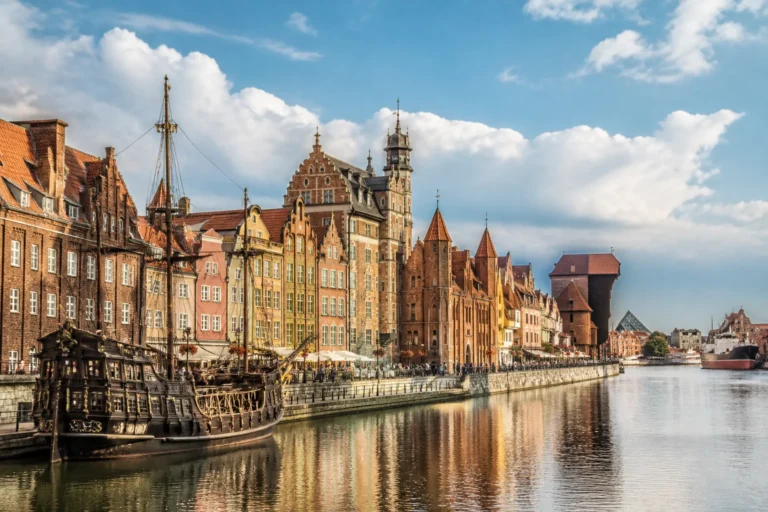
Gdansk
Gdansk pairs a richly layered history with a walkable waterfront and easy access to the Baltic coast. Its reconstructed…
Explore destination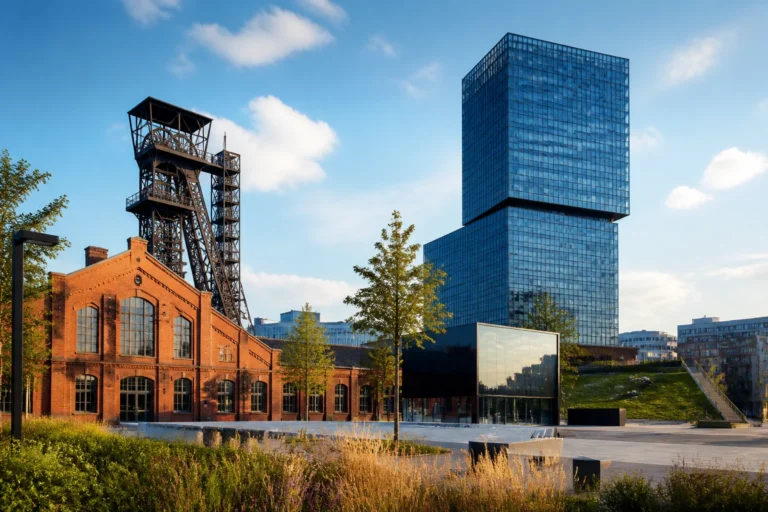 AI illustration
Katowice
Katowice is a practical base for exploring Poland’s Silesian region, as well as a city with its own distinctive…
Explore destination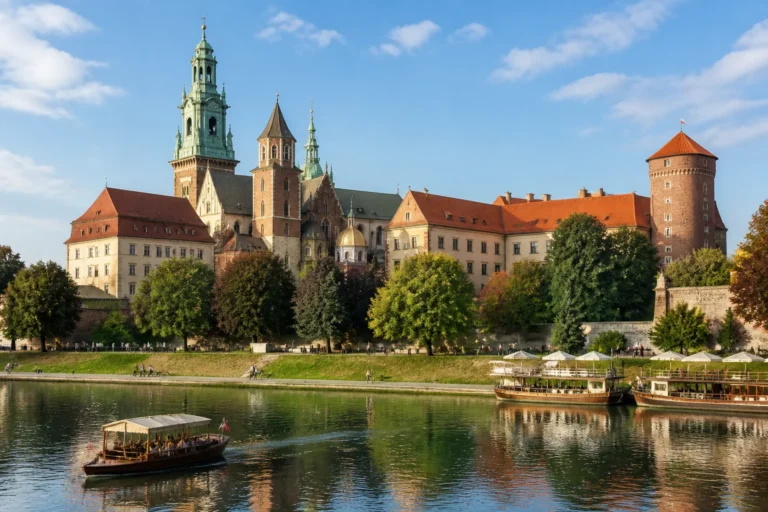 AI illustration
Krakow
Krakow is one of Poland’s most rewarding city breaks: compact enough for an easy weekend, but layered with history,…
Explore destination AI illustration
Poznan
Poznań is a western Polish city with a compact historic centre, a lively food scene and plenty of room…
Explore destination