
Poland · Europe
Gdansk Travel Guide: What to See and How to Plan
Gdansk pairs a richly layered history with a walkable waterfront and easy access to the Baltic coast. Its reconstructed Main Town, maritime heritage and museums make it rewarding for a city break, while rail links across the Tri-City area offer options for longer stays. This guide covers when to go, where to stay and how to plan practical transport, including your arrival at Gdansk Lech Walesa Airport.
Find flights to Gdansk ↓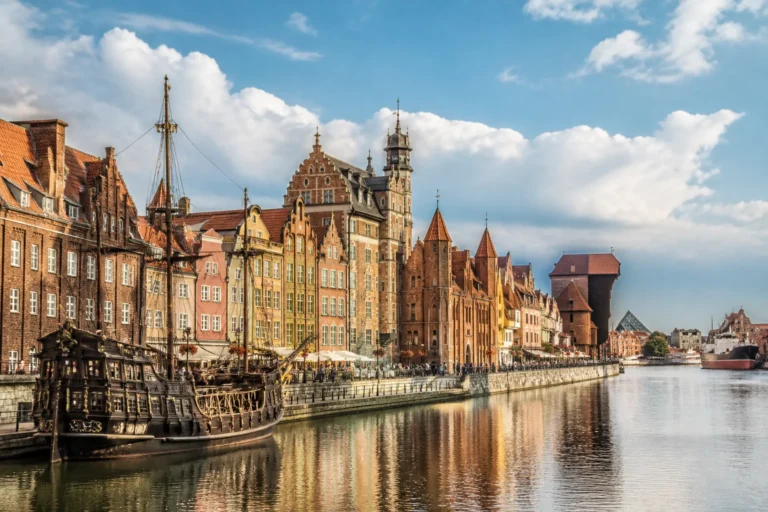 AI illustration
Find flights to Gdansk
Compare flights · EURDiscover Gdansk, Poland’s Baltic port city
Gdansk is a historic port on Poland’s Baltic coast, known for its Hanseatic trading past, maritime character and distinctive architecture. The Main Town, often called Główne Miasto, is the natural starting point: its streets lead towards the Motława waterfront, with landmarks such as the Long Market, Neptune’s Fountain and St Mary’s Basilica. Much of the historic centre was rebuilt after the Second World War, so its appearance reflects both earlier architectural styles and the city’s modern history.
The city’s story is also closely tied to the Second World War and the Solidarity movement. Museums and memorial sites add context beyond the attractive central streets, while the broader Tri-City area links Gdansk with Sopot and Gdynia. It suits visitors interested in history, architecture and a coastal setting, as well as travellers who want a compact base with options for day trips.
- Historic Main Town and the Motława waterfront
- Maritime history and amber craftsmanship
- Museums covering the Second World War and Solidarity
Things to do in Gdansk
Start with a walk through the Main Town, taking in the Long Market, Neptune’s Fountain and the waterfront. St Mary’s Basilica is a major landmark; check visitor arrangements before planning a visit, as access can vary. The riverside area is good for a slower stroll, with views of historic port buildings and the distinctive medieval crane known as the Żuraw. Shops and galleries around the centre also reflect Gdansk’s long association with amber.
Allow time for the Museum of the Second World War and the European Solidarity Centre, which explore pivotal chapters in the city’s and Poland’s history. Westerplatte, associated with the opening of the Second World War in Europe, is another notable historical site. For a change of pace, consider a trip to the coastal districts or a journey to Sopot or Gdynia. Check opening hours, access arrangements and local transport details directly before setting out.
- Walk the Long Market and riverside
- Visit the Museum of the Second World War
- Explore the European Solidarity Centre
- Consider a trip to Westerplatte or another Tri-City destination
When to visit Gdansk
Late spring through early autumn is a popular period for exploring Gdansk on foot and spending time by the coast. Longer daylight hours can make it easier to combine the historic centre with museums or a trip elsewhere in the Tri-City area. Summer is also a busier time, particularly around the waterfront and during local events, so consider reserving accommodation in advance if your dates are fixed.
Spring and autumn can suit visitors who prefer a quieter city break, though conditions by the Baltic are changeable and days are shorter outside summer. Winter brings a different atmosphere and fewer daylight hours for sightseeing. Whatever the season, pack layers and check museum schedules and transport information close to your trip; do not assume coastal conditions will match those inland.
How long to stay in Gdansk
Two full days can cover the main historic centre and one substantial museum visit, with time for meals and a walk along the Motława. A third day gives a more comfortable pace and room to visit another museum, explore Westerplatte or take a short trip to Sopot or Gdynia. If you are especially interested in history, leave space for longer museum visits rather than trying to fit every major site into one day.
A longer stay works well for travellers who want to see more of the Tri-City area or spend time by the coast. When planning day trips, account for the time needed to travel between places and check the return journey in advance. Gdansk can also be part of a wider Poland itinerary, but allow enough time to enjoy the city rather than treating it only as a transit stop.
Gdansk airport and getting around
Gdansk Lech Walesa Airport (GDN) serves the city and the wider Tri-City area. Rail services connect the airport with parts of the urban region, while buses, taxis and app-based ride services are other options. The best choice depends on your arrival time, luggage and final address. Check current routes, stops, fares and any service changes with the relevant transport operator or airport before travelling; do not rely on an assumed direct connection to your accommodation.
In the city, the central sights are largely walkable, though distances add up if you are visiting museums or districts beyond the Main Town. Gdansk has public transport including trams and buses, and regional rail is useful for journeys across the Tri-City area. Check the correct ticket and validation rules before boarding, and confirm the latest information with official operators. If arriving late or travelling with bulky luggage, compare the door-to-door options for your particular journey.
- Airport: Gdansk Lech Walesa Airport (GDN)
- Consider rail, bus or taxi options for the airport journey
- Use walking and public transport to combine central sights
Where to stay in Gdansk
The Main Town and nearby central districts are convenient for first-time visitors who want to walk to major sights, restaurants and the waterfront. This location is particularly useful for a short break, although central streets can be lively. Check a property’s exact position and noise information rather than relying on a broad neighbourhood label.
Wrzeszcz is a practical option for travellers seeking a more everyday urban setting and transport connections, while Oliwa offers a different base away from the historic centre. Both require checking the journey to the places you plan to visit. If you want beach access or nightlife, compare accommodation in Gdansk’s coastal districts with options in neighbouring Sopot; the latter is a separate city, not a Gdansk neighbourhood. Check transport and late-night return options before booking.
- Main Town for easy access to central sights
- Wrzeszcz or Oliwa for a different city base
- Compare coastal Gdansk districts with nearby Sopot
Practical tips for planning your trip
Polish is the local language, and the currency is the złoty. Card payments are common, but it can be useful to have a small amount of cash for situations where cards are not accepted. If you plan to visit several museums, check their individual admission arrangements and opening days before building a schedule around them. Some historic buildings and cobbled streets may be less comfortable for visitors with mobility needs, so look up access details for specific sites.
Gdansk’s popularity and its position on the coast make it worth checking local events and accommodation availability before settling on travel dates. Leave flexibility in your itinerary for changing conditions and travel between districts. For flights, compare available options for your dates through a flight comparison service, then confirm the details directly with the airline or relevant provider before making arrangements. FlyGo.si is an independent comparison and travel information platform, not an airline or ticket issuer.
- Check museum opening days and access information
- Carry a payment option beyond cards
- Confirm transport details with official operators
Frequently asked questions about Gdansk
Which airport serves Gdansk?
Gdansk Lech Walesa Airport, with the code GDN, serves Gdansk and the wider Tri-City area. Check current rail, bus and taxi options for your arrival time and destination.
How many days should I spend in Gdansk?
Two full days can cover the central sights and a major museum. Three days gives you more time for additional museums, Westerplatte or a trip to Sopot or Gdynia.
Can I visit Sopot from Gdansk?
Yes. Sopot is a neighbouring city within the Tri-City area, and regional rail is one option for travelling between the cities. Check current services and plan your return journey.
Is Gdansk easy to explore without a car?
The historic centre is walkable, and public transport can help with longer journeys around Gdansk. Regional rail is useful for exploring the wider Tri-City area; confirm routes and ticket rules with the operators.
What is Gdansk known for?
Gdansk is known for its historic port, Main Town architecture, amber trade and maritime heritage. Its museums also interpret the Second World War and the Solidarity movement.
Travel information can change. Check official transport operators and attraction websites before booking.
Editorial review: 23 Oct 2026
More destinations to explore
 AI illustration
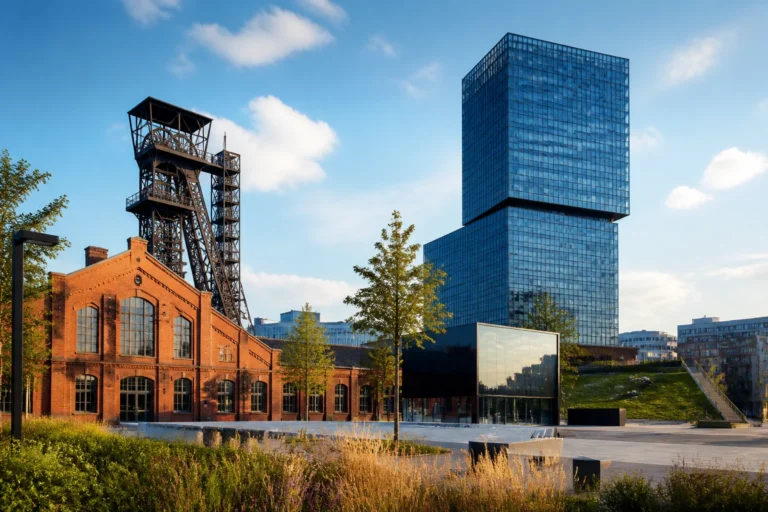
Katowice
Katowice is a practical base for exploring Poland’s Silesian region, as well as a city with its own distinctive…
Explore destination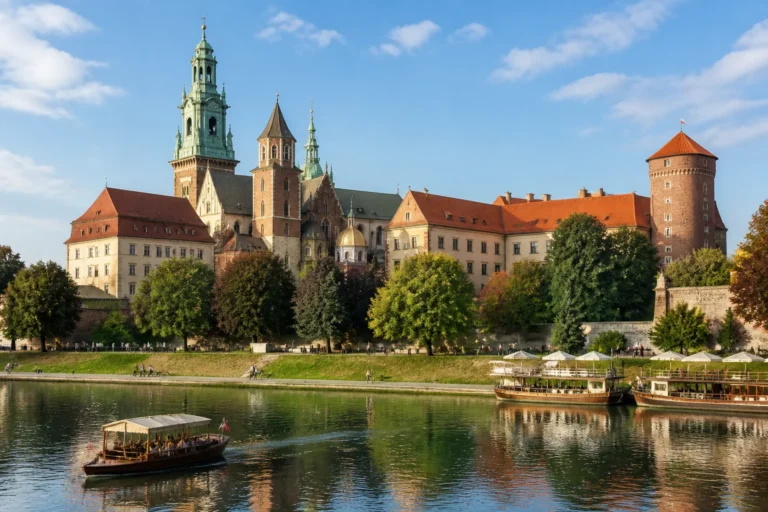 AI illustration
Krakow
Krakow is one of Poland’s most rewarding city breaks: compact enough for an easy weekend, but layered with history,…
Explore destination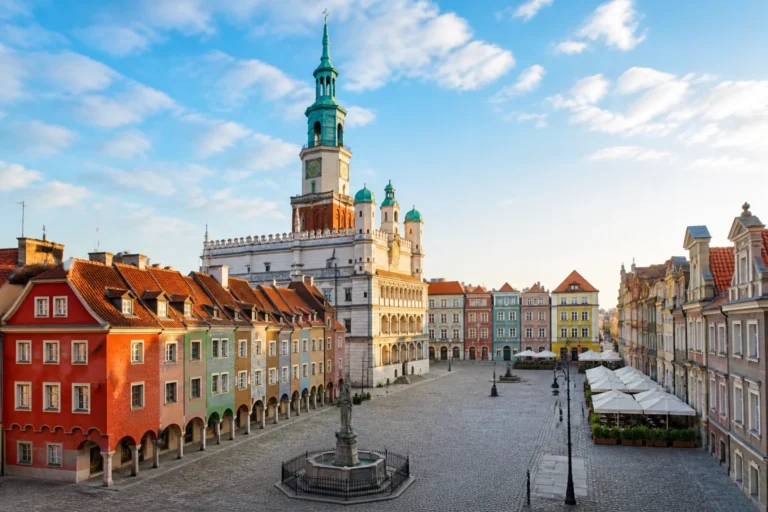 AI illustration
Poznan
Poznań is a western Polish city with a compact historic centre, a lively food scene and plenty of room…
Explore destination AI illustration
Warsaw
Warsaw combines a carefully reconstructed Old Town with modern museums, leafy parks and neighbourhoods that feel quite different from…
Explore destination