
Italy · Europe
Salerno Travel Guide for Independent Travellers
Salerno is a practical and rewarding base on Italy’s Campanian coast, with a walkable historic centre, a lively seafront and easy access to the Amalfi Coast, Cilento and Pompeii. It suits travellers who want a real city feel rather than a purely resort-led stay. Use this guide to plan a trip that balances old-town wandering, coastal views, day trips and simple logistics.
Find flights to Salerno ↓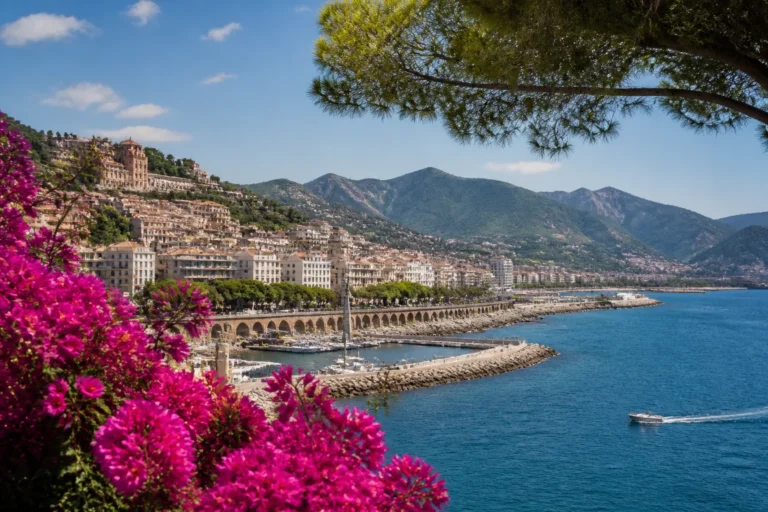 AI illustration
Find flights to Salerno
Compare flights · EURAbout Salerno
Salerno sits on the Tyrrhenian coast in southern Italy and works well for travellers who want to explore Campania without staying in the busiest postcard towns. The city has a long waterfront, a compact old centre and a more everyday atmosphere than nearby Amalfi Coast destinations, which can make it easier to find ordinary shops, cafés and transport links.
Its appeal is partly practical and partly scenic. You can spend time in the centro storico, stroll the promenade, use Salerno as a base for day trips, and still have evenings that feel local rather than overrun with day-trippers. For many independent visitors, that mix of convenience and character is what makes Salerno worth considering.
- Compact historic centre
- Useful base for coastal day trips
- More local feel than many nearby resort towns
Things to Do in Salerno
Start in the old town, where narrow streets open onto small squares, churches and shaded corners that are best enjoyed at a slow pace. This is the part of Salerno where wandering works better than planning: follow the lanes, pause for coffee, and look out for views down toward the sea. The city’s cathedral area is a natural anchor point for exploring on foot.
The seafront is another major draw. The promenade is a good place for an evening walk, especially when you want a break from hillier streets. If you are interested in art, gardens or cultural visits, Salerno also has museums and public spaces that can fill a half-day without needing a car. Beyond the city itself, the main reason many travellers stop here is access to the wider region: the Amalfi Coast, Paestum, Cilento and Pompeii can all be approached as day trips or overnights depending on your pace.
For travellers who enjoy simple pleasures, Salerno is also a city for aperitivo, gelato and lingering meals. You do not need a packed itinerary here; the city works well as a base that lets you combine urban exploration with coastal scenery and slower local routines.
- Walk the historic centre
- Stroll the seafront promenade
- Use the city as a base for regional day trips
- Allow time for cafés, aperitivo and relaxed meals
Best Time to Visit Salerno
Spring and early autumn are usually the most comfortable times for a city-and-coast trip in this part of Italy, because temperatures are often easier for walking and sightseeing. These periods can suit travellers who want to spend time outdoors without the peak-season pressure that comes with the wider Amalfi Coast.
Summer brings long daylight hours and a strong seaside atmosphere, but it can also mean more crowds on transport routes and in nearby coastal towns. Winter is quieter and can suit visitors focused on city breaks rather than swimming or beach time, though some coastal services may feel less frequent than in high season. If your trip depends on ferry links or day-trip connections, build in flexibility and check current timetables before you travel.
- Spring for comfortable walking
- Early autumn for a balanced city-and-coast trip
- Summer for beach and ferry season
- Winter for a quieter urban stay
How Long to Stay in Salerno
A one-night stop can work if you are using Salerno mainly as a transport base, but that is the minimum rather than the ideal. With two nights, you can see the old town, enjoy the waterfront and still leave room for one excursion or a slower meal-focused evening.
Three to four nights is a good range for independent travellers. That gives you time to explore Salerno itself and add a day trip without feeling rushed. If your plan is to use the city as a hub for multiple outings along the coast or into the archaeological sites inland, staying longer can be worthwhile, especially if you prefer to avoid changing accommodation every day.
- 1 night for a transit stop
- 2 nights for the city plus one outing
- 3–4 nights for a more relaxed base
Airports and Transport
Salerno is linked to air travel through regional airports, with Naples often the main international gateway for many visitors and Salerno’s own airport serving some routes. Because services and route patterns can change, it is best to confirm current options with airlines and official airport information before planning your arrival. If you are comparing access points, think first about total journey time and onward transport, not just flight arrival city.
Once in Salerno, the centre is walkable and many visitors rely on their feet for sightseeing. For trips beyond the city, regional trains, buses and ferries may all be useful depending on the destination and season. The Amalfi Coast in particular can involve a mix of transport methods, and connections are worth checking carefully in advance. If you are planning to drive, be aware that traffic, parking and limited access areas can make car use less convenient than it first appears.
For independent travellers, the simplest strategy is often to arrive with a clear idea of your first and last night transport needs, then use local services for day trips. That keeps the trip flexible while reducing the chance of rushing between connections.
- Naples is often a major gateway
- Salerno has its own airport for some routes
- The city centre is best explored on foot
- Check official transport timetables before day trips
Where to Stay in Salerno
For first-time visitors, staying near the historic centre is usually the most convenient option. You will be close to restaurants, cafés, churches and the main walking streets, and you can easily explore without depending on transport. This area also suits travellers who want atmosphere in the evening and quick access to the waterfront.
If you prefer wider views and a more open feel, look for accommodation closer to the seafront. This can work well for travellers who value space and evening walks, and it may be easier if you are arriving with luggage or planning to leave early for a ferry or train. If your trip is mainly logistical, for example as a base before heading to the coast, choose a place with straightforward access to the station or main transport routes.
For longer stays, the best area depends on your style: old town for character, waterfront for ease, and transport hubs for practical day-tripping. In all cases, check walking distances carefully, because Salerno’s streets and gradients can make a short map distance feel longer in real life.
- Historic centre for character and dining
- Seafront for views and evening walks
- Near the station if you prioritise transport
- Check walking distances and gradients
Practical Tips for Visiting Salerno
Salerno rewards travellers who move at a steady pace. Comfortable shoes are useful, especially if you plan to wander the old town or combine city sightseeing with uphill sections. Even in a compact destination, the best experience often comes from allowing time to sit, look around and adjust plans if transport is busy.
If you are using Salerno as a base for the Amalfi Coast, book popular connections early enough to avoid last-minute stress, and keep an eye on seasonal crowding. For food, aim for places that are busy with a mix of locals and visitors rather than trying to chase a single famous address. Simple trattorias, bakeries and casual cafés can be just as memorable as headline restaurants.
A final tip: leave room for flexibility. Salerno is not only a transit point, and the most satisfying trips usually balance one or two headline excursions with time in the city itself. That approach gives you a better sense of place and a trip that feels calmer overall.
- Wear comfortable shoes
- Keep transport plans flexible
- Use Salerno as both base and destination
- Favour relaxed meals and unhurried sightseeing
Frequently asked questions about Salerno
Is Salerno a good base for visiting the Amalfi Coast?
Yes, it can be a very practical base, especially for travellers who prefer a city with ordinary services, transport links and a less crowded feel than some smaller coastal towns. It is still important to check seasonal connections and plan your timing carefully.
Can you walk around Salerno easily?
Yes, many central areas are walkable, particularly the historic centre and the seafront. Some streets are hilly or uneven, so comfortable footwear helps.
How many days do you need in Salerno?
Two nights is enough for a basic introduction, but three or four nights gives you time to enjoy the city and add a day trip without rushing.
Should I fly into Naples or Salerno for a trip to Salerno?
That depends on your itinerary and current flight options. Naples is often the broader international gateway, while Salerno’s airport may be useful on some routes. Compare total travel time and onward connections before deciding.
Is Salerno only a stopover city?
No. While many travellers use it as a transport base, Salerno also works as a destination in its own right, with a historic centre, waterfront and a more local atmosphere than many nearby tourist towns.
Is it easy to visit other places from Salerno without a car?
Often yes, but it depends on the destination and season. Trains, buses and ferries can all be useful, though schedules should be checked with official operators before you travel.
Travel information can change. Check official transport operators and attraction websites before booking.
Editorial review: 23 Oct 2026
More destinations to explore
 AI illustration
Alghero
Alghero, on the north-west coast of Sardinia, combines a historic centre with easy access to beaches and the coastal…
Explore destination AI illustration
Bari
Bari is a practical, characterful gateway to Puglia, combining a walkable old town, a lively waterfront and an easy…
Explore destination AI illustration
Bologna
Bologna is one of Italy’s most rewarding city breaks: compact enough to explore on foot, lively without feeling overwhelming,…
Explore destination AI illustration
Cagliari
Cagliari is Sardinia’s lively capital, where a compact historic centre, long city beaches and easy access to turquoise coastline…
Explore destination