
Uzbekistan · Asia
Tashkent Travel Guide for Independent Travellers
Tashkent, Uzbekistan’s capital, is a broad, green city where Soviet-era avenues, Islamic landmarks, modern metro stations and busy bazaars sit side by side. It works well as a first stop in Uzbekistan: easy to navigate in parts, rich in food and local life, and a practical base for onward travel across the country. This guide focuses on how to see it comfortably and make the most of a short stay.
Find flights to Tashkent ↓ AI illustration
Find flights to Tashkent
Compare flights · EURAbout Tashkent
Tashkent is a city of contrasts. Wide boulevards, parks and administrative districts give it a spacious feel, while the old town preserves more traditional lanes, mosques and religious schools. Many travellers pass through quickly, but it rewards a slower look: the city is a useful introduction to Uzbek culture, cuisine and urban life beyond the usual Silk Road postcard.
As a capital, Tashkent also feels more functional than romantic in places. That can be an advantage for independent travellers. Public spaces are generally straightforward to use, major sights are spread out rather than concentrated, and there are enough cafes, markets and museums to fill one to three days without rushing.
- A practical base for exploring Uzbekistan
- Mix of old town heritage and modern city planning
- Strong food scene with plov, bread and tea culture
Things to Do in Tashkent
Start with the old town area if you want the city’s historic side. Here you will find the Hazrati Imam complex and nearby traditional streets, which are good for understanding how Tashkent looked before modern redevelopment. The area is also a useful place to observe daily life, buy local snacks and visit religious or craft sites at a relaxed pace.
For a different perspective, spend time in the city centre and on the metro. Tashkent’s stations are often admired for their design, and travelling between them is part sightseeing, part practical transport. Chorsu Bazaar is another essential stop: it is lively, food-focused and a good place to see produce, spices, bread and household goods in one place. If you want museums or open-air wandering, add a park, a museum dedicated to history or applied arts, and a long walk along the broad avenues in the evening.
- Hazrati Imam complex and the old town
- Chorsu Bazaar for local food and market atmosphere
- Tashkent metro stations for architecture and movement around the city
- Museums and parks for a slower, more local pace
Best Time to Visit Tashkent
Tashkent is best enjoyed in milder seasons, when walking between sights and spending time outdoors is more comfortable. Spring and autumn are usually the most pleasant times for city exploration, with easier conditions for markets, parks and long walks. These periods are also sensible if you plan to combine Tashkent with rail travel elsewhere in Uzbekistan.
Summer can be intense, especially for travellers unused to hot, dry conditions, so plan more indoor stops and use taxis or the metro to reduce time in the sun. Winter is colder and quieter, but still workable if you are mainly interested in museums, cafes and the city’s indoor rhythm. Because the city is large and spread out, the season you choose can affect how much ground you comfortably cover on foot.
- Spring and autumn are generally the most comfortable
- Summer is better for shorter outdoor visits and more indoor breaks
- Winter suits travellers focused on museums, food and transport links
How Long to Stay in Tashkent
One full day is enough to get a first impression, especially if you are using Tashkent as a transit point. With that much time, you can see a market, visit the old town, and sample local food without feeling too rushed. However, a longer stay makes the city more rewarding because the main sights are dispersed and some of the appeal lies in simply moving through different districts.
Two to three days is a good balance for most independent travellers. That gives you time for the old town, central avenues, a metro ride, one or two museums, and a relaxed meal or two. If you like urban photography, public architecture, or are arriving from a long-haul flight, an extra night can make the pace much easier.
One day: transit overview and one main district
Two to three days: the most comfortable first visit
Longer if you want museums, food stops and slower neighbourhood wandering
- A short stop works, but the city opens up with more time
- Two to three days suits most first-time visitors
- Useful as both an arrival city and a base for onward travel
Airports and Transport in Tashkent
Tashkent is served by Tashkent International Airport, which is the main arrival point for visitors. For transfers into the city, taxis are the simplest option for many travellers, but it is sensible to use official or clearly arranged services and confirm the fare or method before you set off. As with any major capital, allow extra time for traffic, especially around busy periods and peak arrival times.
Getting around the city is usually a mix of metro, taxis and walking. The metro is practical for central routes and worth using even if only for a short ride, because some stations are notable in their own right. Taxis are useful when sights are spread out or when the weather is less pleasant. Walking works best in selected districts rather than across the whole city, since distances can be longer than they first appear.
- Tashkent International Airport is the main gateway
- Metro is useful for central travel and sightseeing
- Taxis are practical for spread-out sights and airport transfers
Where to Stay in Tashkent
For a first visit, staying near the city centre is usually the most convenient choice. You will be closer to major sights, better connected by metro or road, and less dependent on long cross-city journeys. This can also make evening dining easier, especially if you want to try different parts of the city without planning every move in advance.
If you prefer a more atmospheric stay, look near the old town, keeping in mind that the area is quieter and more focused on heritage than nightlife. Business-oriented districts can work well if you want modern hotels and straightforward transport access. Independent travellers should choose based on the balance they want between local character, ease of movement and access to restaurants or transport hubs.
- Central areas are the easiest base for a short stay
- Old town suits travellers interested in heritage and a slower pace
- Business districts can be practical for transport and modern accommodation
Practical Tips for Tashkent
Keep a flexible plan. Tashkent’s appeal often comes from combining a few major sights with time for cafés, markets and neighbourhood travel rather than trying to rush through a long checklist. Carry some cash as well as a payment card, since everyday spending habits can vary by place. Basic Russian or Uzbek phrases can also be helpful, especially in smaller shops, at markets and in taxi situations.
For independent travellers from Europe, it is worth checking current entry requirements, transport timetables and any station or airport procedures before departure, since these can change. Dress respectfully when visiting religious sites, allow extra time for cross-city movement, and avoid assuming all districts are equally walkable. The city is easiest to enjoy when you treat it as a place to explore in layers rather than one compact sightseeing zone.
- Use a mix of metro, taxi and walking
- Carry both cash and a card where possible
- Check current entry, rail and airport details before travelling
- Plan for spread-out sights rather than compact sightseeing
Frequently asked questions about Tashkent
Is Tashkent worth visiting on a trip to Uzbekistan?
Yes, especially if you like cities with a strong local character rather than a single headline attraction. Tashkent offers markets, metro stations, old-town heritage and a useful introduction to everyday Uzbek life.
How do I get from Tashkent airport to the city centre?
Most travellers use a taxi or pre-arranged transfer. The exact option you choose depends on your arrival time, luggage and comfort with local arrangements, so check current airport guidance before you travel.
Can I use the metro in Tashkent as a tourist?
Yes. The metro is both a practical transport option and a way to see notable station design. It is especially useful for central areas, though you may still need taxis for some longer cross-city trips.
Is one day enough for Tashkent?
One day is enough for a basic overview if you are in transit, but two or three days give you a much better feel for the city’s markets, parks, old town and everyday atmosphere.
Which area is best for first-time visitors in Tashkent?
The city centre is usually the most convenient base for first-time visitors because it offers easier transport access and shorter journeys to major sights. The old town is a good alternative if heritage is your main interest.
What should I eat in Tashkent?
Try local staples such as plov, fresh bread, grilled meats, soups and tea. Markets and simple restaurants are often the best places to sample everyday Uzbek food in a relaxed setting.
Travel information can change. Check official transport operators and attraction websites before booking.
Editorial review: 23 Oct 2026
More destinations to explore
 AI illustration
Samarkand
Samarkand is one of Central Asia’s most atmospheric cities, with a scale and sense of history that rewards slow…
Explore destination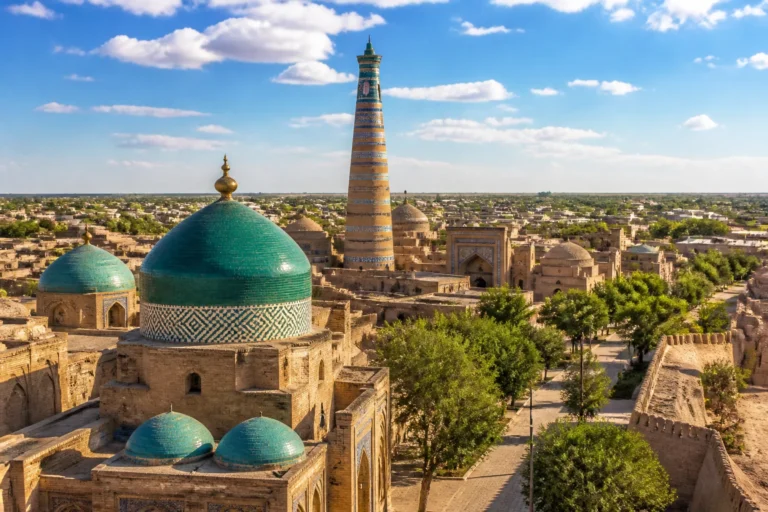 AI illustration
Urgench
Urgench is a practical starting point for exploring Uzbekistan’s Khorezm region, best known to many visitors for the walled…
Explore destination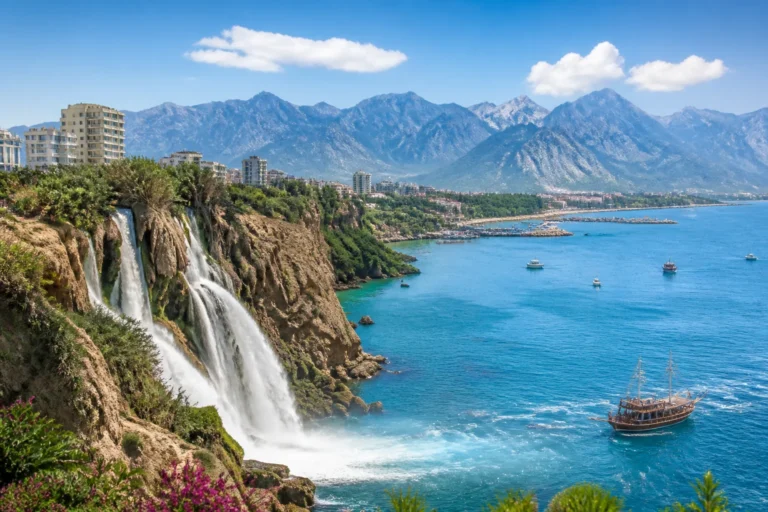 AI illustration
Antalya
Antalya is one of Turkey’s easiest coastal bases for a city break with sea views, Old Town atmosphere and…
Explore destination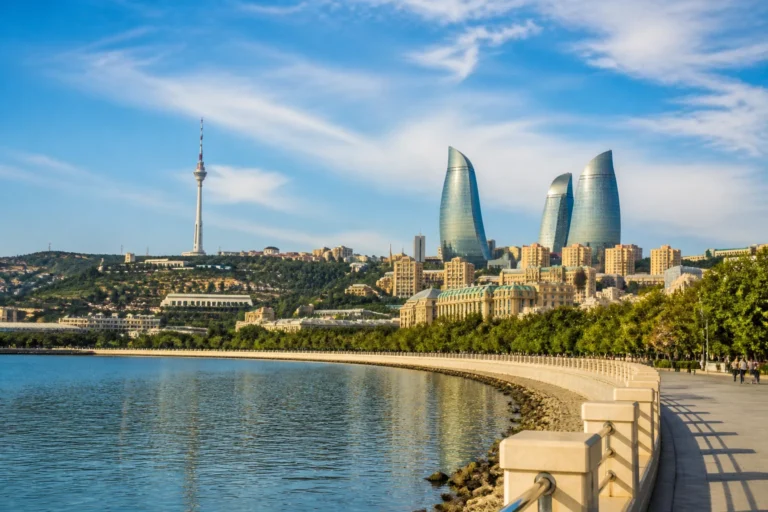 AI illustration
Baku
Baku brings together a compact historic centre, broad Caspian waterfront and striking modern architecture. The Azerbaijani capital is a…
Explore destination