
Uzbekistan · Asia
Samarkand Travel Guide for Independent Visitors
Samarkand is one of Central Asia’s most atmospheric cities, with a scale and sense of history that rewards slow exploration. For European independent travellers, it offers a mix of monumental Islamic architecture, lively markets, neighbourhood tea houses, and easy day-to-day logistics compared with many first-time Uzbek stops. This guide focuses on what to see, how long to stay, where to base yourself, and the practical details that help a trip feel smooth rather than rushed.
Find flights to Samarkand ↓ AI illustration
Find flights to Samarkand
Compare flights · EURAbout Samarkand
Samarkand is a historic Silk Road city in Uzbekistan that many travellers know for its blue-domed monuments, tiled madrassas, and grand squares. The city’s best-known sights are concentrated enough to make sightseeing straightforward, but the broader appeal lies in the layers of old and new: restored landmarks, residential streets, markets, bakeries, and calm courtyards that give the city everyday character.
For independent visitors, Samarkand works well as a focused city break or as part of a wider Uzbekistan route with Bukhara and Tashkent. It is especially rewarding if you enjoy architecture, Islamic art, photography, and a slower pace of travel where the journey between sights can be as interesting as the sights themselves.
- Silk Road history and architecture
- Compact enough for flexible sightseeing
- Good fit for a wider Uzbekistan itinerary
Things to Do in Samarkand
Start with the city’s core landmarks: Registan Square, the Shah-i-Zinda necropolis, and the Gur-e-Amir mausoleum are the classics for a reason. Together they show different sides of Samarkand’s heritage, from monumental civic space to intimate shrine architecture and a dynastic tomb that helped shape the city’s identity. Give yourself time to look closely at tilework, inscriptions, and changes in light rather than treating them as quick photo stops.
Beyond the headline monuments, the Siyob Bazaar is useful for understanding daily life, especially if you want a more grounded contrast to the restored historic centre. You can also look for smaller mosques, madrassas, and neighbourhood streets away from the main sightseeing flow. A slower evening walk can be rewarding too, particularly in areas where locals gather for tea, bread, and conversation.
If you have extra time, consider visiting craft workshops, traditional bakeries, or museums that help explain the city’s role in trade and scholarship. Samarkand is not a place to rush from one famous façade to the next; it is more satisfying when you leave room for unplanned stops and repeated visits to the same area at different times of day.
- Registan Square and its surrounding ensemble
- Shah-i-Zinda for layered tile decoration
- Gur-e-Amir for a major Timurid-era monument
- Siyob Bazaar for food and local atmosphere
Best Time to Visit Samarkand
Samarkand is usually best planned for the milder parts of the year, when long walks between sights are more comfortable and outdoor sightseeing feels less draining. Spring and autumn are commonly the most pleasant seasons for exploring the city on foot, though they can also be busier with other travellers. These periods tend to suit visitors who want a balance of comfortable weather and full days outside.
Summer can be intense, so if you travel then, it helps to build your day around early starts, shade, and longer indoor or courtyard breaks. Winter is quieter and can still be a worthwhile time to visit if you prefer fewer crowds and do not mind cooler conditions. In any season, check opening arrangements for major sites directly with official or on-site sources before you go.
- Spring and autumn are often the most comfortable
- Summer suits early starts and slower pacing
- Winter can be quieter for museum and monument visits
How Long to Stay in Samarkand
Two full days is a sensible minimum if you want to see the main monuments without feeling compressed. That allows for the classic historic core, one market visit, and time to wander between sites rather than just ticking them off. If you like architecture, photography, or slower travel, a third day gives the city room to breathe.
With three days or more, you can revisit favourite places at different times of day, explore beyond the main visitor circuit, and add a relaxed meal or tea stop without constantly watching the clock. Samarkand also works well as an overnight stop on a longer rail-based journey through Uzbekistan, especially if you prefer a trip that mixes famous landmarks with regular, unhurried street life.
- 2 days for the essentials
- 3 days for a more relaxed experience
- Good as part of a longer Uzbekistan itinerary
Airports and Transport
Samarkand is served by Samarkand International Airport, which makes arrival straightforward for many visitors. From the airport, transport into the city is usually done by taxi or pre-arranged transfer, and travellers should confirm current options and official guidance before arrival. If you are coming from elsewhere in Uzbekistan, rail connections are often the most practical long-distance option.
Once in Samarkand, getting around is manageable with a mix of walking, taxis, and local transport. The historic centre is best explored on foot, but distances between some attractions can be longer than they appear on a map, especially in hot weather. For short hops, agree your taxi method and fare expectations in advance where appropriate, and use official or reputable services when possible. For intercity trips, check current schedules directly with the railway or transport operator rather than relying on assumptions.
- Samarkand International Airport for arrivals
- Walking is best in the historic centre
- Rail is often useful for longer domestic links
- Confirm taxi and transfer details locally
Where to Stay in Samarkand
For first-time visitors, staying near the historic centre is the easiest way to keep your days simple. You will be closer to the main monuments, more likely to manage early-morning or evening visits comfortably, and able to return to your accommodation without much hassle. This area is especially practical if your trip is short and you want to minimise time spent on transport.
If you prefer a calmer base, look for accommodation slightly away from the busiest sightseeing streets but still within easy taxi or walking reach. That can give you a quieter night while keeping access to restaurants and attractions manageable. Independent travellers may also want to compare guesthouses, small hotels, and apartment-style stays, especially if breakfast, courtyard space, or extra flexibility matters to them.
- Historic centre for maximum convenience
- Quieter nearby districts for a less busy stay
- Guesthouses and small hotels suit independent travellers
Practical Tips for Visiting Samarkand
Dress respectfully when visiting religious or historical sites, and carry water and sun protection if you are sightseeing for long stretches. A small amount of cash can be useful for taxis, snacks, and market purchases, though your exact payment options may vary by place. It is also worth learning a few basic phrases or having addresses written in a script that local drivers can read more easily.
Samarkand is one of those cities where timing matters less than pacing. If you try to see everything in one rush, the experience can blur together; if you allow pauses for tea, shade, and photos, the city becomes more memorable. For entry arrangements, opening hours, dress expectations, and transport details, rely on the official providers and your accommodation for the most current information rather than on outdated advice.
- Carry some cash for small purchases and taxis
- Plan for shade, water, and respectful clothing
- A slower pace makes the city far more rewarding
Frequently asked questions about Samarkand
Is Samarkand a good destination for a first trip to Uzbekistan?
Yes. Samarkand is one of the easiest places to understand the appeal of Uzbekistan because its main monuments, markets, and visitor infrastructure are relatively accessible for independent travellers.
How many days do I need in Samarkand?
Two days is enough for the headline sights, while three days gives you a more relaxed visit with time for markets, neighbourhood walks, and repeat visits to the historic centre.
Can I explore Samarkand on foot?
Much of the historic core can be explored on foot, but some attractions are farther apart than they look on a map. For longer hops or hot-weather sightseeing, taxis can save time and energy.
What is Samarkand best known for?
Samarkand is best known for its Silk Road heritage, especially Registan Square, Shah-i-Zinda, Gur-e-Amir, and the city’s distinctive tile-covered Islamic architecture.
Is Samarkand only about monuments?
No. The monuments are the main draw, but the city is also rewarding for its bazaars, bakeries, tea houses, quieter streets, and the everyday rhythm around the historic core.
Should I combine Samarkand with other Uzbek cities?
If you have time, yes. Samarkand pairs naturally with Bukhara and Tashkent, and the combination works well for travellers interested in rail travel and a broader view of Uzbekistan.
Travel information can change. Check official transport operators and attraction websites before booking.
Editorial review: 23 Oct 2026
More destinations to explore
 AI illustration
Tashkent
Tashkent, Uzbekistan’s capital, is a broad, green city where Soviet-era avenues, Islamic landmarks, modern metro stations and busy bazaars…
Explore destination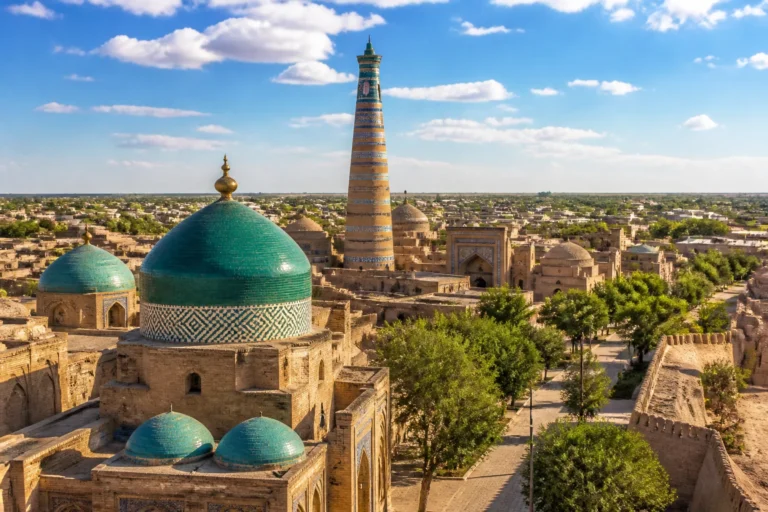 AI illustration
Urgench
Urgench is a practical starting point for exploring Uzbekistan’s Khorezm region, best known to many visitors for the walled…
Explore destination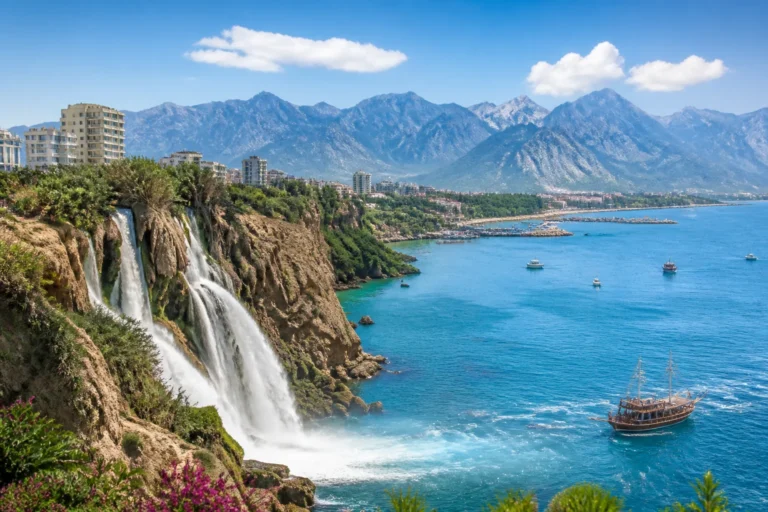 AI illustration
Antalya
Antalya is one of Turkey’s easiest coastal bases for a city break with sea views, Old Town atmosphere and…
Explore destination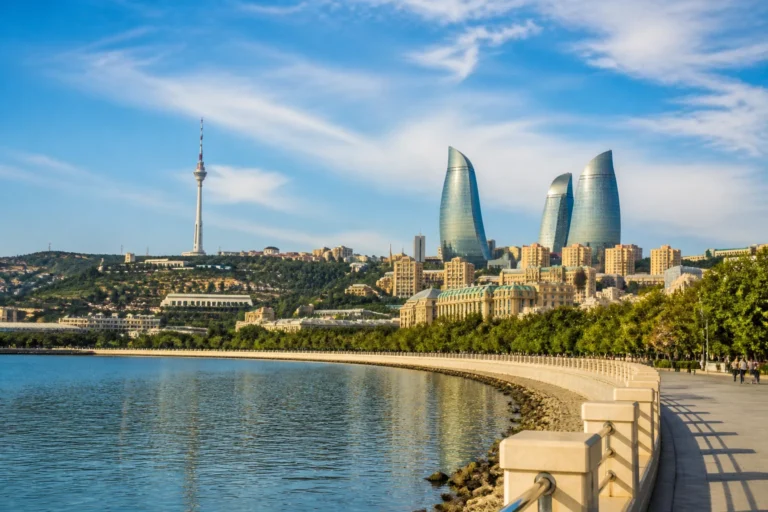 AI illustration
Baku
Baku brings together a compact historic centre, broad Caspian waterfront and striking modern architecture. The Azerbaijani capital is a…
Explore destination