
Switzerland · Europe
Zurich Destination Guide for Independent Travellers
Zurich is often seen as Switzerland’s financial hub, but it is also an easy city to enjoy on foot, by tram, and along the water. For independent travellers, it offers a compact old town, lake views, reliable public transport and straightforward day-trip options into the Alps or nearby towns. This guide focuses on how to make the most of Zurich without overplanning, especially if you want a city break that feels efficient, clean and quietly varied.
Find flights to Zurich ↓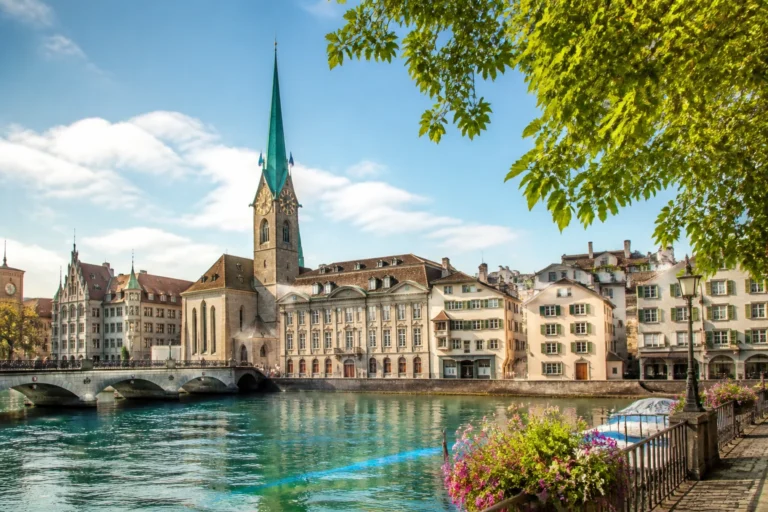 AI illustration
Find flights to Zurich
Compare flights · EURAbout Zurich
Zurich is Switzerland’s largest city and one of the country’s easiest places to navigate as a visitor. The historic centre sits close to Lake Zurich and the River Limmat, which gives the city a pleasant scale: many of the main sights can be reached on foot, while trams connect neighbourhoods efficiently. It is a practical destination for travellers who value order, good transport and a mix of urban life with access to nature.
The city is not about ticking off a long list of headline attractions. Its appeal lies in small experiences: walking the lanes of the Altstadt, pausing by the lake, exploring museums, sitting in a café and noticing how quickly the scenery changes once you head uphill or out toward the water. It also works well as a base for day trips, especially if you want to combine a city stay with rail-based exploring elsewhere in Switzerland.
- Compact historic centre and lakeside setting
- Strong public transport network
- Good base for regional day trips
Things to do in Zurich
Start in the Old Town, where narrow streets, medieval churches and small squares create the city’s most atmospheric area. Grossmünster and Fraumünster are among the best-known landmarks, but the pleasure here is less about monuments alone and more about wandering between them. Crossing the river, climbing to a viewpoint, or following the waterfront can turn a short walk into a relaxed half-day.
Lake Zurich is another essential part of the experience. You do not need a special plan to enjoy it: a promenade walk, a ferry ride, or a stop at one of the lakeside parks can be enough. For culture, Zurich has a strong museum scene, with options ranging from art and design to Swiss history. If you prefer lighter sightseeing, Bahnhofstrasse offers a look at the city’s polished side, though it is more interesting as a stroll than as a shopping mission.
For a different angle, head into neighbourhoods beyond the centre. Areas such as Kreis 4 and Kreis 5 tend to feel more contemporary, with cafés, bars, street art and former industrial spaces repurposed for dining and culture. If you have extra time, take a train or a lake boat excursion rather than trying to squeeze everything into the centre.
Highlights can include a river walk, a lake promenade, a museum visit and a neighbourhood evening out. This balance makes Zurich suitable for travellers who like a city break with room to slow down.
- Old Town walking routes
- Lake Zurich promenade and boat options
- Museums, cafés and adaptive reuse districts
- Scenic trams and easy neighbourhood hopping
Best time to visit Zurich
Zurich is a year-round destination, but the experience changes noticeably by season. Spring and early autumn are often the easiest times for sightseeing because the city is comfortable for walking and outdoor cafés become more appealing. These periods can also work well if you want a mix of city time and day trips without the extremes of summer crowds or winter chill.
Summer brings longer days and more activity around the lake, with outdoor swimming spots, ferry rides and a lively atmosphere. Winter is quieter and can be appealing if you are interested in museums, Christmas markets and a colder, more atmospheric city break. If you plan to combine Zurich with mountain travel, remember that seasonal conditions in higher areas can differ significantly from the city itself.
Rather than choosing purely on weather, think about what you want from the trip. For relaxed sightseeing, shoulder seasons often make the city feel especially manageable. For lake life and long evenings outside, summer is the obvious fit. For a more subdued urban stay, winter can work well as long as you are comfortable dressing for colder conditions.
- Spring and early autumn suit walking and sightseeing
- Summer is good for lakeside time
- Winter works well for museums and seasonal events
How long to stay in Zurich
Two full days is enough for a first look at Zurich if your aim is to see the centre, spend time by the lake and visit one or two museums. That pace suits travellers using the city as part of a larger Swiss itinerary. You can cover the essentials without feeling rushed, especially if you rely on trams and keep sightseeing focused.
Three days gives you a better rhythm. It allows for a slower Old Town walk, a proper lake outing and time to explore a less central district or take a half-day excursion. If you enjoy museums, cafés and unhurried city wandering, the extra day makes a noticeable difference.
Four days or more only makes sense if Zurich is a base for day trips or if you like to travel slowly. In that case, the city can anchor a trip that includes nearby towns, scenic rail journeys or more time on the water.
- 2 days for a compact first visit
- 3 days for a more balanced city break
- 4+ days if using Zurich as a base
Airports and transport in Zurich
Zurich Airport is the main gateway and is well connected to the city by rail and public transport. For most travellers, the simplest approach is to continue into town using the airport’s rail links or other official public transport options rather than arranging a separate transfer in advance. Check the current options with the airport and Swiss transport providers before you travel.
Within the city, trams, buses and trains are the most practical way to get around. Zurich’s network is designed for frequent, predictable connections, and visitors usually find it easier to move around this way than by car. Many central areas are walkable, and combining walking with public transport often gives the best experience.
If you plan day trips, rail is usually the most straightforward option. Boats on the lake can also be part of the journey rather than just a scenic extra. For current fares, timetables and ticket rules, consult the official transport operators rather than relying on outdated information from blogs or forums.
- Zurich Airport is the main arrival point
- Trams and trains are the easiest way to move around
- Walking plus public transport works well in the centre
Where to stay in Zurich
The best area depends on how you want to spend your time. The Old Town is the most convenient for first-time visitors who want to be close to historic streets, the river and many major sights. It can feel the most classic, though not necessarily the liveliest after dark.
If you prefer more transport convenience and easy access to the station, staying near Zürich Hauptbahnhof can be a smart choice. It suits short breaks and onward travel, especially if you are arriving late or leaving early. For travellers who want cafés, nightlife and a more contemporary urban feel, neighbourhoods like Kreis 4 and Kreis 5 can be attractive alternatives.
Lake-facing areas offer a calmer mood and easy access to walks and waterfront time. They are especially appealing if your trip is as much about atmosphere as sightseeing. Wherever you stay, Zurich rewards proximity to trams or a good walking route, so you do not need to be in the absolute centre to feel connected.
- Old Town for classic sightseeing access
- Station area for transit convenience
- Kreis 4 and 5 for a more local, modern feel
- Lake-facing areas for a calmer stay
Practical tips for Zurich
Zurich is easy to enjoy when you keep the logistics simple. Public transport is excellent, but it still helps to understand how tickets and zones work before you board. Use official transport information to check what you need, especially if you are combining tram, train and boat travel. The city is also very orderly, so small details like queueing, recycling and quiet behaviour in residential areas tend to matter more than in many other destinations.
English is widely understood in visitor settings, but a few basic German phrases are always appreciated. Carry a payment method that works well across Switzerland, and remember that some small purchases may be handled differently from what you are used to elsewhere in Europe. If you are travelling in winter, allow extra time for outdoor movement and dress in layers. If you are visiting in summer, the lake can make the city feel much more relaxed than the business district suggests.
Finally, do not try to see Zurich only through its famous central streets. Some of the best memories come from small changes of pace: a ferry crossing, a neighbourhood dinner, a short tram ride to a different district or a quiet walk beside the water. That combination is what makes the city more than just a stopover.
- Check official transport information before travelling
- Carry a payment method that works in Switzerland
- Mix central sights with neighbourhood time
- Leave room for lake and river walks
Frequently asked questions about Zurich
Is Zurich worth visiting for a short city break?
Yes, especially if you like compact cities with good transport, walkable streets and easy access to water. Zurich works well for a short break because the main areas are close together and you can see a lot without rushing.
Can I explore Zurich without a car?
Definitely. Zurich is one of the easiest Swiss cities to manage without a car thanks to its trams, buses and trains. Walking is also practical in the centre, and a car is usually more hassle than help for a city visit.
What is Zurich best known for among travellers?
Many visitors know Zurich for its financial role, but travellers often remember the Old Town, the lakefront, efficient transport and access to nearby day trips. It is a city that feels organised rather than overwhelming.
How many days do I need in Zurich?
Two days is enough for the main sights and a relaxed first impression. Three days gives you a better balance and more time for the lake, museums or a neighbourhood walk.
Is Zurich a good base for day trips?
Yes. Its rail connections make it a practical base for nearby towns and scenic excursions. If you want to combine a city stay with regional travel, Zurich is one of the most convenient starting points in Switzerland.
Travel information can change. Check official transport operators and attraction websites before booking.
Editorial review: 23 Oct 2026
More destinations to explore
 AI illustration
Geneva
Geneva pairs a lakeside setting with a compact historic centre and a distinctly international outlook. Visitors come for views…
Explore destination AI illustration
Adler/Sochi
Adler and Sochi stretch along Russia’s Black Sea coast, combining seaside promenades and parks with access to mountain landscapes.…
Explore destination AI illustration
Alghero
Alghero, on the north-west coast of Sardinia, combines a historic centre with easy access to beaches and the coastal…
Explore destination AI illustration
Alicante
Alicante is an easygoing Mediterranean city where a compact old centre, a long waterfront and a busy local food…
Explore destination