
Montenegro · Europe
Podgorica Travel Guide for Independent Visitors
Podgorica is often treated as a transit point, but Montenegro’s capital has enough local character to reward a short stop. It is a compact city of rivers, bridges, café terraces, and low-key neighbourhoods, with good access to wine country, lake scenery, and mountain day trips. For travellers who prefer an easy base over a packed sightseeing checklist, Podgorica works best as a relaxed introduction to central Montenegro.
Find flights to Podgorica ↓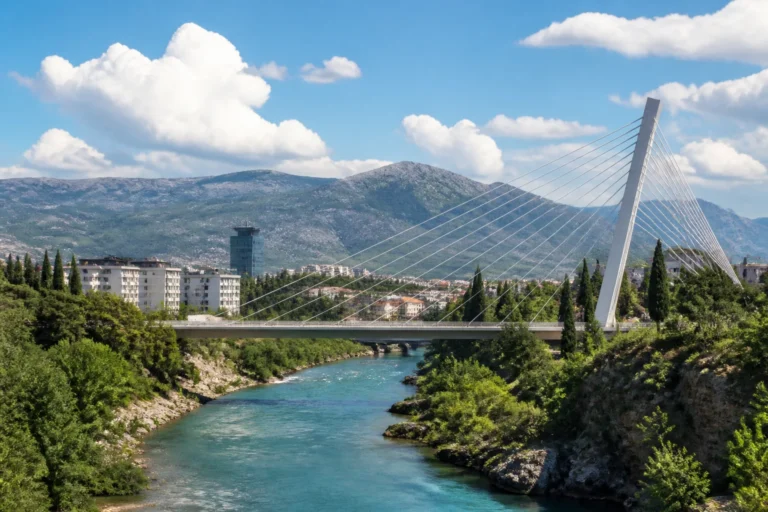 AI illustration
Find flights to Podgorica
Compare flights · EURH2 About Podgorica
Podgorica is the political and administrative centre of Montenegro, but it feels more subdued than many European capitals. The city was heavily reshaped over time, so visitors should not expect a dense historic core full of major monuments. Instead, Podgorica offers a practical urban base, a slower rhythm, and easy access to the rest of the country.
What makes it interesting is the mix: remnants of older Ottoman-era layers, post-war architecture, riverfront green space, modern cafés, and a growing food and wine scene. The city is especially appealing to independent travellers who like exploring on foot, then heading out for half-day trips to vineyards, lakes, or the nearby hills.
- Compact and easy to navigate
- Good base for central Montenegro day trips
- More local than tourist-driven
H2 Things to do in Podgorica
Start with a walk through the central streets and across the bridges over the Morača and Ribnica rivers. The city’s best moments are often found in simple urban scenes: a shaded café terrace, river views, and neighbourhood streets where everyday life happens at its own pace. The area around the city centre is the most practical place for casual wandering.
For a more historic feel, look for the remains of the old town area and the city’s older religious buildings, then balance that with modern landmarks and parks. Podgorica is also a good place to sample Montenegrin food and local wines, especially in restaurants that focus on regional ingredients rather than international menus. If you have more time, use the city as a launch point for trips to Skadar Lake, nearby wineries, or the mountains beyond the capital.
- Walk the riverbanks and central bridges
- Look for traces of the older city layers
- Use Podgorica as a base for wine and nature trips
H2 Best time to visit Podgorica
Podgorica is most comfortable in the shoulder seasons, when temperatures are easier for walking and day trips. Spring and autumn are generally the most balanced times for combining city time with outings to the surrounding region. Summer can feel hot and quiet in the afternoon, so planning indoor breaks or early starts helps.
Winter is usually less focused on tourism and can suit travellers who want a calmer city experience and lower crowds in cafés and restaurants. If you are using Podgorica mainly as a transfer hub, your best time may simply depend on the trips you want to combine with it: lake visits, wine tasting, or mountain access all work differently by season.
- Spring and autumn are the most comfortable seasons
- Summer is better for early starts and late evenings
- Winter suits a quieter city break
H2 How long to stay in Podgorica
For many travellers, one full day is enough to see the main city areas, have a good meal, and get a sense of Podgorica’s atmosphere. That works well if you are simply arriving, resting, and moving on to another part of Montenegro. A short stay can still be worthwhile if you enjoy low-key cities and want a smooth travel base.
Two to three days is better if you want to add a day trip. With extra time, you can combine the city with nearby natural scenery, wineries, or Skadar Lake. Beyond that, Podgorica becomes most useful as a practical base rather than a destination with a long list of urban attractions.
- 1 day for a brief city stop
- 2–3 days if you want a day trip
- Longer stays work best as a base
H2 Airports and transport
Podgorica is served by its own airport, which makes it one of the simplest entry points into Montenegro. From the airport, travellers usually continue by taxi, pre-arranged transfer, or onward transport into the city. For current connections, check the airport and airline information directly, because routes and schedules can change.
Within the city, walking works well for central areas, while taxis are useful for places outside the core. Public transport exists, but many visitors find it less straightforward than in larger European capitals, so planning ahead helps. If you want to explore beyond the city, renting a car can give you the most flexibility, especially for lake, coast, or mountain day trips. Trains and buses may also be useful for some intercity routes, but it is best to confirm timings and stations with official operators before travelling.
- Podgorica Airport is the main arrival point
- Walking is practical in the centre
- A car can help for regional day trips
H2 Where to stay in Podgorica
If you want convenience, stay near the city centre or within easy reach of the main bridges and riverfront areas. This usually gives you the best balance of cafés, restaurants, and straightforward transport. It is a sensible choice for first-time visitors and anyone staying just one or two nights.
Travellers who prefer quieter surroundings may look at residential areas just outside the centre, especially if they are renting a car or do not mind using taxis. Business hotels can be practical for short stays, while smaller guesthouses or apartments may suit independent travellers who want more space and a kitchen. As always, location matters more than style in Podgorica, because the city is spread out rather than tightly packed.
- Centre for easy walking and dining
- Outer neighbourhoods for quieter stays
- Apartments suit longer self-catered visits
H2 Practical tips for Podgorica
Podgorica is a functional city rather than a polished showpiece, so expectations matter. Plan for a mix of walking, taxi use, and occasional public transport rather than assuming everything is clustered together. In hot months, build your day around morning and evening activities, with a slower middle of the day.
English is commonly understood in many visitor-facing places, but not everywhere, so a few basic local greetings can be helpful. Carry a payment method that works across Montenegro and keep some flexibility if you are using buses or regional transport. Most importantly, treat Podgorica as part of a wider Montenegro trip: the city is strongest when paired with the country’s rivers, lakes, vineyards, and mountains rather than judged only on its urban sights.
- Expect a practical, spread-out city
- Use mornings and evenings in warmer months
- Combine Podgorica with nearby nature and wine routes
Frequently asked questions about Podgorica
Is Podgorica worth visiting as a destination?
Yes, if you enjoy quieter cities and want a convenient base for exploring central Montenegro. Podgorica is not a classic sightseeing city, but it can be rewarding for short stays, food, and regional trips.
How many days do you need in Podgorica?
One day is enough for a quick overview, while two to three days work better if you want to add a day trip to places like Skadar Lake or local wineries.
Is Podgorica easy to get around without a car?
The centre is walkable, but the city is spread out. Many visitors manage with walking and taxis, while a car is more useful for trips outside the city.
What is Podgorica best used for?
Podgorica is best used as a practical base for central Montenegro, especially if you want simple access to the airport, nearby nature, and regional wine or lake excursions.
What should I expect from Podgorica’s city centre?
Expect cafés, bridges, river views, government buildings, and a calmer urban atmosphere rather than a dense historic centre packed with famous landmarks.
Travel information can change. Check official transport operators and attraction websites before booking.
Editorial review: 23 Oct 2026
More destinations to explore
 AI illustration
Adler/Sochi
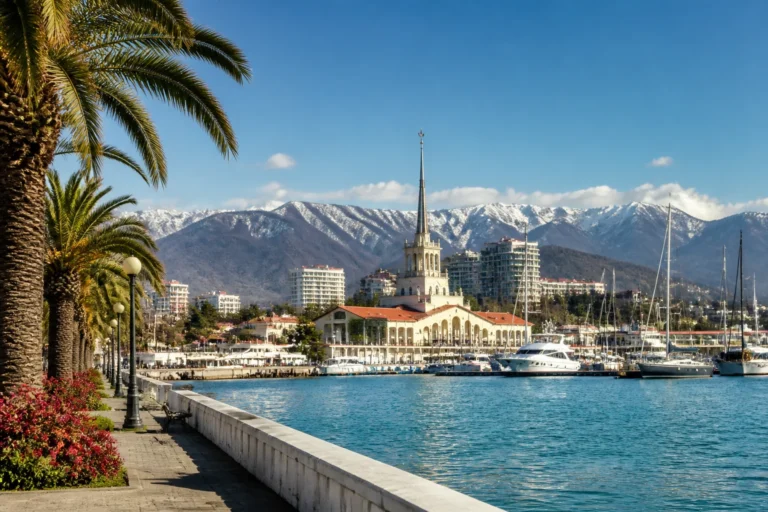
Adler and Sochi stretch along Russia’s Black Sea coast, combining seaside promenades and parks with access to mountain landscapes.…
Explore destination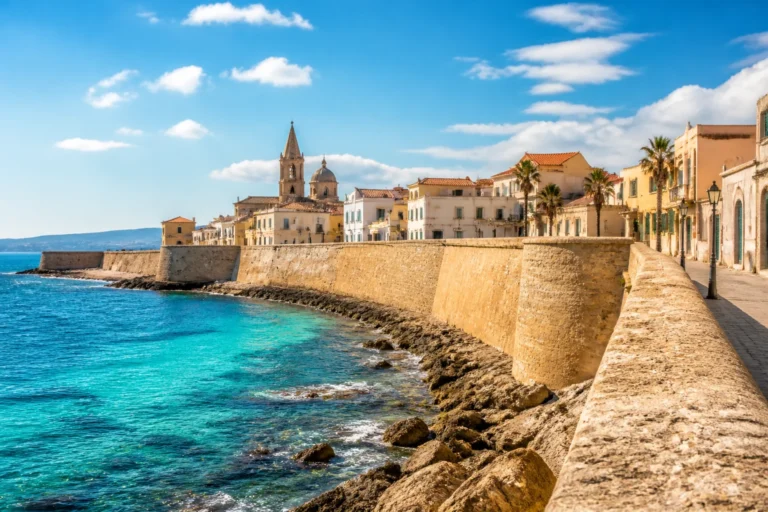 AI illustration
Alghero
Alghero, on the north-west coast of Sardinia, combines a historic centre with easy access to beaches and the coastal…
Explore destination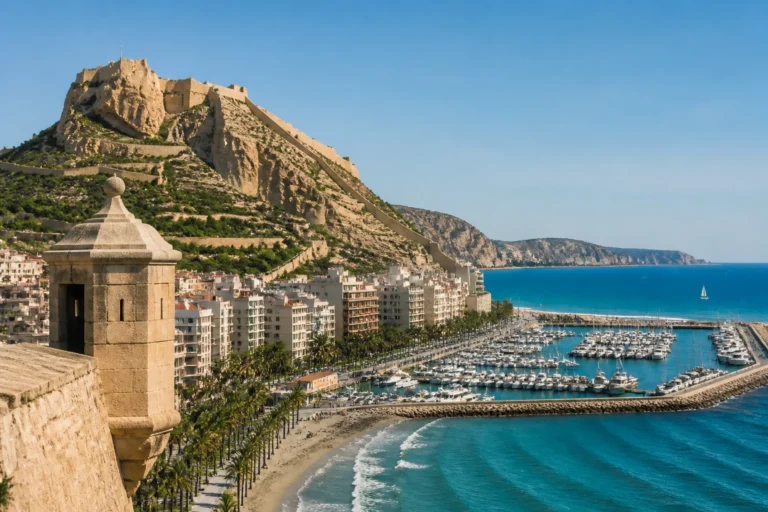 AI illustration
Alicante
Alicante is an easygoing Mediterranean city where a compact old centre, a long waterfront and a busy local food…
Explore destination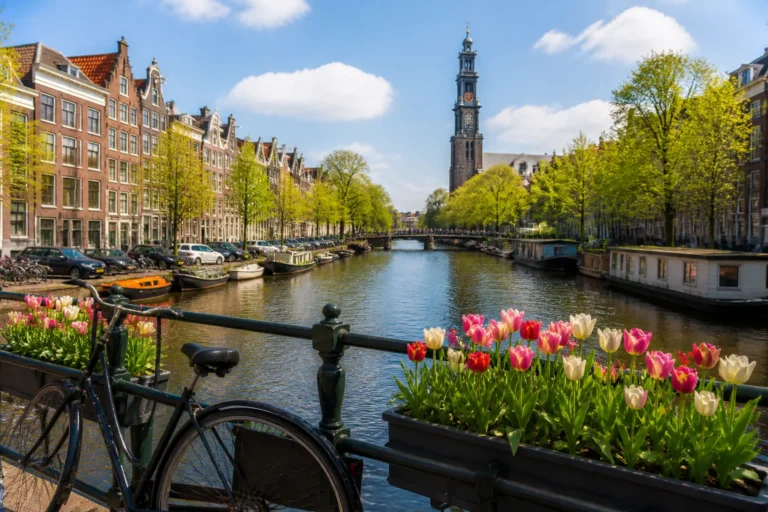 AI illustration
Amsterdam
Amsterdam combines a compact historic centre with a broad mix of museums, neighbourhood cafés and quieter residential streets. Its…
Explore destination