
Colombia · South America
Medellin travel guide for independent visitors
Medellin is one of Colombia’s most appealing city breaks for travellers who like a mix of culture, neighbourhood life, cable cars, and easy access to the hills around the valley. Set in the Aburrá Valley, it has a practical public-transport network, a strong café and food scene, and enough museums, parks, and viewpoints to fill several days without rushing. This guide focuses on how to experience the city comfortably and realistically as an independent visitor.
Find flights to Medellin ↓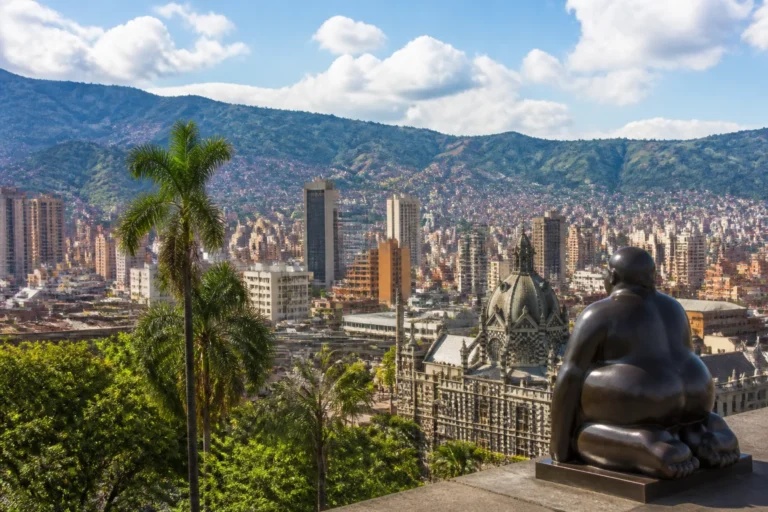 AI illustration
Find flights to Medellin
Compare flights · EURAbout Medellin
Medellin is Colombia’s second-largest city and a place where everyday urban life feels closely tied to the surrounding mountains. Many visitors come for the contrast between modern districts, hillside neighbourhoods, and the city’s reputation for innovation in public transport and urban renewal. It is a good destination for travellers who want city experiences that feel local rather than packaged.
For independent travellers, Medellin works best when approached neighbourhood by neighbourhood. The city is spread out, and movement between areas matters more than in compact historic centres. You will find business districts, lively nightlife zones, cultural institutions, and quieter residential areas that each suit different styles of trip.
- A valley city with strong neighbourhood character
- Useful for culture, food, viewpoints, and urban exploration
- Best enjoyed by moving between distinct districts
Things to do in Medellin
Start with the city’s cable car system, which is both a transport network and a way to understand Medellin’s geography. Riding up to the higher neighbourhoods gives a sense of the valley layout and often leads to parks, viewpoints, or local markets. The Metro itself is also worth using beyond practicality, because it is one of the cleanest and most straightforward ways to cross the city.
In the centre, the main museums, plazas, and public spaces can be combined into a half-day walk, but the experience changes quickly from block to block, so it pays to stay aware of your surroundings and choose daytime visits. For a more contemporary side of the city, look for cafés, galleries, and restaurants in neighbourhoods known for design, nightlife, and creative businesses.
Many travellers also use Medellin as a base for day trips into the wider Antioquia region. If you prefer to keep things city-based, you can still build a varied trip with markets, park visits, street art, local food, and evening neighbourhood walks in busier districts.
- Ride the Metro and cable cars for city views and orientation
- Explore central museums and public squares in daylight
- Spend time in neighbourhoods known for cafés, design, and dining
Best time to visit Medellin
Medellin is often described as having a spring-like climate, but it is still worth planning around rainfall patterns and the type of trip you want. Rather than chasing a specific season for weather alone, think about whether you prefer clearer conditions for views and walking, or do not mind showers in exchange for a less crowded atmosphere.
For many travellers, the most comfortable time is when you can spend long parts of the day outdoors and move between neighbourhoods without too much interruption. If you are visiting for festivals, concerts, or a specific cultural event, check official calendars in advance, as the city’s energy changes noticeably around major dates.
- Plan around rainfall patterns rather than temperature extremes
- Check local event calendars if you want a festival-focused trip
- Outdoor time is central, so comfort for walking matters
How long to stay in Medellin
A short stay of two to three full days is enough for first impressions: a Metro-and-cable-car ride, the main urban sights, and one or two neighbourhoods for dining or coffee. This works if you are combining Medellin with other Colombian destinations and mainly want a city break.
If you have four to five days, the city becomes much more rewarding. You can slow down, visit more than one district, spend time on viewpoint or park visits, and leave room for a day trip without feeling rushed. Longer stays suit travellers who like working from cafés, exploring local food, or using Medellin as a base for regional excursions.
- 2–3 days for highlights and orientation
- 4–5 days for a more balanced city stay
- Extra time helps if you want a day trip outside the city
Airports and transport
Medellin is served by José María Córdova International Airport, which handles most international arrivals, and by Olaya Herrera Airport, which is mainly associated with domestic traffic. Because airport and route arrangements can change, it is sensible to confirm your arrival airport and onward options with the airline or official airport information before travelling.
Within the city, the Metro is the backbone of public transport and is usually the easiest option for visitors to understand. Cable cars connect some hillside communities to the network, and buses, taxis, and ride-hailing services can help fill gaps, especially when crossing areas that are not well linked by rail. For point-to-point movement, allow extra time and avoid assuming that a short distance on a map means a quick journey in practice.
- José María Córdova is the main international airport
- The Metro is the easiest network for many visitors
- Check transfers carefully because the city is geographically spread out
Where to stay in Medellin
For most independent travellers, the best-known choice is El Poblado, which has many hotels, apartments, restaurants, and nightlife options. It is convenient and easy to understand on a first visit, though it can feel more polished and tourist-oriented than other parts of the city. If you want lots of dining choices and straightforward access to taxis or ride-hailing, it is a practical base.
Laureles is a strong alternative for visitors who prefer a more residential feel, with cafés, local restaurants, and a slightly calmer atmosphere. It can suit longer stays or return visitors who want a neighbourhood that feels less centred on nightlife. The city centre is more useful for specific sightseeing than as a first choice for many tourists, while other districts may appeal if you already know the city and want a more local rhythm.
- El Poblado for convenience, dining, and nightlife
- Laureles for a more residential, slower pace
- Choose based on transport ease and your preferred atmosphere
Practical tips for Medellin
Build your plans around neighbourhoods rather than individual attractions, especially if you have limited time. That makes it easier to group sights, reduce crossing the city repeatedly, and keep transport simple. Daytime is generally the best time for wandering unfamiliar areas, while evenings are often best spent in busy restaurant streets, hotel zones, or places you already know.
Dress casually but neatly, and carry only what you need for the day. Like in any large city, it helps to stay alert with valuables and to choose your transport with care. If you are planning cable-car rides, museum visits, or regional excursions, check official operators or venue websites for current opening information and service details before you go.
- Plan by neighbourhood to reduce unnecessary travel time
- Use official sources for current transport and opening details
- Keep evenings to familiar, busy districts when possible
Frequently asked questions about Medellin
Is Medellin easy to visit without a car?
Yes, many visitors manage well without driving by using the Metro, cable cars, taxis, and ride-hailing services. It is still important to plan journeys by neighbourhood, because the city is spread across a wide valley.
Which area is best for first-time visitors to stay in?
El Poblado is often the simplest base for a first visit because it has many accommodation and dining options and is easy to navigate. Laureles is a good alternative if you prefer a more residential atmosphere.
How many days do I need in Medellin?
Two or three days are enough for the main highlights, but four or five days give you more time to explore different neighbourhoods and add a day trip.
Can I use Medellin as a base for day trips?
Yes, many travellers use the city as a base for regional excursions in Antioquia. The best option depends on your interests and the transport arrangements available on the day, so check with official operators or local providers.
Is the Metro useful for tourists?
Very much so. It is one of the most practical ways to move around the city and helps visitors understand the geography of Medellin as they travel.
Should I book airport transport in advance?
For a first arrival, it is wise to compare official airport information, hotel advice, and transport options in advance so you know how you will reach your accommodation. That is especially useful if you are arriving late or after a long flight.
Travel information can change. Check official transport operators and attraction websites before booking.
Prepared with AI assistance and reviewed by the FlyGo editor.
Editorial review: 7 Oct 2026