
Netherlands · Europe
Amsterdam Travel Guide: Plan Your Visit
Amsterdam combines a compact historic centre with a broad mix of museums, neighbourhood cafés and quieter residential streets. Its canals and cycle routes are part of daily life, but the city is more than its best-known sights: a little time outside the central ring can reveal a different pace. Use this guide to plan your stay, choose an area and consider how to get from Schiphol Airport into the city.
Find flights to Amsterdam ↓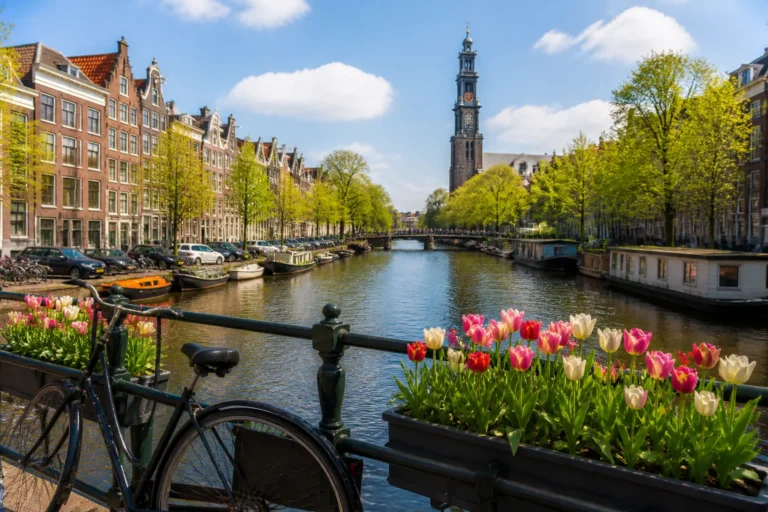 AI illustration
Find flights to Amsterdam
Compare flights · EURGetting to know Amsterdam
Amsterdam is the Netherlands’ capital and a popular European city break destination. Its historic centre is shaped by canals, narrow streets and canal houses, while museums and cafés are spread across several distinct districts. Many central sights are close enough to link on foot, though cycling and public transport are part of how the city moves.
The canal belt and central squares draw many first-time visitors, but the city also rewards exploring further. Jordaan has small streets and independent businesses; De Pijp is known for its lively food and café scene; and Amsterdam Noord, across the water from the centre, offers a change of setting. The city can suit art and history enthusiasts, couples, solo travellers and families, provided they are comfortable navigating busy urban areas.
- Historic canal ring and central streets
- Rijksmuseum and other major museums
- Neighbourhood cafés and markets
- Ferries and waterfront areas in Noord
Things to do in Amsterdam
Allow time for the museums as well as the streets between them. The Rijksmuseum and Van Gogh Museum are among the city’s best-known cultural attractions, while the Anne Frank House is a significant historic site. Entry arrangements and availability can vary, so check each attraction’s official information before building your itinerary around a visit.
A canal-side walk or boat trip offers a different view of the old centre, and the canal ring is worth exploring without a strict checklist. For a more neighbourhood-focused day, browse the streets of Jordaan or De Pijp, or take a ferry to Noord and spend time around its waterfront. Leave space for breaks: the centre can be busy, and a slower itinerary is often more comfortable than trying to fit every landmark into one day.
- Visit a museum that matches your interests
- Explore the canal belt on foot or by boat
- Spend time in Jordaan or De Pijp
- Cross the water to Amsterdam Noord
When to visit Amsterdam
Spring is associated with seasonal flower displays across the Netherlands, and Amsterdam can be a convenient base for a wider trip. It is also a popular time to visit, so plan around expected demand rather than assuming that central attractions or accommodation will be quiet. Summer brings longer daylight hours and plenty of outdoor activity, alongside busy streets and visitor areas.
Autumn and winter can suit travellers who prefer to focus on museums, cafés and indoor sights, though daylight hours are shorter in winter. Conditions change through the year, so pack for variable weather and check local information close to departure. For a more manageable visit at any time, consider weekdays and quieter periods, and reserve any essential attraction visits through official channels where required.
- Spring for seasonal displays and longer walks
- Summer for outdoor plans, with busy visitor areas
- Autumn and winter for a museum-focused itinerary
How long to stay in Amsterdam
Two full days can cover a first look at the canal centre, one or two major museums and a neighbourhood stroll, but the schedule will feel tight if you want several timed-entry attractions. Three days gives more room to balance museums with local areas and to avoid packing every activity into the same part of town.
Consider four days or more if you want a slower pace, additional museums or a day trip beyond the city. If your visit is short, group activities by area and allow time to get between them. Amsterdam’s compact central districts make walking practical for some plans, but not every attraction is next door.
- Two days: central highlights and a focused museum visit
- Three days: add neighbourhood time and a more relaxed pace
- Four or more days: consider a day trip or deeper museum visits
Schiphol Airport and getting around
Amsterdam Airport Schiphol (AMS) is the main airport for visitors to Amsterdam. A railway station is located beneath the airport terminal, with train services connecting Schiphol to Amsterdam and other destinations. Check the current route, platform and any disruption information with the relevant rail operator before travelling; journey details can change.
Once in the city, public transport includes trams, metro services, buses and ferries. Walking works well for many central journeys, while a tram or metro can help with longer distances. Cycling is widespread, but visitors unfamiliar with local traffic should take care and follow cycle-lane rules. Check the official transport operator’s current ticket options and conditions rather than assuming that one ticket covers every service.
- Use the airport railway station to check train connections
- Combine walking with trams, metro, buses or ferries
- Check current transport information before setting out
Where to stay in Amsterdam
The central canal area is convenient for sightseeing and evening plans, but it can be busy. Jordaan offers a more neighbourhood-oriented base while remaining close to central attractions. De Pijp is a useful area to consider for food and cafés, while the Museum Quarter can suit travellers whose priorities include the major museums.
Staying outside the historic centre may offer a quieter setting, but compare the accommodation’s actual location with the places you plan to visit and the nearest public transport. Amsterdam Noord can be an option for a different feel across the water; check ferry and other connections for your specific accommodation before booking. In every area, compare room conditions, cancellation terms and the total cost shown by the accommodation provider.
- Canal area for central sightseeing
- Jordaan for a residential neighbourhood feel
- Museum Quarter for museum-focused plans
- Check transport links when choosing a base farther out
Practical tips for planning your visit
Reserve time-sensitive attractions through their official websites and check entry requirements before travelling. Popular museums may have specific admission arrangements, and opening information can change. Keep a flexible alternative in mind in case your preferred time is unavailable.
Amsterdam’s historic streets and bridges can be uneven or narrow, and busy cycle lanes are easy to mistake for pedestrian space. Pay attention when crossing and avoid stopping in cycle routes to take photographs. If you are travelling with children, luggage or mobility needs, check the route and accommodation access in advance.
For flights, compare the available options and check the full journey details before making plans. FlyGo.si is a flight comparison and travel information website, not an airline or ticket issuer. Confirm current travel documents and entry requirements with the relevant official authorities for your circumstances.
- Check official attraction information before visiting
- Keep clear of cycle lanes and watch for cyclists
- Confirm travel-document requirements with official authorities
Frequently asked questions about Amsterdam
Which airport should I use for Amsterdam?
Amsterdam Airport Schiphol (AMS) is the main airport for the city. Its railway station is beneath the terminal, but check current train connections and any service changes with the operator before travelling.
How many days do you need in Amsterdam?
Two full days can cover central sights and a major museum, while three days allows more time for neighbourhoods and a less rushed schedule. Add days for extra museums or a trip beyond the city.
Can you get around Amsterdam without a car?
Yes. Many central areas are walkable, and public transport includes trams, metro services, buses and ferries. Check current routes and ticket conditions with the transport operators.
Which Amsterdam area is best for a first stay?
The central canal area is convenient for many sights. Jordaan and De Pijp offer different neighbourhood settings, while the Museum Quarter may suit visitors prioritising museums. Compare specific accommodation locations and transport links.
Should I book Amsterdam museums in advance?
For a particular museum or time slot, check its official website before your trip. Admission arrangements and availability can vary, so advance planning is sensible for attractions that are central to your itinerary.
Travel information can change. Check official transport operators and attraction websites before booking.
Editorial review: 27 Oct 2026
More destinations to explore
 AI illustration
Eindhoven
Eindhoven is one of the Netherlands’ most practical city breaks: compact, easy to navigate and known for design, technology…
Explore destination AI illustration
Adler/Sochi
Adler and Sochi stretch along Russia’s Black Sea coast, combining seaside promenades and parks with access to mountain landscapes.…
Explore destination AI illustration
Alghero
Alghero, on the north-west coast of Sardinia, combines a historic centre with easy access to beaches and the coastal…
Explore destination AI illustration
Alicante
Alicante is an easygoing Mediterranean city where a compact old centre, a long waterfront and a busy local food…
Explore destination