
Morocco · Africa
Tangier Travel Guide: Plan Your Visit
Tangier sits at Morocco’s northern tip, where the Mediterranean meets the Atlantic and Europe lies across the Strait of Gibraltar. Its medina, historic cafés and waterfront give the city a character distinct from Morocco’s inland destinations. Use this guide to plan what to see, choose an area to stay and consider how to get around. If you are travelling by air, FlyGo.si can help you compare flight options to Tangier.
Find flights to Tangier ↓ AI illustration
Find flights to Tangier
Compare flights · EURWhat to expect in Tangier
Tangier is a port city shaped by its position between the Mediterranean and Atlantic. Its history and international connections are visible in the mix of architecture, languages and influences, while everyday life continues around busy markets, cafés and residential streets. It is a working city as well as a visitor destination, so the medina is only one part of the experience.
The old medina and kasbah offer narrow lanes and historic buildings; newer districts bring wider streets, shops and seafront promenades. Tangier suits travellers interested in urban culture, food and coastal scenery, and it can also work as a starting point for exploring northern Morocco. Expect hills and uneven paving in the older quarters, and leave room in your plans for getting oriented.
- Explore the medina and kasbah
- See the city’s Atlantic and Mediterranean setting
- Combine historic streets with time along the waterfront
Things to do in Tangier
Begin in the medina, where lanes lead between small shops, cafés and residential doorways. The kasbah above it has historic sites and viewpoints over the city and water. Grand Socco, also known as Place du 9 Avril 1947, is a useful landmark at the meeting point of the old and newer parts of Tangier; nearby Petit Socco is a compact square surrounded by cafés and narrow streets.
For a change of pace, walk along the seafront promenade and explore the modern city around the corniche. Tangier’s literary and artistic past is part of its appeal, but opening times for museums and historic buildings can vary, so check before setting aside time for a particular visit.
Cap Spartel, where the Atlantic and Mediterranean meet, and the nearby Caves of Hercules are popular excursions west of the city. They are outside the central area, so plan transport rather than assuming they are an easy walk from the medina. Beaches and coastal walks can round out a visit, though conditions and facilities vary by location and season.
- Grand Socco and Petit Socco
- The kasbah and medina
- The corniche and seafront
- Cap Spartel and the Caves of Hercules
When to visit Tangier
Spring and autumn are often comfortable periods for walking around Tangier and planning excursions, with milder conditions than the height of summer. Summer brings a livelier coastal feel, but midday can be hot; allow time for shade and breaks. Winter is generally milder than in many European cities, though rain and cooler, damp days are possible.
The best timing depends on what you want to do: choose a shoulder season for a city-focused trip, or summer if seaside time is central to your plans. Ramadan dates change each year, and opening hours or meal routines may differ during the month. Check local arrangements for your travel dates, particularly if you have a tight schedule.
- Spring and autumn for exploring on foot
- Summer for a more beach-oriented visit
- Check opening hours around public holidays and Ramadan
How long to stay in Tangier
Two full days give most visitors time to see the medina, kasbah, central squares and seafront without turning every stop into a rush. Add a third day if you want to visit Cap Spartel and the Caves of Hercules, spend longer at the coast or make time for museums and slower meals.
Tangier can also be a short stop on a wider Morocco itinerary, but a single overnight may leave little time beyond the central sights. If arriving by air, allow for the journey between the airport and town, and avoid planning a tightly timed excursion immediately after landing.
- Two days for the main city sights
- Three days for a coastal excursion and a more relaxed pace
Tangier airport and getting around
Tangier Ibn Battouta Airport (TNG) serves the city. It lies outside the central districts, so you will need to arrange onward transport. Taxis are a common option; confirm the fare and payment arrangements before setting off, and use the official taxi rank or ask airport staff where to find authorised transport. Local services and arrangements can change, so check current information before travel.
In the city, much of the medina and kasbah is best explored on foot, but steep streets and uneven surfaces can make walking demanding. Petit taxis can help with trips around town, while grand taxis generally serve longer journeys; agree on the destination and clarify the fare or whether the vehicle is shared before travelling. For excursions beyond the centre, check transport options and return arrangements in advance.
Tangier is also connected to other parts of Morocco by rail from the city’s train station. If you are considering a train journey, consult the railway operator for current routes, departures and ticket information. Ferry services operate in the wider region, but the port serving a particular crossing may not be in central Tangier; check the departure port and transfer time carefully when combining rail, road and sea travel.
- Airport: Tangier Ibn Battouta (TNG)
- Walk in the medina; use taxis for longer city journeys
- Check train and ferry details with the relevant operators
Where to stay in Tangier
Stay in or near the medina if you want historic surroundings and easy access to the kasbah and central squares. Traditional buildings can be atmospheric, but lanes may be steep, confusing to navigate with luggage and difficult for vehicles. Check the exact location and access arrangements before booking, especially if you are arriving late.
The city centre is a practical base for shops, cafés and transport links, with a more modern street layout than the old quarter. The seafront and Malabata area suit visitors who prefer newer accommodation and proximity to the corniche, though you may need a taxi or longer walk to reach the medina. Compare locations as well as accommodation features, and consider how you will travel between your base and the sights.
- Medina for historic character
- City centre for practical access
- Seafront or Malabata for a modern coastal setting
Practical tips for planning your trip
Wear comfortable shoes for slopes, steps and uneven paving, and keep a map available because the medina’s lanes can be disorienting. For a first visit, a guided walk can provide context and help you get your bearings; agree the scope and any cost before setting off. Ask before photographing people, shops or private spaces.
Carry some Moroccan dirhams for small purchases and local transport, while checking what payment methods your accommodation accepts. Dress comfortably and respectfully, particularly when visiting religious or residential areas. Confirm current opening hours, transport arrangements and any entry requirements through official sources before departure; these details can change.
When comparing flights to Tangier, look at the full journey as well as the departure and arrival times, including the airport transfer and any onward rail or ferry connection. FlyGo.si is a flight comparison website, so use it to explore flight options and check the final travel details with the relevant providers.
- Wear shoes suitable for hills and uneven streets
- Check airport transfers and onward connections in advance
- Confirm opening times and travel requirements with official sources
Frequently asked questions about Tangier
Which airport should I use for Tangier?
Tangier Ibn Battouta Airport (TNG) serves the city. Check your arrival details and plan onward transport to your accommodation, as the airport is outside the central districts.
How many days do you need in Tangier?
Two full days are a useful starting point for the medina, kasbah and seafront. A third day allows more time for an excursion to Cap Spartel and the Caves of Hercules or a slower pace.
Can you explore Tangier on foot?
The medina, kasbah and central squares are well suited to exploring on foot, but streets can be steep and uneven. Taxis are useful for longer journeys around the city.
Is Cap Spartel close to the centre of Tangier?
Cap Spartel is outside the central city, so plan transport for a visit rather than treating it as a walk from the medina. Check local options and return arrangements before you go.
Where should I stay in Tangier for a first visit?
The medina offers historic surroundings, while the city centre is a practical base for shops and transport. The seafront and Malabata area have a more modern coastal feel; compare access to the places you plan to visit.
Travel information can change. Check official transport operators and attraction websites before booking.
Editorial review: 23 Oct 2026
More destinations to explore
 AI illustration
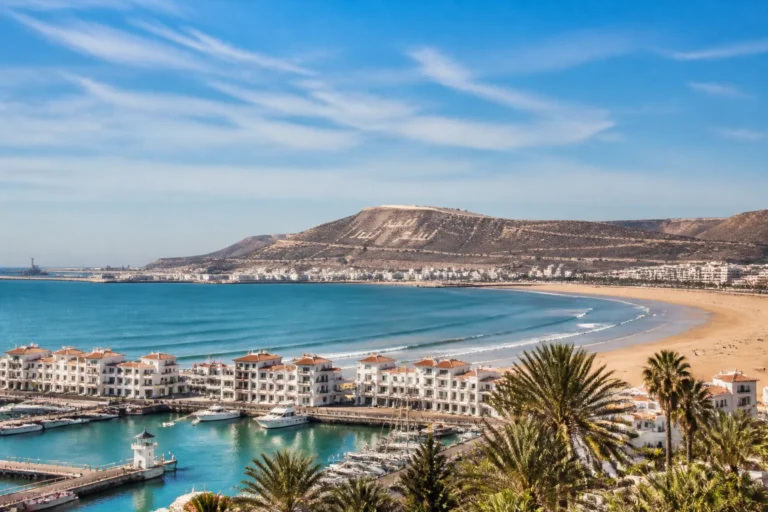
Agadir
Agadir is a Moroccan Atlantic city known for its long beachfront, relaxed resort atmosphere and lively souk. It can…
Explore destination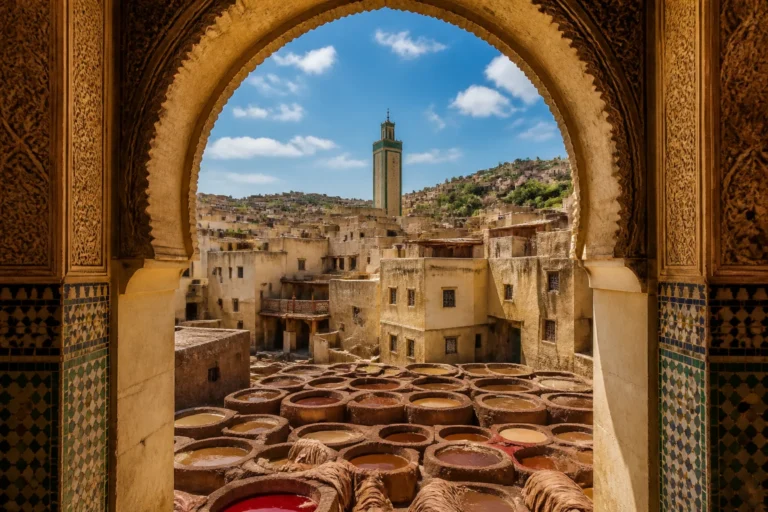 AI illustration
Fes
Fes is a city of layered history, lively markets and winding lanes, with its old medina at the centre…
Explore destination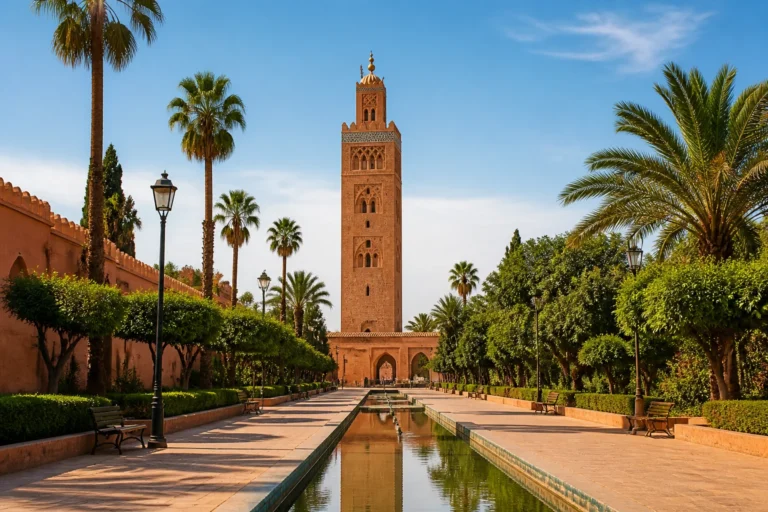 AI illustration
Marrakech
Marrakech is one of Morocco’s most distinctive city breaks: atmospheric, walkable in parts, and full of contrasts between the…
Explore destination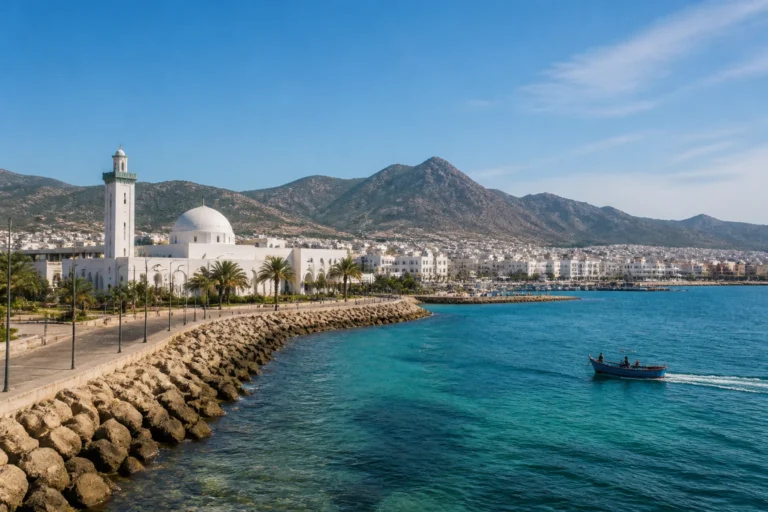 AI illustration
Nador
Nador, in north-eastern Morocco, is a Mediterranean city shaped by its coastline, the Marchica Lagoon and the nearby Rif…
Explore destination