
Bosnia and Herzegovina · Europe
Tuzla Travel Guide: What to See and How to Plan Your Trip
Tuzla is a compact city in north-eastern Bosnia and Herzegovina, shaped by its long history of salt production and its modern university life. Its central saltwater lakes, lively streets and museums make it an appealing stop for a short city break, while the surrounding region offers scope for longer excursions. Use this guide to plan your visit, choose an area to stay and consider your onward transport.
Find flights to Tuzla ↓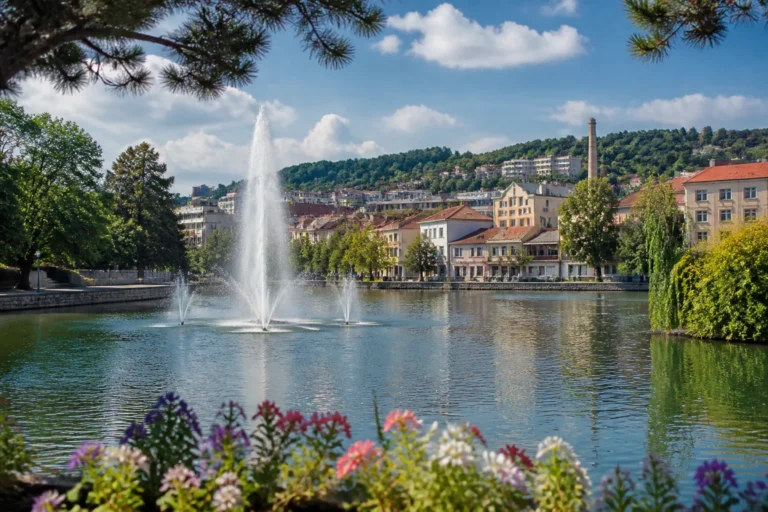 AI illustration
Find flights to Tuzla
Compare flights · EURGetting to know Tuzla
Tuzla is best known for its connection to salt. The deposits beneath the city have influenced its development for centuries, and today the most visible reminder is the Pannonian Lakes, a group of saltwater bathing lakes in the urban centre. The city has a down-to-earth feel, with a walkable core, cafés and a mix of Ottoman, Austro-Hungarian and more recent architecture.
It suits independent travellers looking for a manageable city break rather than a long list of major landmarks. Tuzla also works as a base for exploring parts of north-eastern Bosnia and Herzegovina, though regional outings need separate transport planning.
- Pannonian Lakes and the city’s salt heritage
- Central streets, cafés and local museums
- A useful base for regional excursions
Things to do in Tuzla
Start around the central pedestrian streets and Solni trg, where displays and public spaces connect the city to its salt-making past. The Pannonian Lakes are Tuzla’s distinctive attraction: visitors can swim or relax there when facilities are open for the season. Check local information before planning a visit around bathing, as access and facilities may vary.
For more context, look for the Museum of Eastern Bosnia and explore the city’s religious and architectural heritage, including Turalibegova Mosque. Slana Banja memorial park offers a quieter walk and a place to reflect on the city’s recent history. Allow time to explore at an unhurried pace; Tuzla’s appeal lies as much in its everyday atmosphere as in individual sights.
- Walk the central streets and salt-themed public spaces
- Visit the Pannonian Lakes when open
- Explore the Museum of Eastern Bosnia
- See Slana Banja memorial park
When to visit Tuzla
Late spring through early autumn is a convenient period for combining city walks with time at the Pannonian Lakes. The lakes are seasonal, so check opening arrangements before making them the focus of your trip. In the warmer months, consider visiting outdoor sights earlier or later in the day.
Spring and autumn can suit travellers more interested in museums, cafés and exploring on foot. Winter is a quieter option, but outdoor swimming facilities are not the reason to travel then. Events and opening hours can change from year to year, so confirm details locally if a particular festival or attraction matters to your plans.
How long to stay in Tuzla
Two nights gives most visitors time to see the centre, visit a museum and spend part of a day at the lakes if they are open. A single full day is possible for a brief stop, but it leaves less room for a relaxed pace or changes in weather and opening times.
Stay three or more nights if you want to add a day trip in the wider region. Check journey times and transport options before choosing excursions: destinations outside the city may not be straightforward to reach by public transport, and a car can offer more flexibility.
- One full day for a brief city visit
- Two nights for the main sights at an easier pace
- Three or more nights if adding regional outings
Tuzla Airport and getting around
Tuzla International Airport (TZL) is the airport serving the city. It is in the Dubrave area, roughly 15 kilometres from central Tuzla. Flight routes and schedules can change, so compare available options for your dates rather than assuming a particular connection operates.
For the journey between the airport and town, check current airport or local transport information before travelling. Taxi, car hire and bus services may be options, but availability, stops and timings can change. In the city, the central area is manageable on foot; local buses and taxis can help with longer journeys. Confirm bus routes and payment arrangements locally.
- Airport: Tuzla International Airport (TZL)
- Check current airport-to-city connections before departure
- Walk around the centre; use local transport for longer trips
Where to stay in Tuzla
For a first visit, look for accommodation in or near the centre, around the pedestrian streets and main squares. This puts cafés, museums and the Pannonian Lakes within easier reach and reduces the need to organise transport for everyday sightseeing.
Areas slightly beyond the centre may suit travellers seeking more space or arriving by car, but check how far they are from the places you plan to visit and whether parking is available. If the lakes are a priority, compare the walking distance with your accommodation’s location rather than relying only on a map pin.
- Central Tuzla for walkable access to sights and cafés
- Outside the centre for a quieter stay or more space
- Check parking and walking distances before booking
Practical tips for visiting Tuzla
Bosnia and Herzegovina’s currency is the convertible mark (BAM). Carry a payment card and some cash, as payment methods can differ between businesses. Bosnian, Croatian and Serbian are widely used; a few basic greetings are appreciated, and English may be less commonly spoken away from visitor-facing businesses.
Check opening hours for museums and the seasonal lakes before setting your itinerary. If you are planning a day trip, confirm the return transport as well as the outward journey. For flights, FlyGo.si is a flight comparison website where you can compare options; check the airline or transport operator’s own information for current schedules, conditions and service details.
- Carry a backup payment method
- Confirm seasonal opening times in advance
- Check both legs of any regional journey
Frequently asked questions about Tuzla
Is Tuzla worth visiting for a short break?
Yes, it can suit a short break if you are interested in a compact city, its salt heritage and the Pannonian Lakes. Two nights allows more time than a quick stop to explore at a relaxed pace.
Can you swim at the Pannonian Lakes in Tuzla?
The lakes are used for bathing when open, but access is seasonal and arrangements can change. Check current local information before planning your visit around swimming.
How do you get from Tuzla Airport to the city?
The airport is outside the centre, in the Dubrave area. Taxi, car hire or bus connections may be available, but check current services and timings with the airport or local operators before travelling.
How many days should I spend in Tuzla?
Two nights is a practical starting point for the central sights and, in season, the lakes. Add time if you want to explore destinations elsewhere in the region.
Where is a convenient area to stay in Tuzla?
The city centre is a useful choice for a first visit, with many sights and cafés within walking distance. If staying farther out, check local transport, parking and the distance to your planned activities.
Travel information can change. Check official transport operators and attraction websites before booking.
Editorial review: 23 Oct 2026
More destinations to explore
 AI illustration
Adler/Sochi
Adler and Sochi stretch along Russia’s Black Sea coast, combining seaside promenades and parks with access to mountain landscapes.…
Explore destination AI illustration
Alghero
Alghero, on the north-west coast of Sardinia, combines a historic centre with easy access to beaches and the coastal…
Explore destination AI illustration
Alicante
Alicante is an easygoing Mediterranean city where a compact old centre, a long waterfront and a busy local food…
Explore destination AI illustration
Amsterdam
Amsterdam combines a compact historic centre with a broad mix of museums, neighbourhood cafés and quieter residential streets. Its…
Explore destination