
3 Days in Barcelona: The Perfect City Break Itinerary

Barcelona combines Roman and medieval streets, Modernisme architecture, Mediterranean beaches and neighbourhoods with distinct local character in a compact urban setting. That makes 3 days in Barcelona long enough to see the city’s major landmarks while still leaving time for food, walking and unplanned discoveries.
This itinerary is designed for a first visit. It groups nearby sights together, keeps travel times realistic and leaves enough flexibility to adjust for weather, attraction availability or your preferred pace. For transport, attraction tickets and current visitor information, check the official Barcelona tourism website before travelling.
Planning Your 3 Days in Barcelona
Best Time to Visit and Ideal Trip Length
Barcelona is a year-round destination, but spring and autumn often offer a comfortable balance of mild weather and manageable sightseeing conditions. Summer is popular for beach time and long evenings, although heat, accommodation demand and queues can be greater. Winter is generally quieter and can suit travellers focused on museums, architecture and food.
Three full days is an excellent length for a first city break. It allows you to visit the Gothic Quarter, see several Gaudí landmarks, explore Montjuïc and choose one or two less-touristed neighbourhoods. Add a fourth or fifth day if you want a relaxed beach day, a museum-heavy schedule or a day trip to places such as Montserrat or Sitges.
Where to Stay: Gothic Quarter, Eixample, El Born or Gràcia
- Gothic Quarter: best for historic streets, central sightseeing and evening atmosphere. Some streets are narrow and busy, so check the exact location of your accommodation.
- Eixample: a practical choice for first-time visitors, with broad streets, restaurants, hotels and convenient transport. It is particularly useful for accessing Gaudí’s modernist buildings.
- El Born: a lively option close to the old town, Parc de la Ciutadella and the waterfront, with independent shops and restaurants.
- Gràcia: a more neighbourhood-focused base with squares, cafés and a local atmosphere. It is less central for the waterfront but convenient for Park Güell and northern Eixample.
Choose accommodation near a metro station or within comfortable walking distance of your evening dining area. Staying slightly outside the most famous streets can often provide better value and quieter nights without sacrificing access.
Getting from Barcelona Airport to the City Centre
Most international visitors arrive at Josep Tarradellas Barcelona–El Prat Airport, which has terminals T1 and T2. Check your terminal before choosing transport, as the airport bus services differ by terminal.
- Airport bus: the Aerobús connects T1 or T2 with Plaça Catalunya and is convenient if you are staying near the city centre. Aena lists separate A1 and A2 services for the two terminals.
- Metro: Barcelona Airport is connected to the city by Line L9 Sud. You may need to change lines depending on your accommodation, and airport-specific ticket rules apply.
- Train: the railway connection serves T2, so passengers arriving at T1 need to use the airport’s terminal shuttle first.
- Taxi or pre-booked transfer: useful for late arrivals, heavy luggage, families or accommodation away from central transport hubs. Allow extra time for traffic.
For current stops, operating information and terminal details, consult Aena’s Barcelona Airport transport guide. Girona Airport is a separate airport outside Barcelona and should not be confused with El Prat when planning transfer time.
Getting Around Barcelona
Barcelona is well suited to a combination of walking, metro, bus and occasional taxi journeys. The metro is usually the fastest option between districts, while walking is more rewarding in the Gothic Quarter, El Born, Eixample and along the waterfront. Use the official TMB transport network to plan routes and check service updates.
Expect roughly 10–20 minutes for many central journeys, but allow longer when changing metro lines, walking to stations or travelling to Park Güell and Montjuïc. Validate the correct ticket before travelling and compare individual tickets with multi-journey or visitor passes according to how often you expect to use public transport.
Day 1: Gothic Quarter, La Rambla and the Waterfront
Morning: Gothic Quarter and Barcelona Cathedral
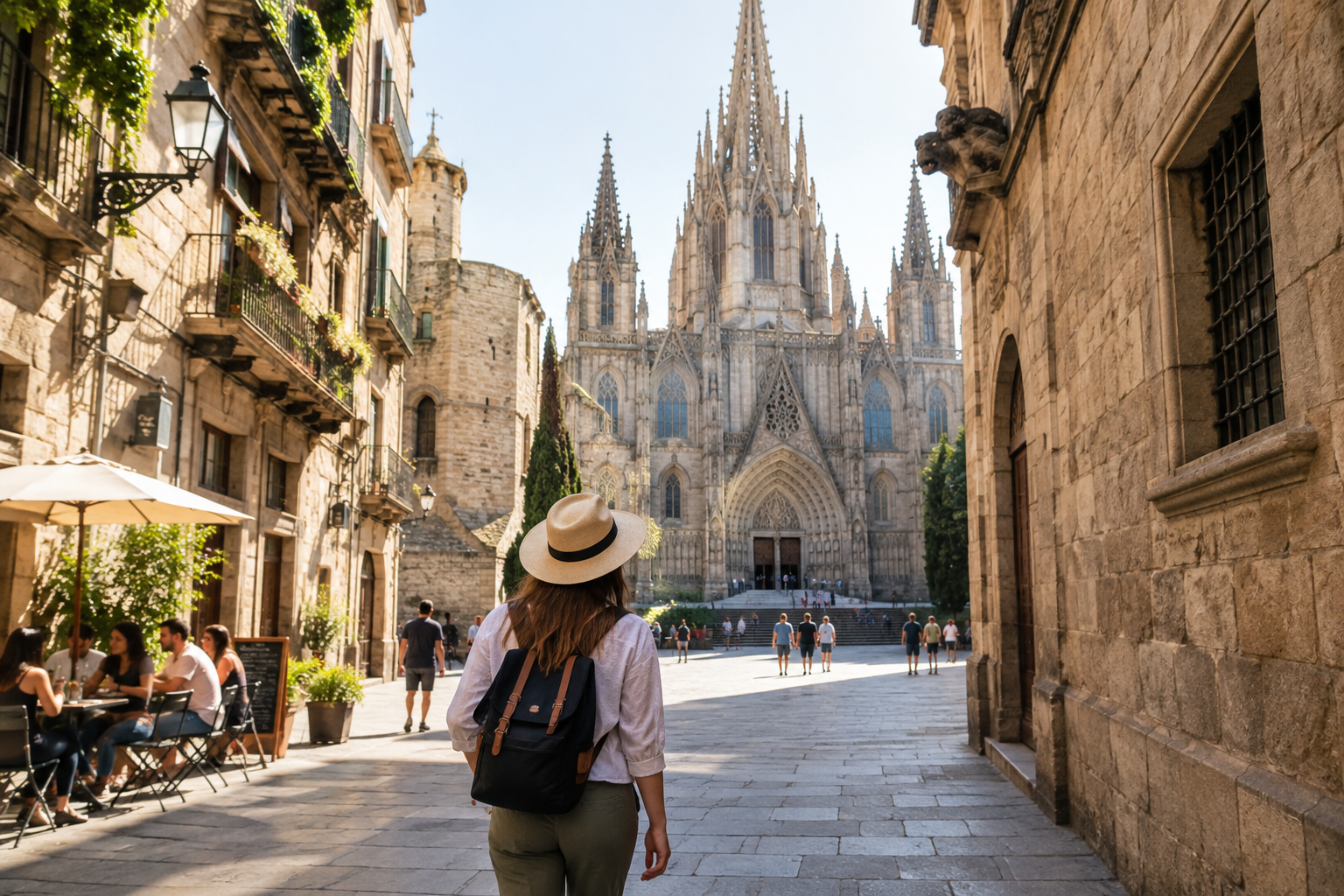
Begin in the Gothic Quarter before the streets become busiest. Explore the area around Plaça de Sant Jaume, the Roman remains, Plaça del Rei and the narrow lanes leading towards Barcelona Cathedral. Allow approximately two to three hours, depending on whether you visit the cathedral interiors and surrounding historic sites.
Keep the morning relatively unstructured. The appeal of the Barri Gòtic is in the details: small courtyards, stone passageways, independent shops and changing views between the buildings. Wear comfortable shoes, as paving can be uneven.
Afternoon and Evening: La Rambla, La Boqueria, El Born and Barceloneta
Walk towards La Rambla after lunch or stop briefly at La Boqueria market for a snack. It is better treated as a short food stop than a full sightseeing destination, especially during the busiest hours. Keep valuables secure in crowded areas.
Continue towards El Born, where you can browse boutiques, visit the area around Santa Maria del Mar and take a break in or near Parc de la Ciutadella. From El Born, allow around 20–30 minutes to walk towards Barceloneta, depending on your route and stops.
Finish by the waterfront. Barceloneta is convenient for a sunset walk, but it is not necessary to spend the entire evening there. If you prefer restaurants and a less beach-focused atmosphere, return to El Born or choose a restaurant in the nearby Ribera district.
Day 2: Gaudí Highlights and Eixample
Morning: Sagrada Família and Hospital de Sant Pau
Reserve the morning for the Sagrada Família, one of Barcelona’s essential advance-booking attractions. A visit commonly takes around 90 minutes to two hours, depending on whether you include a tower visit or audio guide. Arrive close to your timed entry and check the current visitor rules on the official Sagrada Família website.
Afterwards, walk approximately 15–20 minutes along Avinguda de Gaudí to Hospital de Sant Pau. The former hospital complex is an important example of Catalan Modernisme and makes a worthwhile second architectural visit without requiring another long cross-city journey.
Afternoon and Evening: Park Güell, Casa Batlló and Passeig de Gràcia
Travel from Hospital de Sant Pau to Park Güell by metro and bus, taxi or a combination of walking and public transport. Allow roughly 30–45 minutes for the transfer, depending on connections. Park Güell involves slopes and uneven paths, so plan for a slower visit and bring water in warm weather.
After Park Güell, return towards Eixample for Casa Batlló and Passeig de Gràcia. Because this is a full day, choose one major interior visit rather than trying to enter every modernist building. Casa Batlló and La Pedrera are both strong options; select based on your interests and ticket availability.
End with dinner in Eixample or Gràcia. This arrangement keeps the day focused on architecture while avoiding repeated journeys between the old town, the northern hills and the city centre.
Day 3: Montjuïc and Local Barcelona
Morning: Montjuïc and Museums
Start at Plaça d’Espanya and make your way uphill through Montjuïc. Depending on your interests, choose one principal attraction such as the Museu Nacional d’Art de Catalunya, the Joan Miró Foundation or Poble Espanyol. Trying to visit all of them in one morning can make the day feel rushed.
Allow around 30 minutes for the initial journey from central Barcelona to Plaça d’Espanya, then additional time for walking uphill, using the escalators or taking a taxi. Montjuïc is spread out, so check the route between your selected sites before setting off.
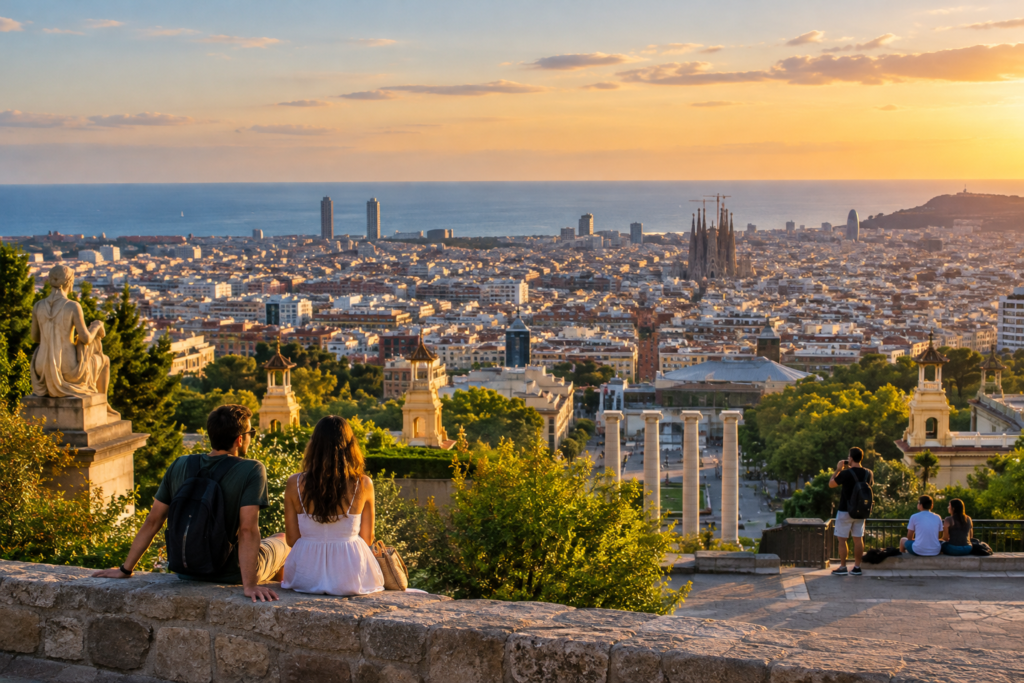
Pause at a viewpoint or garden before lunch. The hill offers broad views across the city and harbour, making it a useful contrast to the enclosed streets of the old town.
Afternoon and Evening: Poble-sec, Sant Antoni, Gràcia or the Beach
For a convenient continuation, walk downhill to Poble-sec, where you can have lunch and explore Carrer de Blai or nearby streets. From there, Sant Antoni is an easy extension for cafés, food markets and a more residential city atmosphere.
Alternatively, take the metro to Gràcia for independent shops, small squares and a slower evening. If you would rather finish beside the sea, travel to the beach for a walk and relaxed dinner, while remembering that the most central beachfront areas can be busy.
Keep the final evening flexible. Barcelona rewards spontaneous wandering, and leaving space for a favourite restaurant, a return to a neighbourhood or a final viewpoint is often more enjoyable than adding another major attraction.
Practical Tips for a Barcelona City Break
Booking Attractions and Avoiding Crowds
- Book timed-entry attractions such as the Sagrada Família and Park Güell in advance, particularly for weekends and high season.
- Schedule the most popular landmark early in the day and keep outdoor neighbourhood walks for later.
- Check official opening hours, entry conditions and cancellation policies before paying.
- Do not plan major attractions back-to-back across the entire city. Transfers, queues and meal breaks take longer than expected.
- Use official attraction websites or reputable booking channels rather than relying on street sellers.
Budget, Safety and Common Mistakes
Your main costs will usually be accommodation, attraction admissions, meals and airport transfers. Barcelona can suit different budgets: save by walking between central districts, choosing a neighbourhood restaurant at lunchtime and selecting only the paid attractions most important to you. Compare the cost of individual transport and attraction tickets with city cards before purchasing.
Keep bags closed and valuables secure on crowded streets, public transport and around major sights. Avoid carrying your passport unless necessary, and use a hotel safe where available. Taxis should be taken from official ranks or booked through a recognised service.
Common mistakes include staying too far from transport, underestimating the walking involved, visiting Park Güell without checking its location and assuming every beach restaurant offers good value. Another frequent error is trying to see Montserrat, the beach and all of central Barcelona within the same three-day schedule.
This itinerary is best suited to: first-time visitors, couples, solo travellers, friends and active families who want a balanced mix of architecture, history, food and local neighbourhoods. Travellers seeking a slower pace should remove one or two interiors rather than rushing through every stop.
How to Adapt This Barcelona Itinerary
Rainy-Day, Family-Friendly and Budget-Friendly Options
For rainy weather: replace long outdoor walks with the Sagrada Família, Casa Batlló, museums, the cathedral and covered food markets. Keep a short walk between indoor stops rather than abandoning the day completely.
For families: reduce the number of scheduled interiors, add longer breaks and use parks, the waterfront and the aquarium area as flexible stops. Check accessibility and age suitability before booking towers or steep attractions.
For a budget trip: prioritise free neighbourhood walks, viewpoints, churches where admission is not required, public beaches and selected museums. Choose one or two paid Gaudí attractions instead of attempting all of them.
For a slower trip: spend Day 1 in the old town and El Born, Day 2 on Gaudí architecture and Day 3 between Montjuïc and one local neighbourhood. This keeps the essential character of Barcelona without turning the city break into a checklist.
Frequently Asked Questions
Is 3 days in Barcelona enough?
Yes. Three full days are enough to see the historic centre, several Gaudí landmarks, Montjuïc and one or two local neighbourhoods. A longer stay is preferable if you want multiple museums, extensive beach time or day trips.
What is the best area to stay for a first visit?
Eixample is one of the most practical bases because it is central, well connected and close to several Modernisme landmarks. The Gothic Quarter and El Born are better for historic atmosphere, while Gràcia suits travellers who prefer a neighbourhood feel.
Do I need to book Barcelona attractions in advance?
Advance booking is strongly recommended for timed-entry attractions, especially the Sagrada Família and Park Güell. Availability can be limited during weekends, school holidays and summer.
Can I walk between most Barcelona attractions?
Many central sights are walkable, including the Gothic Quarter, La Rambla, El Born and parts of Eixample. Use public transport or a taxi for longer journeys to Park Güell, Montjuïc and some beach areas.
Is Barcelona expensive for a three-day city break?
It can be expensive in popular areas, particularly for accommodation and major attractions, but costs vary widely. Walking, using public transport, eating away from the busiest streets and limiting paid admissions can keep the trip manageable.
What should I avoid doing in Barcelona?
Avoid overloading each day, carrying valuables visibly in crowded places, relying on unlicensed sellers and travelling across the city repeatedly for individual sights. Check attraction locations and transport routes before finalising your plan.
Key Takeaways
- Group sights by neighbourhood to reduce travel time.
- Book major attractions early, particularly the Sagrada Família and Park Güell.
- Combine walking with metro and bus travel for the most efficient city break.
- Leave flexibility for meals, weather and spontaneous neighbourhood discoveries.
- Choose fewer paid attractions and spend more time experiencing the city between them.
Conclusion
Three days in Barcelona can deliver a satisfying introduction to Catalan culture, Gothic history, Modernisme architecture, Mediterranean scenery and everyday neighbourhood life. The best approach is not to see everything, but to balance major landmarks with time spent walking, eating and observing the city. With advance planning for the busiest attractions and a realistic approach to transport, this itinerary provides a well-paced foundation for a memorable Barcelona city break.