
Austria · Europe
Vienna Travel Guide for European Independent Travellers
Vienna is one of Europe’s easiest cities to enjoy at your own pace: elegant but not intimidating, efficient but still full of atmosphere. It rewards travellers who like museums, cafés, music, and long walks through neighbourhoods with distinct personalities. This guide focuses on the practical side of planning a trip to Vienna, from the best areas to stay to how to get around once you land.
Find flights to Vienna ↓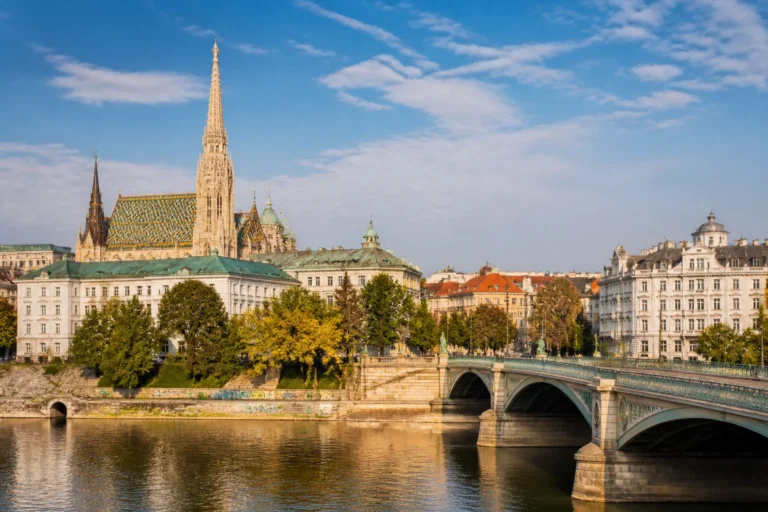 AI illustration
Find flights to Vienna
Compare flights · EURAbout Vienna
Vienna is Austria’s capital and one of Central Europe’s most refined city breaks. It combines imperial architecture, large green spaces, a strong café culture, and a city centre that is easy to explore without rushing. For independent travellers, the appeal is that Vienna feels orderly and accessible while still offering plenty to discover beyond the obvious landmarks.
The city is especially rewarding if you like culture that does not require a packed schedule: you can spend a morning in a museum, a long afternoon in a coffeehouse, and an evening at a concert, restaurant, or neighbourhood wine bar. Vienna also works well as a short break from many European cities because public transport is straightforward and many key sights are concentrated in and around the centre.
- Imperial palaces and classical streetscapes
- Excellent museums, concerts, and cafés
- Compact centre with reliable public transport
Things to do in Vienna
Start with the historic centre, where the main sights sit close together and are easy to combine in one day. St Stephen’s Cathedral, the Hofburg, and the grand boulevards around the Innere Stadt give a clear sense of Vienna’s imperial past. The Ringstrasse is also worth a slow loop, especially if you want to see the scale of the old city walls area and the major public buildings along it.
Beyond the centre, Vienna becomes more local and varied. Schönbrunn is the most famous palace complex and deserves time if you enjoy gardens and formal interiors. MuseumsQuartier is a useful base for contemporary art and a break from the more traditional sights, while the Naschmarkt area is a good place to understand the city’s food scene. If you want a quieter side of Vienna, look for walks in the Prater, along the Danube, or in the vineyard districts on the city edge.
- Walk the Innere Stadt and the Ringstrasse
- Visit Schönbrunn Palace and gardens
- Explore MuseumsQuartier and the Naschmarkt area
- Leave time for cafés, parks, and a concert or opera performance
Best time to visit Vienna
Vienna can be visited year-round, but the experience changes noticeably with the seasons. Spring and early autumn are often the most comfortable periods for sightseeing on foot, with milder temperatures and outdoor terraces starting or continuing to fill up. These are also good months if you want to balance city walks with museum visits.
Summer brings longer days and a lively atmosphere, but it can also mean busier attractions and hotter afternoons. Winter is appealing if you enjoy festive markets, classical concerts, and a more atmospheric city centre, although you should expect shorter daylight hours. If your trip is mainly about museums and cafés, Vienna works well even when the weather is not ideal, because so much of the city’s appeal is indoors.
- Spring and early autumn are often the easiest for walking
- Summer is lively but can be busy
- Winter suits concerts, cafés, and seasonal markets
How long to stay in Vienna
Two full days is enough for a first look at the main landmarks, but it will feel rushed if you also want to linger in cafés, visit major museums, or enjoy a neighbourhood beyond the centre. With three days, you can see the core sights and still leave space for a palace visit, a long lunch, or an evening performance.
If you have four days or more, Vienna becomes much more relaxed. That gives you time to explore different districts, such as the museum-heavy centre, the more residential outer areas, and perhaps a vineyard or riverside walk. A longer stay also makes sense if Vienna is part of a broader Austria trip and you want it to feel like a proper stop rather than a checklist city.
- 2 days: best for the highlights only
- 3 days: a balanced first trip
- 4 days or more: better for museums, cafés, and neighbourhood time
Airports and transport in Vienna
Vienna is served by Vienna International Airport (VIE), which sits outside the centre but is well connected for a city break. Travellers typically reach central Vienna by train, airport rail link, or road transport, depending on their arrival point and final destination. Because connections can change, it is best to check the airport and rail operator websites before travelling, especially if you are arriving late or on a tight schedule.
Once in the city, public transport is one of Vienna’s strengths. The U-Bahn, trams, and buses cover most areas you are likely to visit, and the centre is walkable for many sightseeing plans. For independent travellers, this often means you can choose accommodation based on neighbourhood preference rather than proximity to a single landmark. Taxis and app-based ride services may be available, but for most trips around Vienna, public transport is the simplest option.
- Vienna International Airport (VIE) serves the city
- Central Vienna is easy to reach by rail or road transport
- U-Bahn, trams, and buses are usually enough for getting around
Where to stay in Vienna
If it is your first time in Vienna, staying in or near the Innere Stadt puts many of the classic sights within easy reach. This is the most convenient option for short stays, though it may feel more formal and less residential than other districts. It suits travellers who want to walk to major attractions and prefer a traditional city-centre base.
For a more local atmosphere, consider areas just outside the historic core. Neighbourhoods with good transport links can offer a better balance between access and everyday character, with more restaurants, cafés, and lower-key streets. If you are interested in nightlife, creative spaces, or a less polished side of the city, look for areas that are well connected by tram or U-Bahn rather than focusing only on the centre. Families and slower travellers may prefer quieter districts with green spaces and easy public transport over the most central postcodes.
- Innere Stadt for first-time visitors and short stays
- Areas just outside the centre for a more local feel
- Choose accommodation near a U-Bahn or tram stop
Practical tips for Vienna
Vienna is a city where small planning choices can make a trip smoother. If you want to see popular museums or attend a performance, booking ahead is often sensible, especially in busier periods. For cafés and restaurants, it helps to remember that some places are more formal than they first appear; a relaxed pace is part of the experience, and table service can be unhurried compared with more casual cities.
Vienna also rewards travellers who leave some structure in the day. Use the morning for a major sight, the afternoon for a slower neighbourhood or museum stop, and the evening for a concert, dinner, or a long walk. If you are travelling with only hand luggage, the city works particularly well because transport is straightforward and the centre is easy to navigate. For the most up-to-date operational details on transport, opening times, and ticketing, check official venue and operator information before you go.
- Book popular cultural attractions in advance when possible
- Expect a relaxed dining pace in many cafés and restaurants
- Mix major sights with slower neighbourhood time
Frequently asked questions about Vienna
Is Vienna easy to visit without a car?
Yes. Vienna is one of the easier European capitals to navigate without a car, especially if you are staying near the centre or a major transport line. Walking, trams, and the U-Bahn cover most typical sightseeing needs.
What is Vienna best known for?
Vienna is best known for its imperial history, classical music tradition, grand architecture, museums, and café culture. Many visitors also come for the palaces, parks, and the city’s calm, orderly feel.
How far is Vienna Airport from the city centre?
Vienna International Airport is outside the centre, but it is connected by rail and road transport. The best option for your arrival will depend on where you are staying and when you land, so it is worth checking current operator information.
Is one day enough for Vienna?
One day is enough for a brief overview of the historic centre, but it will not do justice to the city. Two or three days is a much better fit if you want to include a palace, a museum, and some time in a café.
Which area is best for first-time visitors to Vienna?
For a first trip, staying near the historic centre is the most practical choice. It reduces travel time and makes it easier to fit in major sights, especially if your visit is short.
What should I not miss on a first trip to Vienna?
A first trip usually includes the historic centre, Schönbrunn Palace, a classic coffeehouse experience, and at least one museum or concert if that fits your interests. After that, choose one or two neighbourhoods to explore more slowly.
Travel information can change. Check official transport operators and attraction websites before booking.
Editorial review: 23 Oct 2026
More destinations to explore
 AI illustration
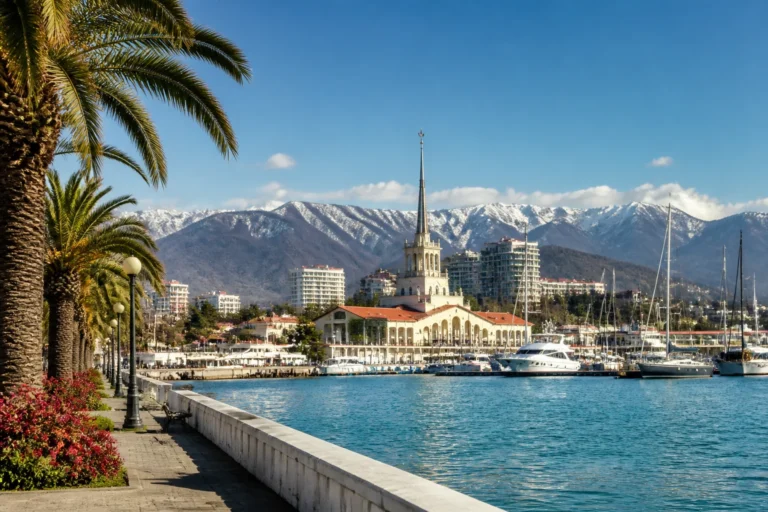
Adler/Sochi
Adler and Sochi stretch along Russia’s Black Sea coast, combining seaside promenades and parks with access to mountain landscapes.…
Explore destination AI illustration
Alghero
Alghero, on the north-west coast of Sardinia, combines a historic centre with easy access to beaches and the coastal…
Explore destination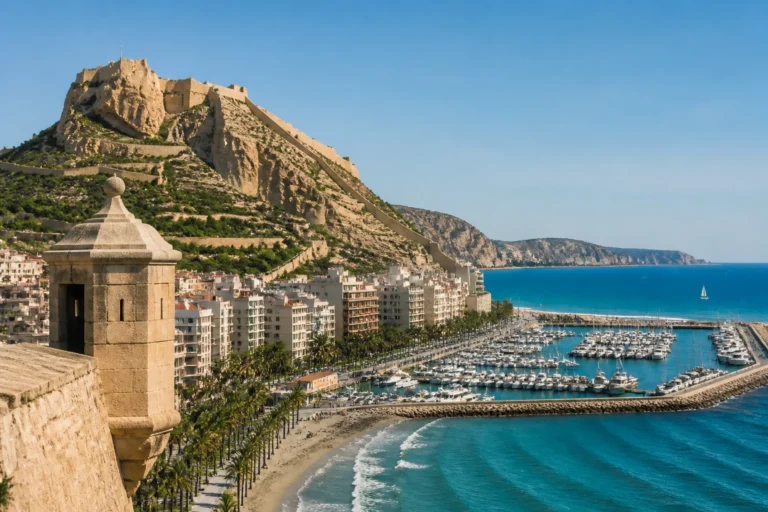 AI illustration
Alicante
Alicante is an easygoing Mediterranean city where a compact old centre, a long waterfront and a busy local food…
Explore destination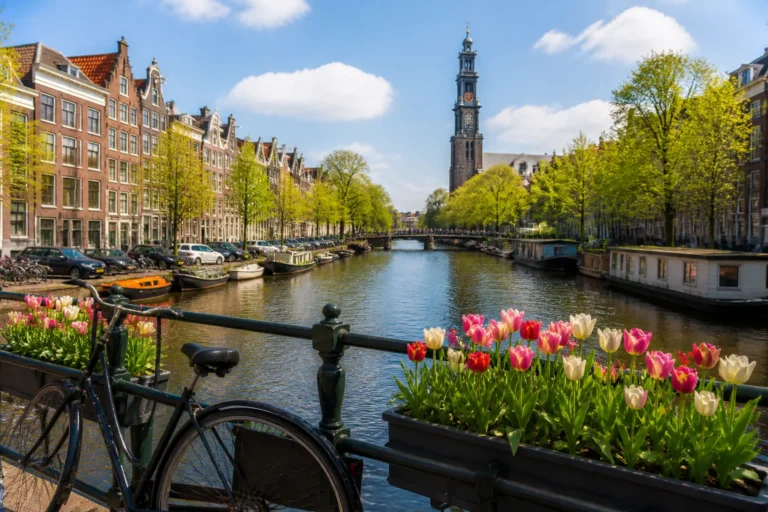 AI illustration
Amsterdam
Amsterdam combines a compact historic centre with a broad mix of museums, neighbourhood cafés and quieter residential streets. Its…
Explore destination