
Kosovo · Europe
Pristina travel guide: what to know before you go
Pristina, Kosovo’s capital, is a compact and energetic city that rewards travellers who enjoy an urban break with strong local character. It is a good base for cafés, museums, easy day trips, and a look at a city still shaping its post-socialist identity. This guide covers the essentials for planning a visit, from timing and neighbourhoods to transport and practical expectations on the ground.
Find flights to Pristina ↓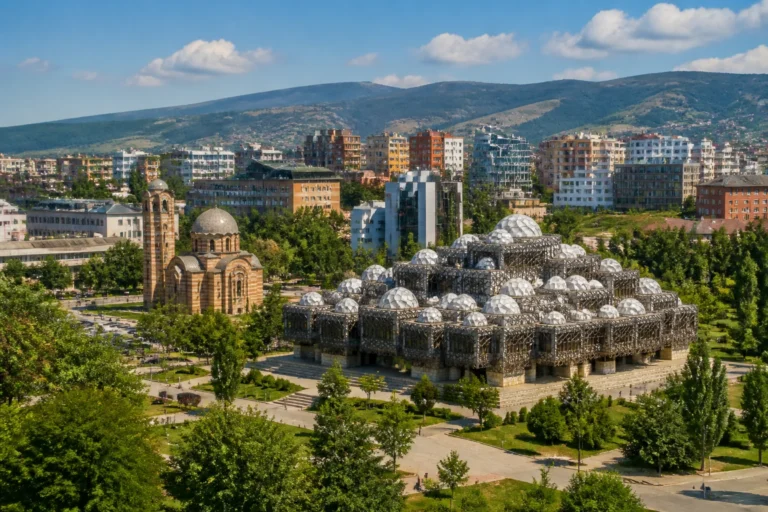 AI illustration
Find flights to Pristina
Compare flights · EURAbout Pristina
Pristina is Kosovo’s largest city and its political, cultural, and administrative centre. For many visitors, its appeal lies in the mix of lively café culture, visible layers of recent history, and a walkable core that can be explored without rushing. The city is not polished in a classic Western European sense, but that is part of what makes it interesting: you will find street life, student energy, and a strong local pace of living.
The main centre is fairly compact, with government buildings, pedestrian streets, markets, and major landmarks close enough for a day or two on foot. English is commonly used in tourist settings, especially among younger people, though a few local phrases are always appreciated. Travellers who come expecting a long checklist of monuments may be surprised that Pristina works better as a place to soak up atmosphere, eat well, and use as a base for nearby excursions.
- Compact city centre with easy walking between many sights
- Strong café culture and a youthful urban feel
- Good starting point for short day trips in Kosovo
Things to do in Pristina
Start with the city centre, where several of Pristina’s best-known landmarks sit within a short walk of one another. The National Library is one of the city’s most talked-about modernist buildings, while the Mother Teresa Cathedral, pedestrian streets, and nearby public squares give a sense of the city’s everyday rhythm. The Newborn monument is another familiar stop, especially for visitors interested in contemporary identity and symbolism in Kosovo.
For a broader picture of the city, add a museum or two and spend time in cafés rather than trying to overpack the itinerary. The Ethnological Museum offers a more traditional perspective on local life and heritage, while the green spaces and urban parks provide a slower contrast to the centre. Markets and neighbourhood streets are also worth exploring if you like seeing how a city functions beyond its headline attractions.
If you have extra time, consider a half-day trip outside the centre. There are monasteries, hills, and other places of interest within reach of Pristina, but transport and opening arrangements are worth checking in advance with official or local operators. For many independent travellers, the best experience is a balanced one: a few key sights, plenty of café stops, and room for spontaneous wandering.
- National Library and other landmark architecture
- Newborn monument and central pedestrian areas
- Ethnological Museum and local heritage stops
- Cafés, squares, and street life for a slower visit
Best time to visit Pristina
Pristina can be visited year-round, but spring and early autumn are often the most comfortable times for walking around the city. These shoulder seasons usually suit travellers who want milder temperatures and a relaxed pace without the intensity of midsummer. They are also practical for combining city time with day trips.
Summer can feel lively and sociable, with busy terraces and a strong outdoor café scene, though heat may make mid-afternoon sightseeing less enjoyable. Winter is quieter and can be a good option if you prefer fewer crowds and do not mind cooler conditions. If you are planning to visit museums, churches, or indoor attractions, the season matters less than your own comfort with walking and occasional weather disruption.
For city breaks, it is sensible to think in terms of comfort and crowd levels rather than chasing a single perfect month. Because events, opening hours, and local holidays can influence what is available on the ground, it is wise to check details with venues or official tourism sources before you travel.
- Spring and early autumn are often the most comfortable for sightseeing
- Summer brings café life and a busier atmosphere
- Winter can suit travellers who prefer a quieter city break
How long to stay in Pristina
One full day is enough to get a first impression of Pristina if you are short on time. That allows for the city centre, a museum or landmark building, and a relaxed meal or two. Travellers who prefer to move steadily rather than rush will probably find that a day feels a little tight, but still worthwhile as part of a wider Kosovo itinerary.
Two days is a better pace for most independent visitors. It gives you space to see the key sights, spend time in cafés and restaurants, and explore a different neighbourhood or two without feeling pressed. It also leaves room for a day trip if you want to use the city as a base.
Three days or more can make sense if you like slow travel, are interested in local history, or want to combine Pristina with nearby places. The city itself is not huge, so extra time is best used for atmosphere, food, and outward trips rather than ticking off a long list of major attractions.
- 1 day for a quick city-centre overview
- 2 days for a balanced city break
- 3 days or more if you want day trips and a slower pace
Airports and transport in Pristina
Pristina is served by Pristina International Airport (PRN), which is the main airport for Kosovo. For the most useful onward planning, check current transport options with the airport, your accommodation, or official local providers before you travel. Depending on your arrival time, you may have a choice of taxi, shuttle, or pre-arranged transfer, but it is best not to assume the same frequency at all hours.
Within the city, central Pristina is easy to cover on foot, especially if your plans focus on the core sights, cafés, and museums. For longer hops, local taxis and buses are part of the transport picture, but travellers should confirm fares, routes, and pick-up points locally rather than relying on outdated online advice. If you plan to visit nearby towns or rural sites, an organised driver or a rental car may be more convenient than trying to connect multiple services.
If you are travelling on to another country in the region, build in flexibility. Cross-border journeys in the Balkans can involve changing conditions, so it is sensible to check current operator information and allow extra time. FlyGo.si compares flights, but the final leg on the ground is always worth planning carefully.
- PRN is the main airport for the city
- The centre is walkable for most short-stay visitors
- Check current local transport details before arrival
Where to stay in Pristina
For a first visit, staying near the city centre is usually the simplest option. This puts you close to major sights, restaurants, and transport connections, and it reduces the need for taxis after dark. It is also the best choice if you want to experience Pristina’s café culture and street life with minimal logistics.
If you prefer a quieter base, look for accommodation just outside the busiest central streets while still keeping walking access to the core. This can be a good balance for travellers who want easier sleep but do not want to spend much time commuting. Apartment-style stays are often appealing for longer visits, especially if you value space and a kitchen.
Business travellers may prefer areas with straightforward access to offices and main roads, while leisure travellers usually gain the most from a central location. Whatever you choose, check how you will reach the property after arrival, especially if you are landing late or arriving from another city by bus.
- Central stays are best for a first visit
- Nearby quieter streets can offer a better balance of calm and access
- Apartments suit longer stays or independent travellers
Practical tips for visiting Pristina
Pristina is a straightforward city to explore, but a few practical habits help. Carry some cash for smaller purchases, especially in places that may not be geared toward card payments. If you are relying on mobile maps or ride apps, keep an offline backup in case signal or battery becomes an issue during the day.
Dress is generally casual in the city centre, though it is sensible to be respectful if you visit religious sites or more formal institutions. A light layer is useful outside the warmest months, and comfortable shoes matter because many of the most interesting places are best reached on foot. For food and drink, the café scene is one of the city’s strengths, so leave time to sit rather than just pass through.
Finally, keep expectations aligned with the city’s character. Pristina is not a classic postcard capital; it is a place to observe a capital in transition, try local food, and enjoy an easygoing urban stay. That makes it especially appealing to travellers who like destinations with personality rather than perfection.
- Carry some cash for smaller purchases
- Comfortable shoes are useful for central walking
- Plan for a relaxed city break rather than a checklist-style visit
Frequently asked questions about Pristina
Is Pristina worth visiting for a short city break?
Yes, especially if you enjoy compact capitals, café culture, and a destination that feels different from more polished European city breaks. One or two days is usually enough to get a good sense of the city.
What is Pristina best known for?
Pristina is known for its youthful atmosphere, modern public landmarks, café culture, and its role as Kosovo’s capital. Many visitors also come to see its recent-history symbolism and urban energy.
Can you explore Pristina on foot?
Yes, much of the centre is walkable and that is often the easiest way to see the main sights. For longer distances, you may want local transport or a taxi arranged on the ground.
Is Pristina a good base for day trips?
It can be, depending on what you want to see. The city works well as a base for nearby cultural sites and regional excursions, but it is worth checking transport options in advance.
What type of traveller will enjoy Pristina most?
Pristina tends to appeal to independent travellers, urban explorers, and people interested in contemporary Balkan history. It is also a good choice for visitors who like relaxed cafés and less conventional capitals.
Should I book accommodation in the centre?
For a first visit, yes, central accommodation is usually the most convenient. It makes it easier to walk to sights, eat out, and move around without needing constant transport.
Travel information can change. Check official transport operators and attraction websites before booking.
Editorial review: 23 Oct 2026
More destinations to explore
 AI illustration
Adler/Sochi
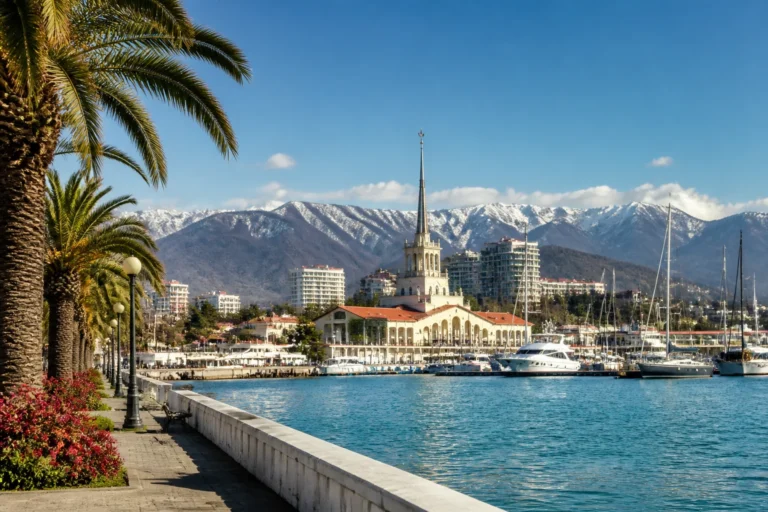
Adler and Sochi stretch along Russia’s Black Sea coast, combining seaside promenades and parks with access to mountain landscapes.…
Explore destination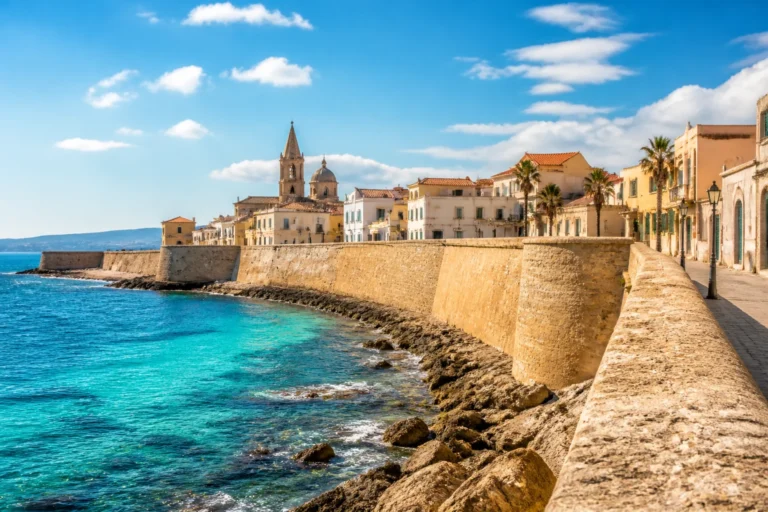 AI illustration
Alghero
Alghero, on the north-west coast of Sardinia, combines a historic centre with easy access to beaches and the coastal…
Explore destination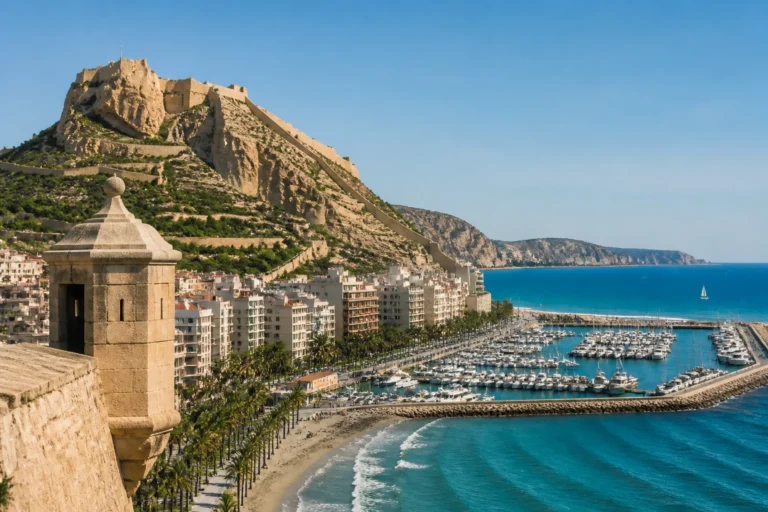 AI illustration
Alicante
Alicante is an easygoing Mediterranean city where a compact old centre, a long waterfront and a busy local food…
Explore destination AI illustration
Amsterdam
Amsterdam combines a compact historic centre with a broad mix of museums, neighbourhood cafés and quieter residential streets. Its…
Explore destination