
North Macedonia · Europe
Skopje Travel Guide for Independent Visitors
Skopje is a compact Balkan capital with an unusually layered feel: Ottoman-era streets, socialist-era blocks, a rebuilt central core, and a strong café culture that makes lingering part of the experience. It works well for independent travellers who like cities you can explore on foot, then use as a base for day trips into North Macedonia’s mountains, lakes, and monasteries. Expect contrasts rather than polish, and plan to enjoy them.
Find flights to Skopje ↓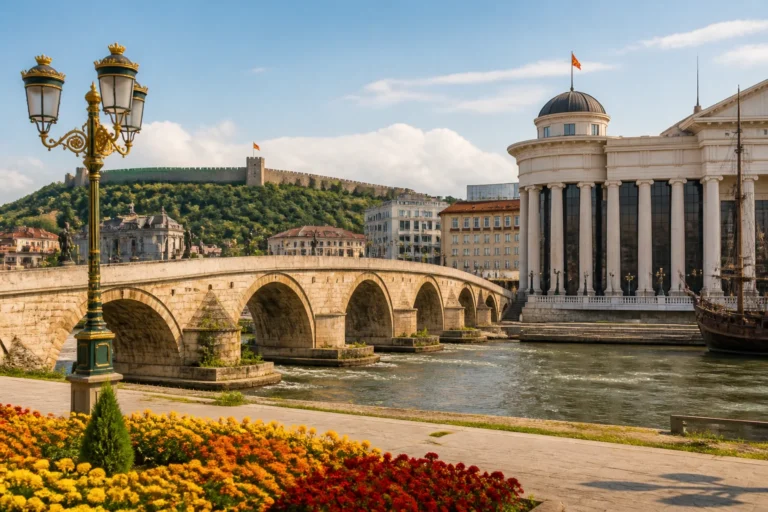 AI illustration
Find flights to Skopje
Compare flights · EURAbout Skopje
Skopje is the capital of North Macedonia and one of the most characterful cities in the western Balkans. The city feels split between eras: the Ottoman-influenced Old Bazaar and river crossings on one side, and the more monumental post-earthquake centre on the other. That mix is not always seamless, but it is exactly what gives the city its appeal for travellers who enjoy urban layers and visible history.
Most first-time visitors spend their time around the city centre, the river, and the Old Bazaar, which is where you will find the strongest concentration of sights, cafés, and restaurants. Beyond the centre, Skopje can also be a practical starting point for seeing Matka Canyon, nearby monasteries, and the wider Vardar valley.
- A city of contrasts, from bazaars to modern squares
- Easy to explore in a few compact districts
- Good base for short excursions outside the city
Things to Do in Skopje
Start in the Old Bazaar, one of the city’s most atmospheric districts. Its cobbled lanes, mosques, courtyards, craft shops, and tea houses offer a more intimate feel than the newer centre. This is a good place to slow down, browse, and get a sense of Skopje’s Ottoman and Balkan heritage without needing a strict sightseeing plan.
Cross the River Vardar to the central area, where you can see the city’s more theatrical public spaces, bridges, and large monuments. The area around Macedonia Square, the riverfront, and the stone bridge is useful for orientation even if you do not spend all day there. For a different perspective, head up to the Kale Fortress or to viewpoints above the city when conditions are clear.
If you have time for a half-day escape, Matka Canyon is one of the most popular outings from Skopje. It is known for water, cliffs, and hiking paths, and it gives a welcome contrast to the capital’s urban energy. Museums and galleries can fill a quieter afternoon, but in Skopje the best experiences are often simple ones: walking, café-hopping, and observing the city at street level.
- Wander the Old Bazaar and its side lanes
- See the Stone Bridge and central riverfront
- Visit Kale Fortress for city views
- Take a half-day trip to Matka Canyon
Best Time to Visit Skopje
Spring and autumn are generally the most comfortable times to visit Skopje, with milder temperatures for walking and sitting outside. These shoulder seasons are usually better for balancing city sightseeing with a day trip to nearby nature areas, since summer heat can make long walks less pleasant.
Summer brings a livelier outdoor atmosphere, especially in the evening, but it can also be the least comfortable season for daytime exploration. Winter is a workable choice if you prefer fewer crowds and do not mind shorter days. In any season, it is worth checking local holiday periods and opening hours for museums, markets, and restaurants, as schedules can be more limited than in larger Western European capitals.
- Spring and autumn are usually best for walking
- Summer suits evening cafés and riverfront time
- Winter is quieter but days are shorter
How Long to Stay in Skopje
A one-night stop can work if you are using Skopje as part of a longer Balkan route, but two full days is a more comfortable minimum. That gives you time to see the Old Bazaar and the central districts without rushing, and still leave space for an unrushed meal or two.
Three days is ideal if you want to add Matka Canyon or another excursion. With that extra time, Skopje becomes less of a transit stop and more of a city break: enough for sightseeing, relaxed cafés, and some flexibility if you want to revisit parts of the centre at different times of day.
- 1 day: quick overview and an overnight stop
- 2 days: the main sights at a relaxed pace
- 3 days: enough for a city stay plus a day trip
Airports and Transport
Skopje is served by Skopje International Airport, which is the main air gateway for the city and a convenient arrival point for international visitors. For current flight and transfer details, check the official airport and transport operator information before you travel, as services can change.
From the airport, travellers usually continue by taxi, pre-arranged transfer, or bus where available. In the city itself, taxis are a practical way to bridge longer gaps between districts, while the centre and Old Bazaar are walkable once you are based nearby. Local buses are part of the urban network, but for a short stay many visitors rely mainly on walking and taxis to save time.
If you are planning onward travel in North Macedonia, Skopje’s bus and rail connections can be useful, though they are worth checking carefully in advance. Timetables and service patterns may not suit spontaneous trips as well as in some larger European capitals, so it is sensible to confirm departure points and return options before setting out.
- Use the airport as your main arrival point
- Walk the centre, Old Bazaar, and riverfront
- Rely on taxis for longer cross-city hops
- Check official transport sources for current schedules
Where to Stay in Skopje
For a first visit, staying near Macedonia Square or the riverfront keeps you close to the main sights, transport links, and a broad choice of restaurants. This area is the most practical if you want easy walks between the modern centre, the Stone Bridge, and the bazaar.
If atmosphere matters more than convenience, the Old Bazaar area can be a good fit, especially for travellers who enjoy older streets and a more traditional city feel. It can be lively in the evening, and many visitors like being close to cafés and smaller eateries. For a quieter stay, look a little farther from the busiest squares, where you may find more space and a less frenetic pace while still remaining reasonably central.
Families or longer-stay visitors may prefer neighbourhoods with easier parking and larger rooms, while solo travellers often choose central locations for simplicity. In Skopje, being close to the parts of the city you plan to walk matters more than chasing a specific “best” district.
- Centre and riverfront for convenience
- Old Bazaar for atmosphere and character
- Choose walkability over distance where possible
Practical Tips for Skopje
Carry some cash, but do not assume every small place is cash-only; payment habits vary by business. If you plan to visit mosques, churches, or other religious sites, dress respectfully and check whether any specific visitor rules apply. Skopje is a city where a little flexibility helps, especially with opening hours, transport timing, and weekend rhythms.
English is commonly understood in tourist-facing settings, but a few basic local greetings are still appreciated. Taxis are best arranged carefully through reputable providers or official stands when possible. If you are heading to Matka Canyon or other outdoor spots, bring suitable footwear and allow extra time for the return journey, particularly if you are relying on public transport or a pre-booked transfer.
The city rewards unhurried walking, so build in pauses for coffee, tea, or a simple meal. Rather than trying to tick off everything, it is better to focus on a small number of areas and experience how they connect: the centre, the bazaar, the river, and one out-of-town escape.
- Keep some cash for smaller businesses
- Dress respectfully at religious sites
- Allow extra time for day trips
- Focus on a few districts rather than rushing
Frequently asked questions about Skopje
Is Skopje worth visiting for a short city break?
Yes. Skopje is especially appealing if you like cities with visible layers of history and a strong café culture. A short break is enough to see the main centre, the Old Bazaar, and a nearby excursion if you plan well.
What is Skopje best known for?
Skopje is best known for its mix of Ottoman heritage, the Old Bazaar, the riverfront around the Stone Bridge, and the city’s distinctive post-earthquake centre. Many visitors also use it as a base for Matka Canyon.
Can you explore Skopje on foot?
Much of the central area is walkable, especially if you stay near the river or Macedonia Square. You may still want taxis for longer hops or for reaching outlying sights and transport hubs.
How many days do you need in Skopje?
Two full days is a good minimum for seeing the main sights without rushing. Three days is better if you want time for a day trip or a more relaxed pace.
Is Matka Canyon easy to visit from Skopje?
It is one of the most common excursions from the city, but the easiest way to get there depends on current transport options and your timing. Check official and local transport information before you go, especially if you want to return the same day.
Which area is best for first-time visitors?
The centre near Macedonia Square and the riverfront is the most convenient choice for a first stay. It gives you easy access to the main sights and enough options for meals, cafés, and onward transport.
Travel information can change. Check official transport operators and attraction websites before booking.
Editorial review: 23 Oct 2026
More destinations to explore
 AI illustration
Adler/Sochi
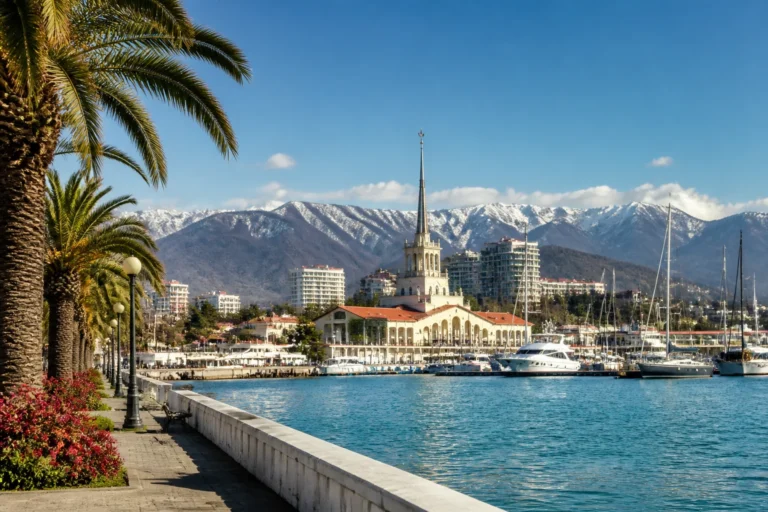
Adler and Sochi stretch along Russia’s Black Sea coast, combining seaside promenades and parks with access to mountain landscapes.…
Explore destination AI illustration
Alghero
Alghero, on the north-west coast of Sardinia, combines a historic centre with easy access to beaches and the coastal…
Explore destination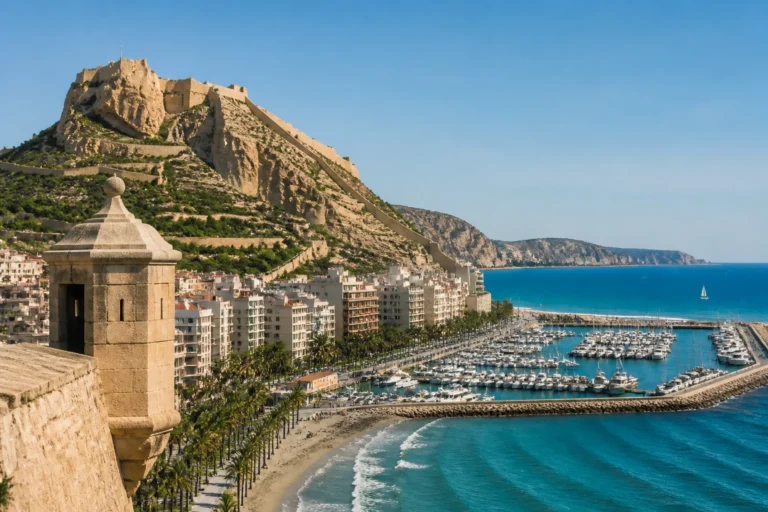 AI illustration
Alicante
Alicante is an easygoing Mediterranean city where a compact old centre, a long waterfront and a busy local food…
Explore destination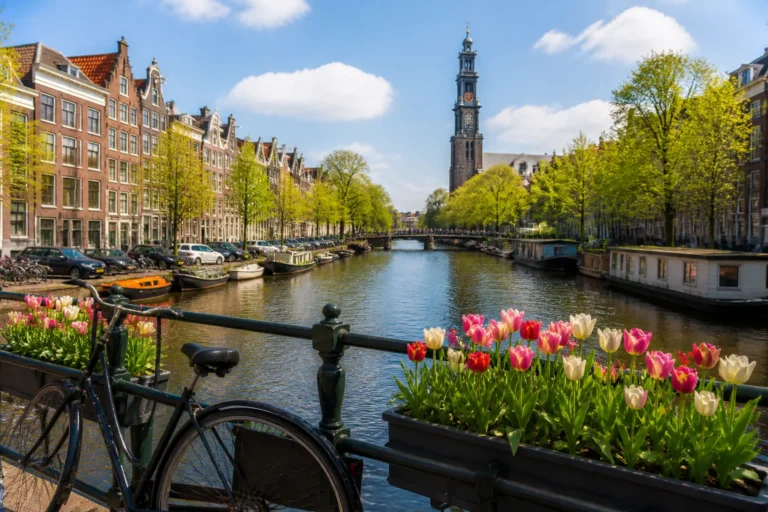 AI illustration
Amsterdam
Amsterdam combines a compact historic centre with a broad mix of museums, neighbourhood cafés and quieter residential streets. Its…
Explore destination